

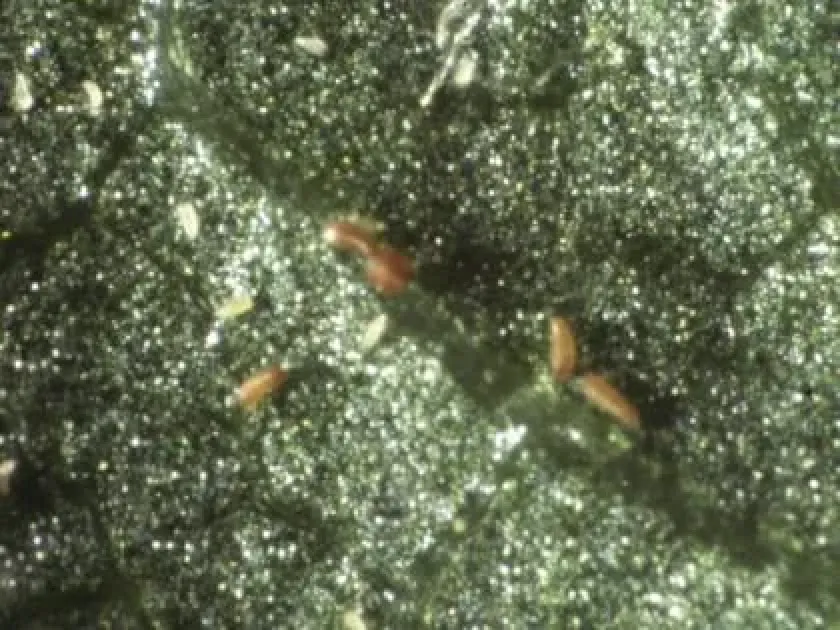
Description
How to identify
The apple rust mite (Aculus schlechtendali) is a microscopic pest belonging to the Eriophyidae family. It is characterized by a tiny, elongated, worm-like body that is yellowish-brown in color.
Due to its extremely small size (approximately 0.15–0.20 mm), this mite is invisible to the naked eye. They primarily survive the winter as adult females hidden within leaf buds or bark crevices.
As temperatures rise in the spring, these mites migrate to the newly unfolding leaves. Their life cycle is rapid, especially during warm, dry summer months, allowing multiple generations to occur.
The reproduction rate of this mite is highly dependent on environmental conditions, with populations peaking in mid-summer when the climate is most favorable for their development.
Dispersal within an orchard occurs primarily through wind currents or by attaching to insects, birds, and even through the movement of pruning tools or contaminated nursery stock.
What it damages
This mite exclusively feeds on the epidermal cells of apple leaves and fruits. By piercing the plant cells, they extract nutrients and cause significant stress to the host tree.
Feeding activity on the leaves results in a characteristic bronzing or russeting appearance. This damage impairs the tree's photosynthetic capability, reducing its overall vitality.
On fruits, the damage manifests as a dry, rough, or russeted skin texture. This significantly devalues the produce and makes it less suitable for fresh market consumption.
In cases of severe infestation, early leaf senescence and drop can occur, which weakens the tree's ability to store reserves for the following season and negatively impacts fruit bud formation.
The cumulative effect of mite feeding can lead to reduced fruit size and lower sugar content, affecting the orchard's overall profitability and production stability.
Signs of infestation
The most visible symptom of an infestation is the discoloration of leaves, which turn from a healthy green to a dull bronze, brown, or distinct "rusty" color.
Leaves may exhibit curling or cupping along the midrib. The texture of the foliage often becomes leathery and brittle to the touch as a defensive response to the pest feeding.
Fruit damage is characterized by a network of fine cracks or a brown, scaly appearance on the skin, which is often mistaken for environmental russeting by untrained eyes.
Stunted growth of new shoots is another indicator. When mite colonies concentrate on the terminal buds, they inhibit the healthy elongation and expansion of the young leaves.
Microscopic examination of the undersides of the leaves reveals the presence of numerous mites and their translucent eggs clustered along the veins of the leaf.
Control measures
Integrated Pest Management (IPM) is essential for controlling the apple rust mite. Monitoring population levels through leaf samples is crucial before deciding on any chemical intervention.
Early spring treatments are particularly effective, as the mites are exposed and migrating from their overwintering sites toward the new foliage.
Biological control, using predatory mites like Typhlodromus pyri, is a highly effective long-term strategy that can maintain rust mite populations below economic damage thresholds.
Cultural practices, such as maintaining optimal irrigation and proper fertilization, help keep trees vigorous and more resilient against mite-induced stress.
- Apply specific acaricides when monitoring indicates populations exceeding economic thresholds.
- Use sulfur-based sprays early in the season as a preventative measure.
- Encourage natural predators by reducing the use of broad-spectrum insecticides.
- Ensure equipment is cleaned between orchard blocks to prevent accidental spread.
Content graph
Connections · Apple rust mite
Most often together:
Marketplace
Products · 2

Biology
Taxonomy
- Latin name
- Aculus schlechtendali
- Order
- Mites
- Family
- Eriophyidae
- EPPO code
- VASASD
Community
Discussion
No discussions yet — be the first.