

Description
How to identify
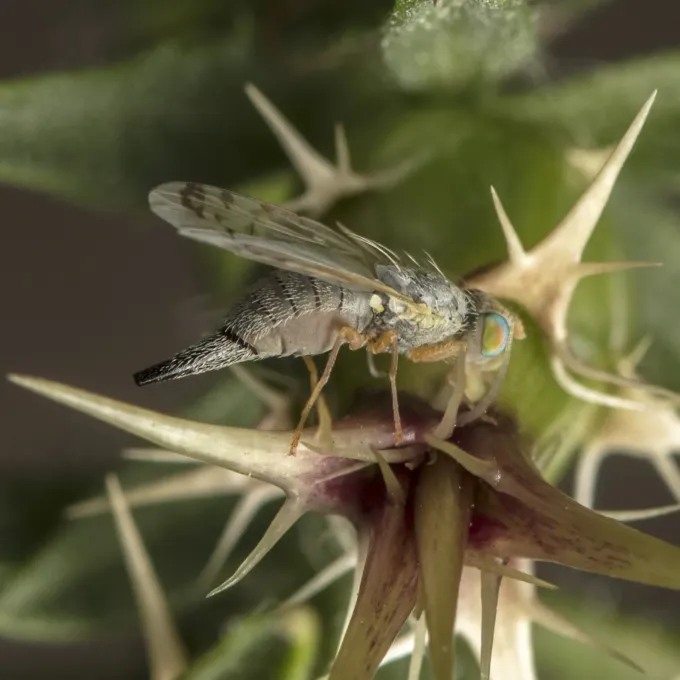
The safflower fly (Acanthiophilus helianthi) is a dipteran insect belonging to the Tephritidae family. The adult fly is relatively small, usually 3–5 mm in length, characterized by distinctively patterned wings with dark, reticulated markings.
The body coloration of the adult is typically yellowish-brown. The larvae are legless, whitish or yellowish in appearance, and reach about 6 mm in length at maturity. They are highly specialized to live within the flower heads of their host plants.
Pupation primarily occurs within the infested flower heads or sometimes in the soil. The pupae are brown and barrel-shaped, which provides a protective cover during the dormant winter period.
Reproduction is strictly synchronized with the phenology of the safflower plant. The female fly uses a specialized, long ovipositor to pierce the bracts of the buds and deposit eggs directly into the flower tissues.
The life cycle involves several stages: egg, three larval instars, pupa, and adult. Depending on the geographical region and climate, the species may complete several generations per season.
What it damages
The primary host for this pest is the safflower (Carthamus tinctorius). However, the fly can also infest other Asteraceae species, which serve as alternative reservoirs for the population throughout the growing season.
The larvae feed internally on the flower parts, specifically consuming the ovaries and developing seeds. This feeding behavior destroys the embryo, leading to significant yield losses and lower seed quality.
The damage often results in the deformity of the flower heads, preventing them from developing normally. Heavily infested heads often remain stunted or dry up prematurely, significantly reducing the oil content of the harvest.
Beyond direct feeding damage, the larvae create entry points for secondary infections. Various fungi and bacteria can enter the injured tissues, causing rot within the flower heads and further degrading the crop.
Economic damage is most severe in intensive production areas where the fly can proliferate quickly if natural control mechanisms are insufficient or absent.
Signs of infestation
The earliest signs of infestation are microscopic puncture marks on the outer bracts of the flower buds, caused by the females during the egg-laying process. These spots may darken over time.
Visually, affected flower heads often appear asymmetrical or stunted. In many cases, the flowers fail to open properly, or the head turns brown and withers before the seeds can reach maturity.
In the field, infested plants show non-uniform development. A significant reduction in the number of healthy, viable seeds in the harvested heads is a clear indicator of a past infestation.
Exits holes on the bracts of the flower heads are a definitive sign that the adult flies have emerged, marking the completion of the pest's cycle within that specific plant.
Opening a flower head during the blooming or seed-filling stage will reveal the presence of larvae or their frass, confirming the active infestation of the crop.
Control measures
The most effective management strategy is crop rotation, which breaks the pest's life cycle. Maintaining sufficient distance between current safflower fields and those used in previous years is essential to prevent migration.
Deep plowing after harvest is a vital cultural control measure, as it helps bury the pupae deep in the soil, effectively preventing adult emergence in the following season.
Chemical control should be timed to coincide with the bud-formation stage of the crop. Systemic or contact insecticides are most effective when applied before the eggs are laid inside the buds.
Monitoring using yellow sticky traps helps agronomists estimate the population density of the flies, allowing for precise application of pesticides only when necessary.
- Eliminate weeds from the Asteraceae family around the field borders.
- Choose planting dates that minimize the overlap between the most sensitive growth stage and peak fly activity.
- Ensure strict post-harvest sanitation to remove all potential overwintering sites.
Content graph
Connections · Safflower fly
Most often together:
Marketplace
Products · 1
Biology
Taxonomy
- Latin name
- Acanthiophilus helianthi
- Order
- Diptera (flies)
- Family
- Tephritidae
- EPPO code
- ACAIHE
Community
Discussion
No discussions yet — be the first.