
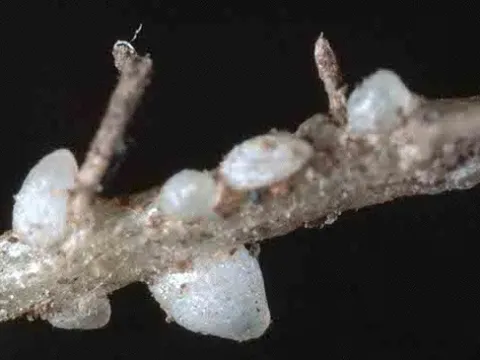
Cabbage cyst nematode
Heterodera cruciferae
The cabbage cyst nematode (Heterodera cruciferae) is a microscopic soil-borne parasite belonging to the family Heteroderidae. It is an obligate sedentary endoparasite that specifically targets plants within the Brassicaceae family.
What the section contains
Cabbage cyst nematode
The female nematode undergoes a metamorphosis where its body swells into a lemon-shaped cyst, which acts as a protective casing. These cysts turn from white to a deep brown color, housing hundreds of eggs capable of surviving in the soil for several years.
Males are vermiform (worm-shaped) and mobile, moving through the soil water film to find females for reproduction. Juveniles at the second stage are the primary infective forms that invade the root tissues of host plants.
The life cycle of Heterodera cruciferae is highly synchronized with the host plant's root development. Optimal development occurs in temperate climates, where soil moisture levels are conducive to larval movement toward root tips.
As a highly specialized pest, it can cause significant yield loss in intensive agricultural systems where host plants are grown frequently in the same soil, allowing the population density of cysts to spike.
This nematode causes severe damage to various cruciferous vegetables, including cabbage, cauliflower, broccoli, Brussels sprouts, and oilseed rape. By invading the roots, it disrupts the vascular system and prevents water and nutrient uptake.
The damage results in stunted plant growth, chlorosis (yellowing of leaves), and a drastic reduction in total yield. In many cases, the plants fail to develop marketable heads, rendering them worthless for commercial sale.
Heavily infested root systems often display a proliferation of lateral roots, a condition known as "root branching" or "root matting," which occurs as the plant attempts to compensate for the damage caused by the nematodes.
Secondary infections are common, as the lesions created by the nematode provide entry points for soil-borne fungi and bacteria, which lead to root rot and premature senescence of the crops.
The economic impact is particularly high in fields where soil conditions are ideal for the nematode and where monocropping has reduced the natural biological diversity of the soil, leaving the parasite unchecked.
Visible signs of infestation often appear as patches of uneven growth within a field. These areas usually spread over time if the nematode population is not managed through effective crop rotation practices.
Symptoms during the growing season include wilting, particularly during the hottest hours of the day, as the compromised root system cannot meet the transpiration demands of the plant foliage.
Close inspection of the roots will reveal the presence of small, lemon-shaped cysts, which can be seen with the naked eye as tiny brown dots. These cysts are most abundant on the secondary and tertiary roots of the host plant.
In addition to wilting, plants may show signs of premature aging, with lower leaves turning yellow and dropping off earlier than expected. The overall vigor of the crop is significantly lower compared to non-infested fields.
For definitive confirmation of the presence of Heterodera cruciferae, soil samples should be taken and analyzed in a diagnostic lab to count the number of viable cysts per unit of soil.
The most effective management strategy is a long-term crop rotation scheme, excluding host crops like cabbage and related Brassicaceae for a period of at least 4 to 6 years to allow the cyst population to naturally decline.
Weed management is critical, as many common cruciferous weeds act as alternative hosts that keep the nematode population alive between main crop seasons. Fields must be kept free of these weeds.
The use of trap crops, which stimulate nematode hatching without allowing successful reproduction, can be an effective biological control method to deplete the seed bank of cysts in the soil.
Chemical control involving soil fumigation or the application of nematicides may be used in high-value vegetable production, but such treatments are expensive and must be managed according to strict environmental regulations.
- Strict sanitation protocols for farm machinery to prevent the transfer of infested soil between fields.
- Use of certified pathogen-free seedlings to avoid introducing the nematode into new areas.
- Regular soil testing and monitoring of crop performance to catch infestations before they become unmanageable.