
Cereal root-knot nematode
Meloidogyne artiellia
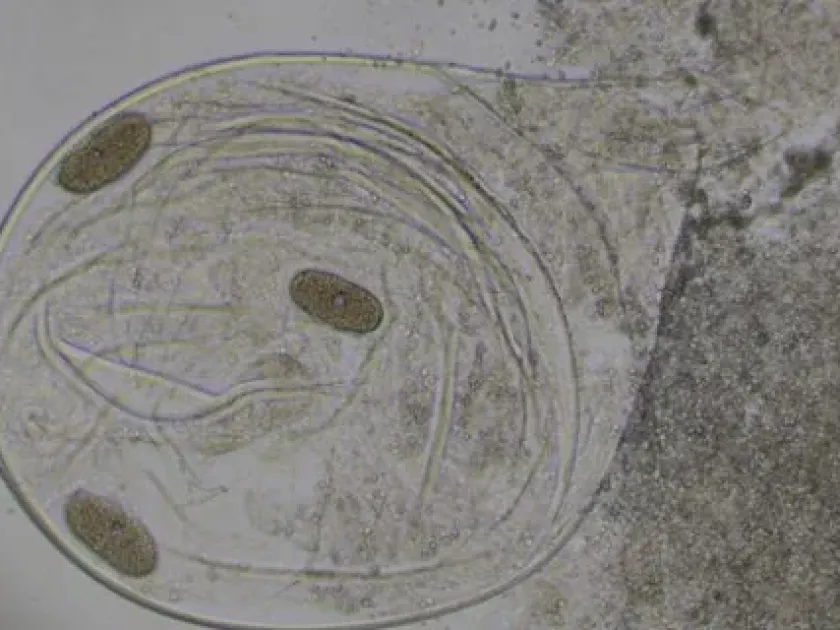
Description
How to identify
The cereal root-knot nematode (Meloidogyne artiellia) is a microscopic, soil-borne plant-parasitic worm within the family Meloidogynidae. It is a highly specialized endoparasite that primarily targets cereals and legumes, causing significant disruption to root function.
Taxonomically, it belongs to the Phylum Nematoda. Unlike other species that have a wide host range, Meloidogyne artiellia has adapted specifically to the conditions provided by crops like wheat, barley, and chickpeas, making it a persistent threat.
The life cycle involves an egg stage, four larval stages, and a sedentary adult stage. The second-stage juveniles (J2) are the primary infectious agents, using their stylets to penetrate the root tissue and navigate through the cortex to reach the vascular cylinder.
Once settled, the nematode induces the formation of giant cells, which serve as its exclusive nutrient source. This physiological manipulation results in the characteristic root-knot formation that gives the genus its name.
Adult females are sedentary, pear-shaped, and often extrude egg masses onto the root surface, while the males remain slender and motile to seek out females for reproduction, completing the cycle within a few weeks under favorable conditions.
What it damages
Meloidogyne artiellia causes extensive damage by weakening the root system. By stealing nutrients intended for the plant's development, the nematode restricts the plant's growth, leading to stunted stems and poor vegetative development.
The vascular damage prevents the efficient transport of water and nutrients from the soil to the shoots. In cereal crops, this leads to reduced tillering, lower grain filling, and a drastic decline in overall biomass production.
Plants infested by this nematode show symptoms of stress, often resembling drought damage because the roots cannot supply enough moisture to the plant, even when soil water content is adequate.
The physical trauma to the root system created by the knots also provides an entry point for secondary bacterial and fungal infections, which can exacerbate root rot and accelerate the collapse of the plant population in infested areas.
Economic losses are cumulative. On heavily infested fields, yield loss can be substantial, often resulting in patchy crop growth that significantly lowers the net harvestable weight and grain quality.
When it appears
The nematode's activity is closely linked to soil temperature. Juvenile emergence typically occurs in spring when soil temperatures reach +10°C to +12°C, marking the start of the primary infection period for winter-sown cereals.
As the season progresses and the crop develops, the nematode population grows through successive generations. The speed of the cycle is directly dependent on environmental factors, particularly moisture levels in the soil.
Peak infection periods usually align with the rapid growth phases of the host plant. The nematodes are most aggressive during the tillering and stem elongation stages, when the plant is investing energy into root expansion.
At the end of the crop season, as the host plant begins to senesce, the nematode produces eggs that can survive in the soil or root residues. These eggs enter a dormant phase, waiting for the appropriate cues to hatch in the following season.
Long-distance dispersal is primarily human-aided. Soil adhering to machinery, tools, and even footwear can carry cysts and eggs to uninfested fields, which is why strict sanitation is essential for managing the spread.
Signs of infestation
The most diagnostic feature of Meloidogyne artiellia infestation is the development of small but numerous knots or galls on the roots. These growths are a direct consequence of the nematode's parasitic activity inside the root cortex.
- Poor crop establishment and patches of stunted plants across the field.
- Yellowing of leaves, indicating chlorosis and nutrient deficiency.
- Increased sensitivity to environmental stress and rapid wilting in hot, dry conditions.
- Deformed or highly branched root systems lacking normal elongation.
- The presence of pear-shaped, translucent female nematodes within the root knots.
Field inspection requires uprooting suspected plants and washing the soil carefully from the roots to identify the galls. A magnifying lens may be needed to clearly see the small knots and the adult females embedded within them.
Control measures
The primary management strategy is crop rotation. By alternating cereals with non-host crops, farmers can starve the nematode population, reducing the density of J2 juveniles in the soil over several growing seasons.
Tillage practices, such as deep plowing, can help disrupt the life cycle by burying infested crop residues and larvae, making it harder for the nematodes to locate host roots in the upper soil layers.
The use of certified, clean seed and resistant cultivars is crucial. Choosing varieties that have been bred for resistance or tolerance to Meloidogyne artiellia is often the most cost-effective long-term solution for farmers.
Sanitation measures, including cleaning machinery and equipment between fields, are essential to prevent the introduction of this pest to clean land, as the nematode can persist for years in the soil once established.
Chemical control via nematicides is generally reserved for high-value areas or severe infestations. It is important to note that these treatments must be applied correctly to be effective, given the difficulty of soil penetration.
Causes diseases · 1
Discussion
No discussions yet — be the first.