
Cereal cyst nematode (root-gall)
Subanguina radicicola
Description
How to identify
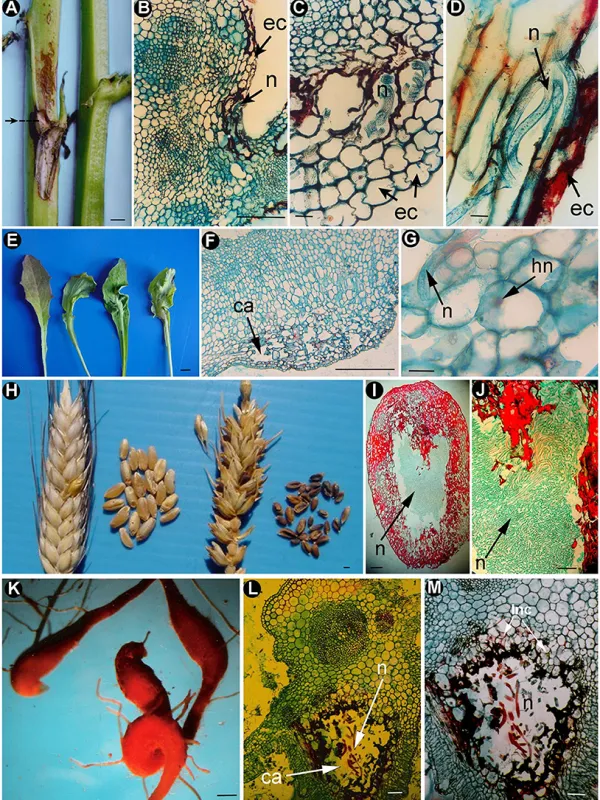
Subanguina radicicola is a plant-parasitic nematode that belongs to the family Anguinidae. It is recognized as a specific pathogen that induces the formation of galls on the roots of various grasses and cereal crops, significantly impacting root functionality.
The life cycle begins when second-stage juveniles penetrate the root tissues. Within the roots, the nematodes induce physiological changes in plant cells, leading to the development of characteristic galls. These galls serve as a protective feeding site for the developing larvae.
Adult nematodes are microscopic and worm-like, adapted for mobility within the soil and root tissues. The survival of this pathogen in the absence of a host is facilitated by its ability to enter an anhydrobiotic state, allowing it to persist in soil for several years.
Dissemination typically occurs through the movement of infested soil attached to farm machinery, contaminated water, or the use of infected seedlings. The nematode thrives in cool and moderately moist environments, which are typical for early spring development of cereals.
Accurate identification of Subanguina radicicola requires laboratory analysis, as it can be easily confused with other root-gall forming organisms. Understanding its life cycle and ecological requirements is essential for effective agricultural management.
What it damages
The host range of the cereal root-gall nematode includes major cereals like wheat, barley, rye, and oats, as well as various wild grass species. These wild grasses often act as reservoirs, maintaining nematode populations in fields when crops are rotated.
Damage occurs primarily through the obstruction of the root system, which disrupts the plant's uptake of water and essential nutrients. This systemic impairment leads to stunted growth, reduced biomass, and overall poor plant vigor throughout the growing season.
Yield losses result from decreased tiller formation and reduced grain quality. In cases of high soil infestation, the reduction in crop stand density can be severe, directly impacting the profitability of the grain production enterprise.
Secondary infections are a frequent consequence of nematode damage. The wounds created by nematode penetration provide easy entry points for soil-borne pathogens, including fungi and bacteria, leading to the development of complex root rot diseases.
Economic damage is most significant in continuous cereal cropping systems where the nematode population can reach high densities over time. Managing this pest is crucial for maintaining sustainable productivity in cereal-growing regions.
Signs of infestation
The most distinctive sign of infestation is the presence of visible, spherical or elongated galls on the roots. These swellings are the direct result of nematode feeding and can be seen upon careful examination of the root system.
Above-ground symptoms often mimic nutrient deficiency or drought stress. Infested plants typically exhibit chlorosis, stunted height, and a generally sickly appearance. These plants fail to thrive even under adequate moisture and fertility conditions.
Fields infested with the nematode show patchy, uneven growth. The patches of stunted plants are often clearly visible during the tillering stage, indicating localized high concentrations of the nematode in the soil profile.
Under stressful conditions, such as dry spells, infested plants are the first to wilt. Their compromised root systems are unable to sustain the plant's water demands, leading to premature leaf senescence and potentially crop failure in heavily affected areas.
Diagnosis should always involve professional phytosanitary evaluation. Extracting nematodes from soil samples and root tissues allows for the quantification of population densities, which is necessary to determine the appropriate response.
Control measures
Crop rotation is the most effective cultural control measure. By avoiding cereal hosts for several years, farmers can significantly deplete the nematode population in the soil, as these pests cannot survive indefinitely without a suitable host.
Effective weed management is essential to prevent wild grasses from maintaining the pathogen population. Deep tillage and plowing can also help to disrupt the soil environment, making it less favorable for the survival and dispersal of the nematode.
Utilizing clean, certified seed is a fundamental practice to prevent the introduction of nematodes into new fields. Furthermore, optimizing planting dates allows crops to establish robust root systems before peak nematode activity occurs.
Balanced fertilization and soil management support overall plant health, allowing the crop to compensate for root damage. A vigorous plant can better withstand the stress caused by moderate nematode infestations compared to a stressed crop.
Chemical control options are generally limited due to high costs and environmental regulations. Consequently, an integrated approach focusing on crop rotation, sanitation, and soil health management remains the standard for controlling cereal root-gall nematodes.
Causes diseases · 1
Discussion
No discussions yet — be the first.