
Beet cyst nematode
Heterodera schachtii
Description
How to identify
The beet cyst nematode Heterodera schachtii is a microscopic soil-borne parasite classified within the family Heteroderidae. It is one of the most economically significant pests affecting sugar beet crops globally.
The life cycle involves a cyst stage, where the female's body hardens into a protective, lemon-shaped casing. These cysts contain eggs and juveniles, allowing the pathogen to survive for many years in the absence of a host crop.
When environmental conditions are favorable, particularly in the presence of root exudates from host plants, the juveniles emerge from the cysts to infect new roots.
Inside the host root, the parasite induces the formation of specialized "syncytial" cells, which serve as a continuous nutrient source for the developing nematode.
Identification typically requires laboratory analysis, as the symptoms caused by the nematode are often mistaken for nutrient deficiencies or other root-damaging pathogens.
What it damages
Sugar beet, fodder beet, and red beet are the primary hosts for Heterodera schachtii. It also affects other species within the Chenopodiaceae family, such as spinach.
Weeds like common lambsquarters and various cruciferous species can also serve as alternative hosts, helping to sustain nematode populations in the soil between cropping seasons.
Damage to the vascular system of the root hinders the uptake of water and nutrients, leading to stunted growth, wilting, and poor development of the storage root.
The presence of these nematodes significantly reduces sugar accumulation, resulting in lower processing quality and lower economic value of the sugar beet harvest.
High infestation levels in fields can cause severe yield losses, sometimes making it impossible to grow sugar beet profitably without implementing strict management practices.
When it appears
The nematode becomes active in the spring when soil temperatures rise above 8–10 degrees Celsius, which aligns with the planting and germination period of sugar beets.
Under optimal conditions, with moderate moisture and temperatures between 20–25 degrees Celsius, the nematode can complete several generations within a single growing season.
As the sugar beet matures, females remain attached to the roots, eventually becoming cysts, which protects the population through the winter or during periods of unfavorable conditions.
Dissemination occurs primarily through the movement of infested soil attached to farm machinery, boots, and tools, as well as through water runoff or wind erosion.
Long-term survival is ensured by the cysts, which can remain viable in the soil for up to a decade, making rotation a critical component of pest management.
Signs of infestation
Symptoms often appear as patches of stunted, yellowing plants in the field. These patches may spread over time if the soil is not managed correctly.
Plants infested with Heterodera schachtii often exhibit "hairy root" syndrome, where the plant produces a dense mass of lateral roots in an attempt to compensate for the damaged primary root.
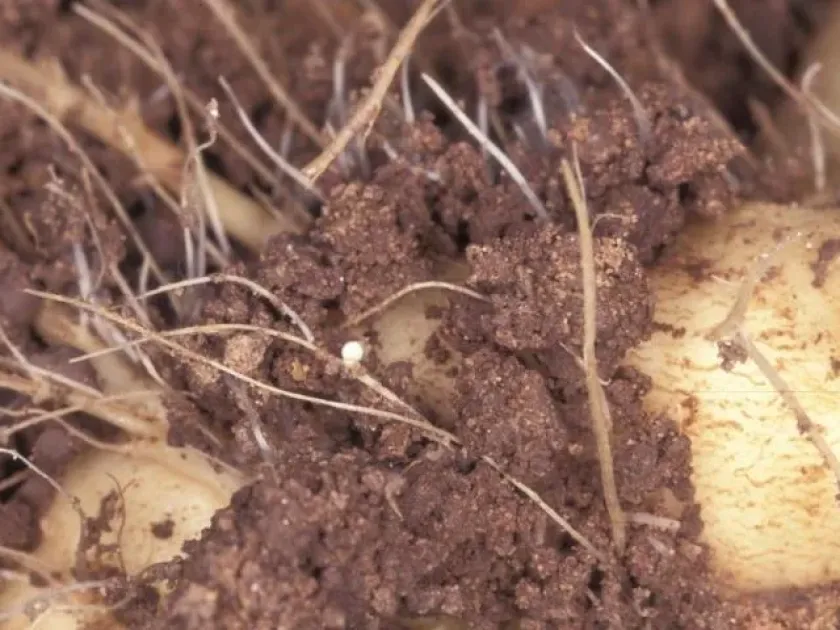
During the growing season, small, lemon-shaped white or yellow females can be seen attached to the root surfaces upon careful excavation of the soil.
Visible wilting during warm, dry periods is a hallmark of an compromised root system unable to supply enough water to the foliage.
- Stunted plant growth and development.
- Premature yellowing and senescence of lower leaves.
- Excessive branching of the taproot.
- Significant yield reduction in patches.
Control measures
Crop rotation is the most effective management strategy; planting non-host crops like cereals for several years can significantly reduce soil nematode populations.
Strict sanitation measures, such as cleaning equipment before moving from infested fields to clean ones, are essential to prevent the spread of cysts.
Using resistant or tolerant beet varieties can help maintain productivity and suppress nematode population growth in infested soil.
Integrated pest management should include weed control in non-cropping periods to eliminate alternative hosts that provide food for the nematodes.
Biological treatments and specific green manures (like nematode-resistant oil radish) are increasingly used to suppress nematode activity and improve overall soil health.
Causes diseases · 1
Discussion
No discussions yet — be the first.