
Zygophiala jamaicensis
Zygophiala jamaicensis
Zygophiala jamaicensis is a microscopic filamentous fungus belonging to the order Capnodiales, within the family Schizothyriaceae. It is one of the primary pathogens associated with the complex of fungi causing the so-called flyspeck disease in fruit crops.
What the section contains
Zygophiala jamaicensis
The fungus is characterized by its epiphytic growth habit, primarily colonizing the waxy cuticle of the host's fruit surface. It forms superficial colonies that do not penetrate deep into the fruit pulp, yet result in significant economic damage.
The taxonomic status of the fungus is well-defined, and it is frequently identified in studies of superficial blemish diseases of apples and pears. Its life cycle involves both asexual reproduction through conidia and potential sexual stages on decaying organic matter.
The fungus relies on humidity and high moisture levels to maintain its growth. It is often found growing in association with other fungi, creating a complex community on the surface of apple skins that is sometimes referred to as the flyspeck-sooty blotch complex.
Identification typically involves microscopic examination of the fungal structures, specifically the conidiophores and conidia, which exhibit distinct morphological traits characteristic of the Zygophiala genus.
The primary impact of Zygophiala jamaicensis is the reduction of fruit aesthetic quality. While it does not induce decay, rot, or structural damage to the fruit, it leaves numerous black dots on the skin, significantly reducing the market grade of the product.
Fruits infected with this pathogen are often rejected for fresh market sales, particularly in premium segments. This leads to substantial financial losses for growers, especially in high-density commercial orchards where cosmetic quality is highly valued.
In addition to the flyspeck dots, the fungal infection can contribute to a dull or clouded appearance of the fruit skin. This diminishes the natural luster of the fruit, further impacting its appeal to consumers.
The pathogen is particularly detrimental in regions with high seasonal rainfall. It can spread across entire blocks of an orchard, making effective sanitation and control critical for maintaining profitable production levels.
While the internal health of the fruit remains largely unaffected, the superficial damage serves as a pathway for potential secondary pathogens to colonize the surface, especially during long-term cold storage.
The disease development is highly seasonal, peaking during the summer and early autumn. The fungus requires specific environmental conditions to thrive, particularly periods of high humidity and moderate temperatures.
Initial infections usually begin mid-summer, when the fruits are expanding. Rain splashes act as the primary vector, moving conidia from reservoir sites on tree branches and foliage onto the developing fruits.
The fungus overwinters as mycelium on the bark of twigs and on fallen leaves. As temperatures rise in the spring, the fungus reactivates and begins the cycle of spreading to new leaves and subsequently to fruits.
The critical window for infection occurs when moisture remains on the fruit surface for extended periods, such as during dew or frequent rainfall. Lack of airflow in the canopy significantly increases the risk of successful colonization by the fungus.
Conversely, dry and hot conditions inhibit the development of Zygophiala jamaicensis, as the fungus is susceptible to desiccation and requires a consistent moisture film to survive on the skin.
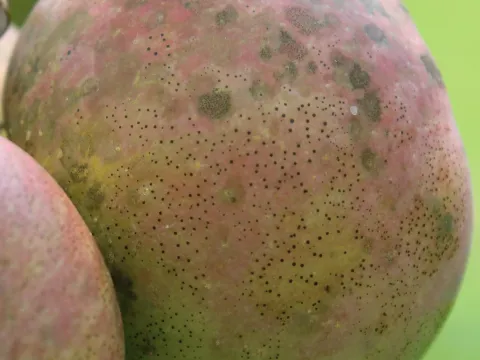
The most diagnostic sign of the disease is the presence of small, dark brown or black clusters of fungal colonies on the skin of the fruit. These dots resemble fly feces, hence the common name "flyspeck".
The fungal colonies are typically round and measure about 0.5 to 1.0 mm in diameter. They are firmly attached to the cuticle and cannot be easily removed by simple washing or brushing.
Fine, thread-like mycelial strands often connect the individual dark spots, forming a network across the fruit surface. This network may be visible under magnification and provides a key indicator for field diagnosis.
In some cases, the colonies may be scattered across the fruit skin or grouped into larger, localized patches. There is no surrounding necrosis or halo effect, which helps distinguish it from other fruit-spotting diseases.
While the fruit flesh remains intact, the visual presence of these colonies is highly uniform, and once established, they persist until the fruit is harvested or processed.
Cultural management is the cornerstone of control. Proper orchard sanitation, such as removing fallen leaves and pruning trees to improve canopy airflow, helps dry the fruit surface faster, which inhibits fungal growth.
Chemical control involving the use of fungicides is often necessary in areas with high disease pressure. Preventive applications during the growing season help create a protective barrier on the fruit surface.
Choosing the correct timing for fungicide applications is essential, especially when weather forecasts predict extended periods of high humidity. Regular monitoring of the orchard is necessary to adjust the protection schedule.
Integrated Pest Management (IPM) strategies, including the use of both biological and synthetic agents, can minimize the reliance on chemical pesticides while maintaining high fruit quality.
Continuous education on the disease cycle and early detection methods remains the most effective approach for orchardists to mitigate the risk posed by Zygophiala jamaicensis in their production systems.