
Anther smut
Ustilago violacea
Description
How to identify
The causative agent of the disease is the fungus Ustilago violacea (synonym Microbotryum violaceum), belonging to the order Microbotryales and class Microbotryomycetes. It is a basidiomycete fungus that specifically infects plants of the Caryophyllaceae family.
This pathogen is an obligate systemic parasite. Its mycelium spreads systemically within the host tissues, colonizing growing points and reproductive organs, which ensures its survival throughout the entire growing season.
The life cycle of the fungus is closely linked to the plant's reproductive system. During development, the fungus replaces the pollen in the flower anthers with a mass of its teliospores, effectively transforming the reproductive organ into an inoculum source.
The teliospores of the fungus are characterized by a distinct violet or dark brown color, from which the name of the disease is derived. They serve as the primary means of spreading the infection throughout crops and plantings.
Under a microscope, the spores exhibit a finely echinulate surface. In favorable conditions, they germinate to form basidia with basidiospores, which can conjugate and initiate infections on healthy host plants.
What it damages
The primary hosts are wild and ornamental species of the Caryophyllaceae family, including garden pinks (Dianthus caryophyllus), maiden pinks (Dianthus deltoides), and other members of the Dianthus genus.
The pathogen severely affects the reproductive organs. By replacing healthy pollen with fungal spore masses within the anthers, it renders the affected flowers completely sterile.
The economic impact is significant in breeding and seed production, as infected plants cannot produce viable seeds. This poses a major challenge for commercial nurseries and ornamental plant growers.
Infected plants often display altered growth patterns. They may exhibit changes in floral sex expression or morphological deformities, which drastically reduce the aesthetic and commercial value of the crop.
Systemic infection leads to a general decline in plant vigor. While the fungus may not kill the plant immediately, it renders it biologically deficient, eliminating its ability to reproduce naturally and weakening its resilience.
Signs of infestation
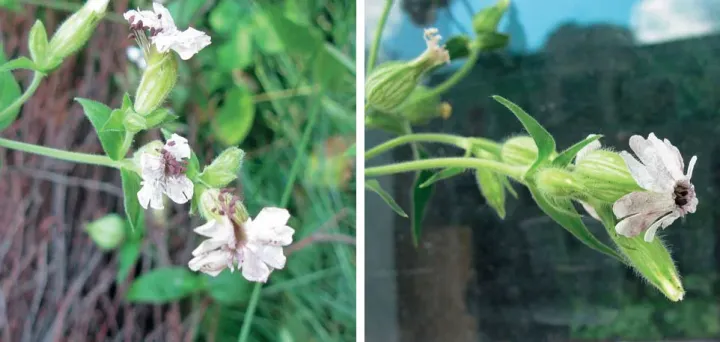
The most prominent symptom is the presence of a violet, powdery mass inside the flower anthers. When the anthers open, instead of yellow pollen, a dark violet spore mass is released.
Externally, infected flowers may appear slightly deformed or stunted. Occasionally, premature dehiscence of anthers can occur, making the fungal spores visible even before the flower fully opens.
Spore dispersal is primarily mediated by wind and insect pollinators. Insects visiting infected flowers become contaminated with spores and subsequently transfer them to healthy plants, facilitating cross-infection.
Infection often remains latent until the flowering stage. The presence of the fungus only becomes apparent during the development of anthers, which makes early diagnosis during the vegetative growth phase difficult.
In severe cases, infected flower stalks may appear stunted, and the total number of flowers per plant decreases, serving as a secondary indicator of systemic pathogen invasion.
Control measures
The primary control measure involves the systematic roguing and destruction of diseased plants as soon as symptoms are detected. Infected individuals should be removed with roots and incinerated.
Implementing crop rotation and maintaining spatial isolation between healthy and potentially infected plantings is recommended. This helps mitigate the risk of spore transmission by insect vectors.
While systemic fungicides applied early in the season may provide some suppression, curing a systemically infected plant is difficult, making preventative measures the priority.
Using disease-free seed stock is crucial. Seeds must be sourced from certified pathogen-free nurseries or treated with appropriate disinfection protocols to prevent initial infestation.
- Regular phytosanitary monitoring of the nursery stock.
- Elimination of wild Caryophyllaceae weeds that may serve as reservoirs for the pathogen.
- Disinfection of horticultural tools after contact with infected material to prevent mechanical spread.
Causes diseases · 2
Discussion
No discussions yet — be the first.