
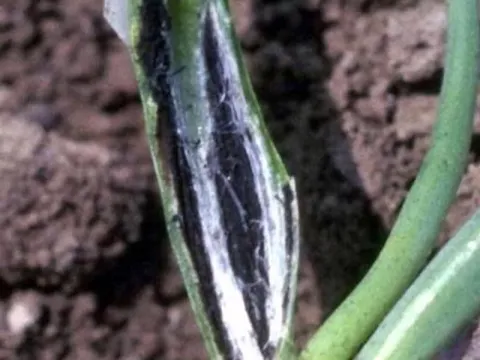
Urocystis colchici
Urocystis colchici
Urocystis colchici is a highly specialized fungal pathogen belonging to the order Ustilaginales, commonly known as smut fungi. This microscopic organism is an obligate parasite, meaning its entire life cycle is strictly dependent on the living tissues of specific host plants.
What the section contains
Urocystis colchici
Systematically, this fungus is classified under the kingdom Fungi, phylum Basidiomycota. The life cycle revolves around teliospores, which form dense clusters encased by sterile cells. These protective structures are essential for the survival of the pathogen in harsh environmental conditions.
The fungus persists in the soil via dormant spores found on crop residues and can also be disseminated through infested planting stock. The extreme durability of these spores against desiccation and freezing temperatures makes the eradication of this pathogen a significant challenge for agricultural management.
The biological cycle begins when teliospores germinate under favorable temperature and moisture conditions, producing a basidium with basidiospores. These spores subsequently infect the tender tissues of young shoots or bulbs, penetrating through the epidermis of the host plant.
As the infection progresses, the fungal mycelium spreads throughout the intercellular spaces of the host, absorbing essential nutrients. Eventually, the mycelium differentiates into masses of new teliospores, which rupture the host tissue, preparing for the next cycle of infection and dispersal.
##damage##The primary hosts for this fungus are members of the Liliaceae family. It poses a specific threat to various species of Colchicum (autumn crocus) and a selection of other ornamental bulbous crops grown in residential and commercial settings.
The parasite targets subterranean organs, particularly bulbs, as well as the base of stems and developing foliage. The disruption of normal physiological functions prevents the plant from achieving healthy growth, resulting in diminished aesthetic value and impaired blooming capacity.
Infection in bulbs often leads to internal rot, which renders the planting material useless. For professional nurseries, this results in significant financial losses, as the compromised quality of the bulbs makes them unsuitable for retail or further propagation.
On a larger scale, this pathogen can lead to reduced plant density in fields, necessitating the complete removal of infected areas. Since the fungus accumulates in the soil with every subsequent planting of susceptible crops, the damage tends to become more severe over time.
Due to the narrow host range of Urocystis colchici, the most substantial losses occur in monoculture systems, where the fungus consistently finds the host tissue necessary for its continued reproduction and spread.
The disease is visually characterized by the appearance of dark, lead-gray to black elongated stripes or pustules on the leaves and stems. These pustules represent dense masses of fungal spores that have broken through the plant's epidermis.
As the infection advances, these stripes may coalesce, causing significant distortion and curling of the leaves. The affected tissue becomes brittle and develops fissures, releasing the characteristic black, soot-like powder of the fungal spores.
In bulbs, symptoms can manifest as darkening of the outer scales or the presence of distinct spots hidden beneath the surface layers. With high levels of infection, the internal structure of the bulb loses its integrity, becoming soft and prone to rapid decay.
Initial symptoms might be subtle, but a careful examination of the planting material usually reveals irregularities in the bulb's surface and integrity. Premature yellowing and dying back of the foliage from the tips downward is a typical indicator that the plant is struggling with the infection.
The presence of these characteristic black spore-filled pustules is the definitive diagnostic sign, distinguishing an infection by Urocystis colchici from physiological issues or other plant diseases.
The cornerstone of control is the strict implementation of crop rotation, avoiding the planting of susceptible Liliaceae species on affected sites for at least 3 to 5 years. This practice allows the spore population in the soil to decline naturally over time.
Using only certified, healthy planting material is a critical preventative measure. Implementing rigorous phytosanitary inspections before storing bulbs is essential to identify and discard any potentially infected specimens early in the process.
Pre-planting treatment of bulbs with systemic fungicides is an effective management strategy. It is essential to select products that are specifically labeled and recommended for controlling smut diseases in bulbous plants.
Meticulous removal and destruction of all infected plant residues at the end of the growing season is mandatory. Burning the debris is the safest way to ensure that the fungal spores are neutralized and cannot re-infect the soil in the following season.
Optimizing growing conditions, such as ensuring proper soil drainage and avoiding overcrowding, enhances the overall resistance of the plants. Proper moisture management and good aeration significantly limit the pathogen's ability to thrive and spread throughout the planting site.