
Uromyces silphii
Uromyces silphii
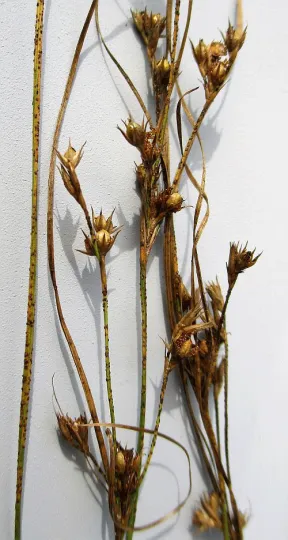
Description
How to identify
Uromyces silphii is an obligate parasitic fungus within the order Pucciniales, commonly recognized as a causal agent of rust diseases in specific plant species.
Taxonomically, it belongs to the family Pucciniaceae, which includes many significant pathogens that cause major economic losses in agricultural crops worldwide.
The fungus is highly specialized, primarily affecting members of the Silphium genus, relying on the host plant for all its nutritional needs throughout its lifecycle.
Identifying the pathogen typically requires a microscopic analysis of the characteristic pustules and spore structures formed on the host plant's epidermis.
It is a hetereoecious rust, meaning its life cycle involves complex stages that often require different environmental conditions for full progression and sporulation.
What it damages
The primary impact of Uromyces silphii is the depletion of the host plant's physiological resources, directly diverting nutrients away from plant growth and biomass production.
The infection leads to the disruption of the photosynthetic process, as the fungal growth damages the cellular structure of leaves and stems.
In silphium cultivation, severe outbreaks cause premature leaf senescence and a significant reduction in the quality and quantity of harvested forage.
Chronic infections weaken the plant's structural integrity and its ability to store necessary carbohydrates for dormancy and survival through winter.
Economic damage is exacerbated when the infection spreads rapidly across high-density stands, leading to decreased field yield and profitability for farmers.
When it appears
The development of Uromyces silphii is heavily dependent on favorable environmental factors, particularly high relative humidity and moderate temperatures.
Initial infection often begins in the early growing season when spores from previous seasons become airborne and settle on susceptible host tissue.
Active sporulation occurs throughout the summer, with repeated infection cycles occurring as long as moisture is present on the leaves for spore germination.
Autumn brings the formation of teliospores, which are the resting stages designed to endure cold winter temperatures before restarting the cycle in spring.
Dense canopy cover and poor air circulation in the field contribute to an increased risk of infection, providing a conducive microclimate for the pathogen.
Signs of infestation
The most visible sign of infection is the emergence of small, rust-colored or yellow pustules appearing predominantly on the underside of leaves.
These pustules eventually rupture the leaf epidermis, releasing a dusty cloud of spores that can be spread easily by wind and rain droplets.
As the disease progresses, leaves display generalized chlorosis (yellowing), wilting, and eventual necrosis as the leaf tissues die off.
Stem infections can cause localized lesions, which may lead to twisting or stunted growth of the plant parts above the infection site.
- Rust-colored or yellow pustule formation on leaves.
- Visible dusty spore mass release upon physical disturbance.
- Premature yellowing and leaf shedding throughout the stand.
Control measures
Cultural control practices, such as the complete removal and destruction of crop residues post-harvest, are essential to break the survival cycle of the pathogen.
Maintaining proper field hygiene and implementing rotation schedules help to lower the inoculum pressure in regions where the fungus is endemic.
The selection of resistant plant varieties is the most sustainable and recommended long-term strategy for managing rust diseases in field crops.
When necessary, the targeted application of systemic fungicides during the early stages of disease development can help mitigate widespread infection.
Regular field scouting is vital to monitor for early signs of rust, allowing for timely intervention and minimizing the need for extensive chemical treatments.
Causes diseases · 1
Discussion
No discussions yet — be the first.