
Description
Symptoms
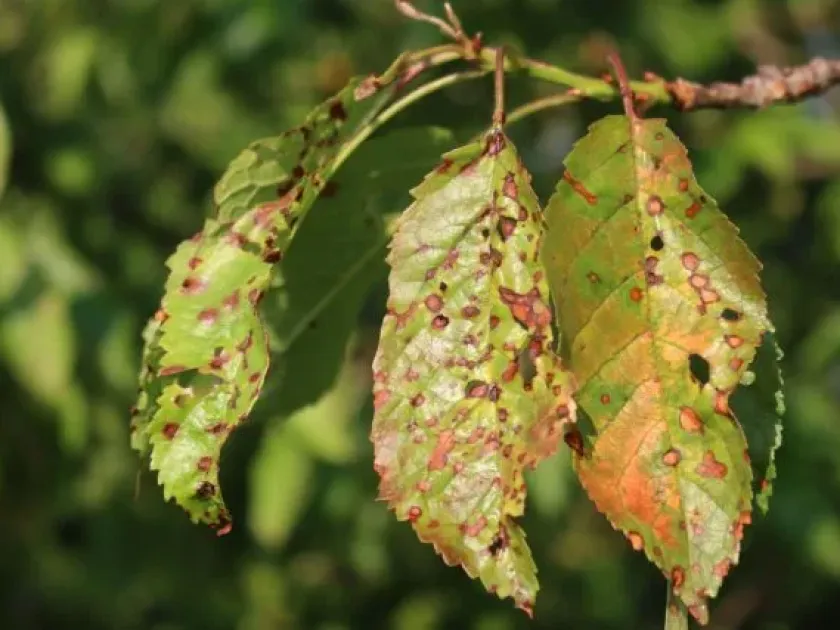
The first symptoms of stone fruit rust appear on the upper surface of leaves as small, pale green or yellow-colored chlorotic spots. These spots are often initially overlooked but become more distinct over time.
As the disease progresses, corresponding pustules form on the underside of the leaf directly beneath the spots. These pustules are filled with reddish-brown or rust-colored spores, which give the disease its common name.
A hallmark of severe infection is premature defoliation. Affected trees may begin to drop their leaves as early as mid-to-late summer, significantly reducing the tree's photosynthetic capacity before the onset of dormancy.
While the disease primarily targets foliage, severe infestations can also affect fruit and succulent shoots. On fruit, it manifests as small, dark, depressed spots that diminish the aesthetic appeal and market value of the harvest.
Microscopic examination of the pustules reveals characteristic spores, which are essential for confirming the diagnosis of Tranzschelia discolor, distinguishing it from other leaf spot diseases affecting stone fruits.
Pathogen
The causal agent of this disease is the fungus Tranzschelia discolor, which belongs to the Basidiomycota phylum. This pathogen has a complex life cycle, involving both sexual and asexual stages, allowing it to survive efficiently in various environmental conditions.
This fungus is known to infect a wide variety of Prunus species. Susceptible crops include peaches, plums, apricots, nectarines, cherries, and almonds, making it a significant challenge for stone fruit producers globally.
The fungus overwinters primarily in the form of teliospores found on fallen leaves. As temperatures rise in spring, these spores germinate and release basidiospores, which act as the primary inoculum for new infections.
Disease progression is heavily dependent on moisture. High humidity, warm temperatures, and frequent rainfall during the summer months create an ideal microclimate for the rapid production and dispersal of urediniospores.
Once the primary infection is established, the fungus produces large quantities of spores that can be carried by wind and splashing rain to healthy foliage, leading to secondary cycles of infection throughout the growing season.
Why it matters
The primary damage caused by stone fruit rust is the premature loss of foliage, which deprives the tree of its ability to produce carbohydrates. This leads to a significant depletion of energy reserves needed for winter survival.
Trees affected by severe rust often exhibit reduced cold hardiness. They are more likely to suffer from winter injury, leading to branch dieback or, in extreme cases, the total death of the tree during harsh winter conditions.
Reduced vigor directly impacts the following year's crop yield. Trees stressed by the disease produce fewer fruit buds and show lower overall productivity, making the management of the disease vital for sustainable orchards.
For fruit growers, the economic impact is compounded by lower fruit quality. Deformed, spotted, or prematurely ripened fruit often fails to meet market standards, leading to direct financial losses.
In nursery settings, stone fruit rust is particularly damaging. Young trees that lose their leaves prematurely fail to harden off properly, resulting in high mortality rates during storage or upon transplanting.
Protection
Sanitation is the cornerstone of rust management. Since the fungus overwinters on fallen foliage, raking and burning or burying leaves after leaf fall is essential to significantly reduce the primary inoculum for the next spring.
Fungicide applications are highly effective when timed correctly. Protective sprays using copper-based products or systemic fungicides from the triazole group should be applied during the early stages of disease development.
Proper orchard management includes maintaining adequate spacing between trees to improve airflow and reduce the humidity levels that the fungus requires to propagate. Keeping the canopy open through proper pruning is also key.
- Remove and destroy all infected plant debris during the dormant season.
- Maintain optimal tree health through balanced fertilization and irrigation.
- Monitor the orchard regularly, especially during wet summer periods, for early signs of infection.
Integrating cultural and chemical controls is the most successful strategy. By minimizing the amount of spores present and protecting the foliage during vulnerable periods, growers can effectively protect their stone fruit harvest.
Pathogens and affected parts
Affects crops · 1
Discussion
No discussions yet — be the first.