
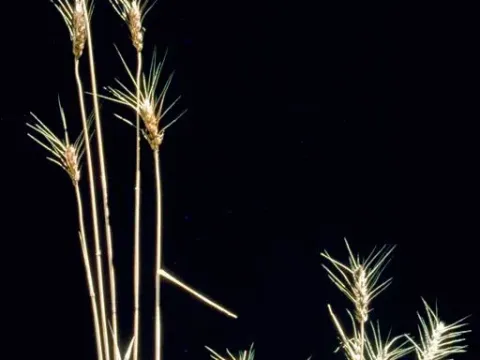
Dwarf bunt of wheat
Tilletia controversa
The causative agent of the disease is the fungus Tilletia controversa, which belongs to the Kingdom Fungi, Order Ustilaginales, and the genus Tilletia. This fungus is an obligate parasite and is classified as a significant quarantine pest in many regions of the world.
What the section contains
Dwarf bunt of wheat
The mycelium of the pathogen develops systemically within the plant tissues, eventually colonizing the ovaries. Unlike other common bunts, this species is highly persistent in soil and can survive for many years without a host.
The teliospores are spherical, dark brown, and covered with a characteristic reticulate coat. They are contained within "bunt balls," which are modified, distorted grain structures produced by the infected plant.
The germination of spores requires specific environmental conditions, notably long periods of low temperatures (between 0°C and 10°C) coupled with high soil moisture. This is why the disease is particularly prevalent in areas with prolonged snow cover.
The infection process occurs in the autumn during the germination phase of winter wheat, specifically when the seedling is still located within the soil profile.
Dwarf bunt primarily affects winter wheat, although it can also infect rye, barley, and various wild grass species. The disease causes severe stunting and reduces the overall crop yield significantly.
Infected plants exhibit excessive tillering, producing numerous short, weak stems compared to healthy plants. This results in patches of stunted growth that are easily distinguishable in the field.
The ears of infected plants are often deformed, remain partially trapped inside the flag leaf sheath, or appear twisted. Instead of viable kernels, the glumes are filled with masses of fungal spores.
The economic impact is two-fold: direct yield loss and quality degradation. Contaminated grain carries a strong fishy odor caused by trimethylamine, making it unsuitable for human consumption or animal feed.
Furthermore, the presence of the pathogen on a farm can trigger strict quarantine regulations, limiting the farmer's ability to market or transport grain produced on the affected land.
The pathogen persists in the soil as teliospores, which can remain viable for 7 to 10 years. Infection takes place in the fall as seeds begin to germinate and develop into seedlings.
Optimal infection occurs when the soil remains cold and damp for an extended duration, typically under a persistent snow cover which protects the germinating spores and seedlings from freezing temperatures.
Following the winter, the mycelium continues its systemic growth within the plant, moving toward the apical meristem. However, symptoms remain hidden until the plants enter the heading stage.
Spore production peaks as the wheat matures, and the fungal masses replace the grain within the glumes. During harvesting, these fragile bunt balls break, releasing spores into the air and soil.
The timing of sowing is critical; planting too early in warm soil or too late can sometimes help avoid the specific temperature range required for spore germination.
The most prominent visual sign is stunting, where infected plants are significantly shorter than healthy ones, sometimes only half the height. This gives the crop an irregular, patchy appearance.
The spikes of infected plants appear distorted and swollen. Upon closer inspection, the glumes are found to be spread apart, revealing the presence of dark, compact bunt balls inside.
When crushed, the bunt balls release a dark, sooty, and fine powder composed of millions of teliospores. The texture of this powder is one of the key diagnostic features.
The characteristic "rotten fish" odor is a strong indicator of the disease. This smell is produced by the chemical trimethylamine, which accumulates in the grain tissue during the late stages of the fungal life cycle.
In fields with high disease pressure, entire sections of the crop may show reduced height and density, with nearly every tiller producing infected spikes rather than healthy wheat heads.
The primary control strategy involves the use of pathogen-free seeds that have been thoroughly treated with systemic fungicides specifically effective against Tilletia species.
Implementing long-term crop rotation is essential. Growers should avoid planting winter wheat in the same field for at least 5 to 7 years to allow the soil spore bank to decline naturally.
Strategic planting dates are vital. By monitoring soil temperature during the planting window, farmers can avoid periods that are optimal for the fungus, thereby reducing infection rates.
- Utilize resistant or tolerant wheat varieties.
- Practice deep tillage to bury spores and reduce their immediate proximity to seedlings.
- Follow strict quarantine protocols for harvesting and movement of equipment.
- Apply specialized seed treatment fungicides (e.g., triazole-based compounds).
Because dwarf bunt is difficult to eradicate once established in the soil, an integrated approach combining seed hygiene, cultural practices, and chemical control is the most effective defense.