
Rose mosaic
Rose mosaic
Description
How to identify
Rose mosaic is a viral disease caused by a complex of viruses, primarily Prunus necrotic ringspot virus (PNRSV) and Arabis mosaic virus (ApMV). These viruses are systemic, meaning they inhabit the entire plant, including the sap, tissues, and vascular system.
The virus is an obligate parasite that does not survive independently in the soil. It lacks a specific insect vector, spreading mainly through contaminated vegetative propagation materials and infected grafting tools used during pruning or budding.
What it damages
This disease primarily affects species of the Rosa genus. It is a major concern for commercial rose nurseries where propagation occurs via cuttings and grafting, as the virus can easily move through infected rootstocks.
While rose mosaic does not usually kill the plant immediately, it significantly weakens the host. Infected roses often show reduced vigor, poor growth, and diminished flower production, making them more susceptible to other stressors.
Signs of infestation
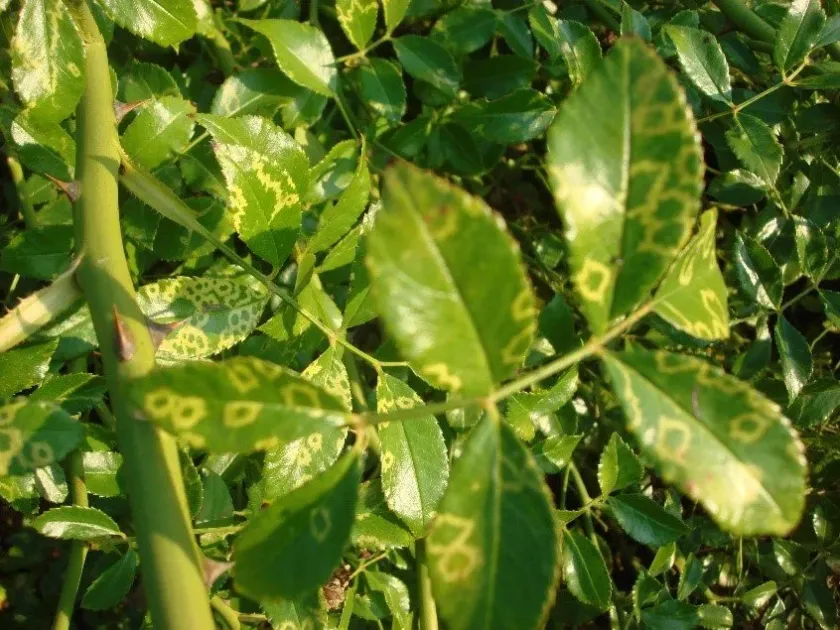
Symptoms are most distinct in spring and autumn. They typically appear as chlorotic patterns, such as yellow mosaic spots, lines, or rings on the foliage. Some leaves may show a distinctive zigzag pattern or oak-leaf markings.
In addition to discoloration, plants may exhibit stunted growth and leaf deformation. In hot weather, these symptoms may fade or become hidden, leading gardeners to believe the plant has recovered, though the virus remains active in the tissues.
Control measures
There is no known cure for rose mosaic, so management is entirely focused on prevention and strict sanitation practices to stop the spread to healthy specimens.
- Always purchase virus-indexed or certified disease-free rose bushes from reputable nurseries.
- Sterilize all pruning shears, knives, and budding tools between plants using a bleach solution or rubbing alcohol.
- Remove and destroy infected plants immediately to eliminate sources of further inoculation.
- Avoid propagating cuttings from bushes that have ever exhibited symptoms of the virus, even if symptoms are currently invisible.
Causes diseases · 1
Discussion
No discussions yet — be the first.