
Light leaf spot
Pyrenopeziza brassicae
Light leaf spot is a significant fungal disease of oilseed rape caused by the pathogen Pyrenopeziza brassicae (anamorph Cylindrosporium concentricum).
What the section contains
Light leaf spot
The fungus is a member of the order Helotiales and is a widespread problem in many temperate regions where brassica crops are cultivated on a large scale.
The pathogen is highly specialized and attacks a variety of hosts within the Brassicaceae family, making it a persistent threat to commercial rapeseed production.
It exists in both an asexual state (producing conidia) and a sexual state (producing apothecia), which allows it to survive in varied environmental conditions.
Agronomists identify the pathogen by its specific microscopic structure and its ability to colonize host tissues without immediately killing them.
The disease causes significant yield losses by damaging the photosynthetic capacity of the plants through the destruction of leaf tissue.
Stem infections are particularly dangerous as they weaken the structural integrity of the plant, often leading to lodging during the grain filling stage.
Pod infection results in reduced seed filling, lower oil content, and increased risk of pod shatter, which causes substantial losses during mechanical harvesting.
Infected plants have reduced overall vigor, which makes them more susceptible to secondary infections and environmental stresses like drought or cold.
The economic impact of the disease is exacerbated by the loss of harvest quality, rendering the seeds less valuable for industrial or food processing applications.
The disease cycle typically begins in the autumn when spores are dispersed by rain-splash from infected crop residues onto newly emerged seedlings.
The infection progresses slowly during the winter months, remaining latent within the leaf tissues while the plant is in its vegetative rosette stage.
Increased temperatures and humidity in the spring trigger the development of visible symptoms and the production of new spores on the leaf surface.
Extended periods of cool, wet weather provide optimal conditions for the fungus to spread rapidly through the canopy, leading to severe outbreaks.
During the summer months, the pathogen produces apothecia on the debris, which are capable of releasing ascospores that travel long distances via the wind.
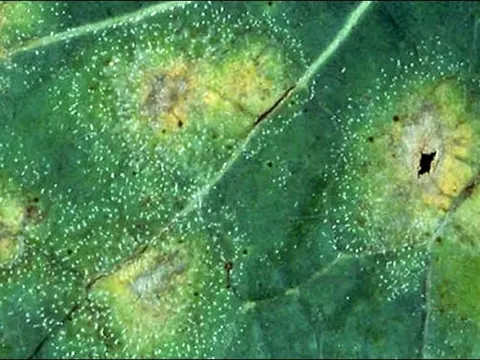
Early symptoms appear as small, light-colored or white spots on the leaves, which often expand to form larger, irregular, or circular necrotic lesions.
A distinctive feature of these spots is the presence of small, white or pinkish conidial masses, which appear like tiny pinpricks in the center of the lesions.
Stem lesions usually appear as elongated, dark-colored streaks or necrotic zones that may eventually cover significant portions of the stem surface.
When humidity is high, the leaves may show a powdery or granular appearance due to the extensive production of conidia across the infected surface.
- presence of concentric patterns on leaf lesions;
- visible tiny white conidial pustules;
- early leaf yellowing and senescence;
- cracking and necrotic stem tissues;
- black apothecia on wintered plant debris.
Crop rotation remains the most critical strategy, with a recommended gap of at least three years between oilseed rape crops to reduce inoculum levels.
Proper management of crop residues through deep tillage helps to bury infected material and limit the survival of the pathogen in the soil.
The selection of disease-resistant hybrids is highly recommended as it provides an inherent defense mechanism against the pathogen pressure.
Strategic fungicide applications, typically utilizing triazoles, should be timed based on field monitoring to protect the crop during vulnerable growth stages.
Effective weed control is essential because wild brassica species can host the pathogen, acting as a bridge for the disease to return to the main crop.