
Lingonberry monilinia
Monilia urnula
Description
How to identify
The causal agent is the fungus Monilia urnula (also classified as Monilinia urnula), belonging to the Ascomycota division. This pathogen is a specialized parasite affecting plants of the Ericaceae family.
The fungus overwinters as mycelium or sclerotia within mummified berries that remain on the soil surface in lingonberry patches.
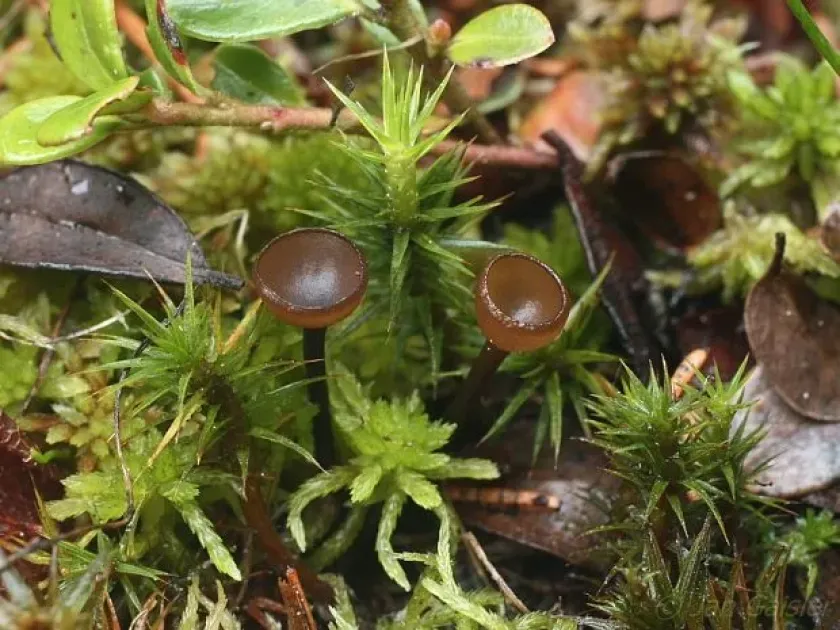
In spring, when conditions are appropriate, these sclerotia produce small, cup-shaped fruiting bodies known as apothecia, which release ascospores.
These spores are wind-dispersed and land on developing lingonberry flowers, initiating the infection cycle by penetrating the stigma of the flower.
This pathogen is highly adapted to the host, synchronizing its life cycle with the development of the lingonberry plant to maximize infection success.
What it damages
The primary damage occurs in the reproductive organs of the lingonberry plant. The fungus infects the flower, colonizing the ovary and preventing normal fruit development.
Infected berries fail to ripen properly, turning into hard, shriveled, and dark structures known as mummies, which are completely unmarketable.
Yield losses can be severe in years with high humidity during the bloom period, potentially destroying a large percentage of the total harvest.
The mummified berries serve as a reservoir for the pathogen, ensuring its survival and persistence in the field for subsequent growing seasons.
Chronic infections can weaken the plant overall, as energy that should have gone into healthy fruit development is diverted into supporting the fungal colonization process.
When it appears
The life cycle begins early in spring, synchronized with the budding and flowering phases of the lingonberry bush.
Infection is highly dependent on environmental conditions, particularly high humidity, rain, and cool temperatures during the blossom period in May and June.
After the initial infection, the fungus continues to develop within the berry, producing conidial sporulation which can lead to secondary spread among neighboring berries.
The disease progression slows down as temperatures rise in mid-summer, but by then, the mummification of the infected fruit is usually complete.
Late summer and autumn are characterized by the maturation of the sclerotia inside the fallen berries, preparing the pathogen for winter dormancy.
Signs of infestation
Early symptoms include the browning and wilting of blossoms, which may fail to set fruit or appear deformed soon after infection occurs.
A visible sign of active infection is the presence of a white or grey powdery mycelial growth on the surface of the developing berries.
As the season progresses, the infected fruit becomes hardened, wrinkled, and takes on a greyish-brown color, which is characteristic of the mummy stage.
Internally, the berry tissues are replaced by fungal structures, forming a solid sclerotium that is resistant to environmental stresses.
Unlike healthy fruit, infected berries do not plump up with juice, remaining light and dry, which makes them stand out visually during the harvest period.
Control measures
Sanitation is a primary control method; collecting and destroying mummified berries from the ground effectively reduces the primary inoculum for the next year.
Applying fungicides during the pre-bloom and bloom stages is critical to prevent the initial infection of the flowers by ascospores.
Cultural practices such as mulching the soil surface can physically trap sclerotia and prevent the formation of apothecia, inhibiting the spread of the fungus.
Maintaining proper air circulation through pruning and thinning of dense bushes helps reduce micro-humidity levels, making the environment less favorable for the pathogen.
- Remove fallen berries manually.
- Apply fungicides preventatively.
- Ensure good orchard ventilation.
- Use mulch to suppress apothecia.
Causes diseases · 1
Discussion
No discussions yet — be the first.