
Description
Symptoms
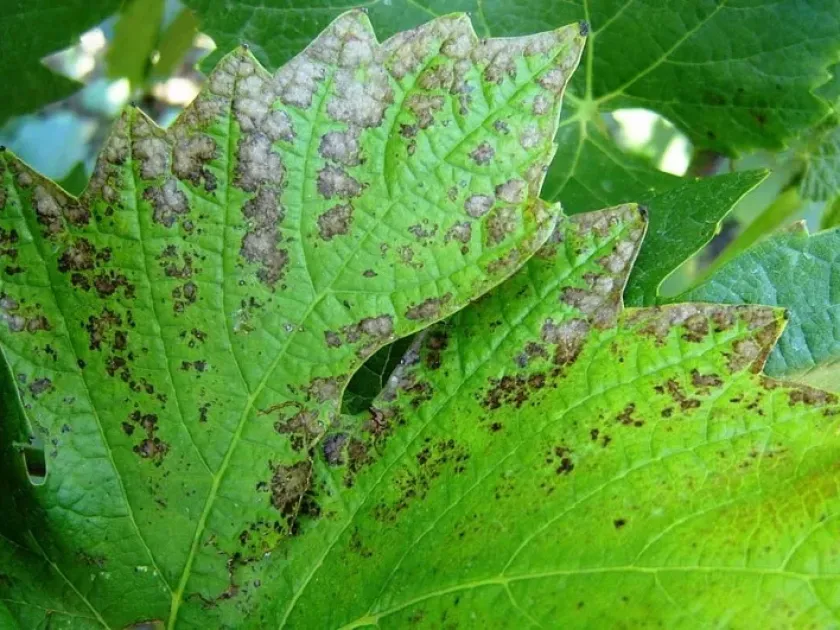
The disease is characterized by distinct leaf spots. On dark-colored grape varieties, these spots appear reddish-brown, while on white varieties, they present as yellowish-brown lesions.
A key diagnostic feature is the angular shape of the spots, which are clearly delimited by the leaf veins. This helps distinguish this disease from other types of leaf spots.
As the infection progresses, the necrotic tissue dries out and becomes brittle. Severe cases often lead to premature defoliation, which severely hinders the vine's ability to undergo photosynthesis.
In addition to foliage, the pathogen can infect petioles and flower rachises, causing them to wither and leading to the mass shedding of blossoms or young berries.
During periods of high humidity, a sparse sporulating layer consisting of conidia may appear on the underside of the leaves, facilitating secondary infections within the canopy.
Pathogen
The causative agent of the disease is the fungus Pseudopezicula tracheiphila, an ascomycete that specifically infects cultivated grapevines. In viticulture literature, it is widely recognized as the cause of "Brenner disease."
The life cycle begins with apothecia that overwinter on fallen leaves. During wet spring weather, these structures release ascospores, which serve as the primary source of infection for the new season.
The fungus enters the plant through stomata or mechanical wounds. Once inside, the pathogen infects the vascular tissues, blocking them and leading to necrosis in the leaf lamina.
Debris left on the vineyard floor serves as a long-term reservoir for the pathogen. Efficient sanitation practices are mandatory to break the cycle of infection and limit inoculum pressure.
The pathogen thrives under temperate conditions, coinciding with the early growth stages of the vine. Young, succulent tissues are highly susceptible to initial colonization by the fungal mycelium.
Conditions for development
The development of the disease is heavily favored by prolonged rainy spring weather and high humidity. Free moisture on the leaf surface is a prerequisite for spore germination.
The period between May and June is considered the highest risk window for infection, as the temperature and moisture levels are usually optimal for the release and spread of ascospores.
Poorly ventilated vineyards with high canopy density create an ideal microclimate for the fungus, allowing it to remain active and spread rapidly from plant to plant.
Vines growing in nutritionally deficient soils or those subjected to improper canopy management are more susceptible to severe infection due to reduced plant vigor.
Frequent fluctuations in weather, specifically rain followed by moderate temperatures, trigger waves of spore releases from overwintered leaves, causing rapid disease outbreaks.
Why it matters
The primary damage results from premature leaf drop, which disrupts carbon assimilation. This weakens the vine significantly and reduces its overall winter hardiness.
If the rachis is attacked, significant crop loss occurs as the flower clusters or young berries desiccate and drop before reaching maturity, directly impacting yield volume.
Weakened vines show lower growth rates and poor bud development, leading to long-term productivity losses that can persist well into the following growing seasons.
The accumulation of inoculum in the vineyard soil creates a persistent challenge, necessitating consistent and costly protective measures to manage the infection in future years.
In cases of heavy infestation, shoots may become completely defoliated, preventing proper wood maturation and leaving the vine vulnerable to frost damage.
Protection
Effective sanitation is the cornerstone of management; all fallen leaves must be removed or destroyed after harvest to reduce the amount of overwintering inoculum.
Cultural practices, such as shoot positioning, leaf removal, and thinning, improve airflow within the canopy, reducing humidity and making the environment less favorable for the fungus.
Chemical control strategies typically involve applying fungicides before and immediately after flowering, which are the most critical times to block initial infection.
Copper-based products and modern systemic fungicides create a protective barrier on the leaf surface, effectively preventing spore germination and entry into the plant tissues.
- Maintaining proper vineyard spacing to enhance ventilation.
- Providing balanced nutrition to maintain vine health and vigor.
- Selecting grape varieties with natural resistance to leaf pathogens.
- Regular monitoring of vineyard health during wet and cool weather.
Pathogens and affected parts
Affects crops · 1
Discussion
No discussions yet — be the first.