
Description
Symptoms
Initial symptoms include reduced vigor, leaf chlorosis, and poor fruit development. Infected trees may appear normal from the outside until significant internal damage has occurred.
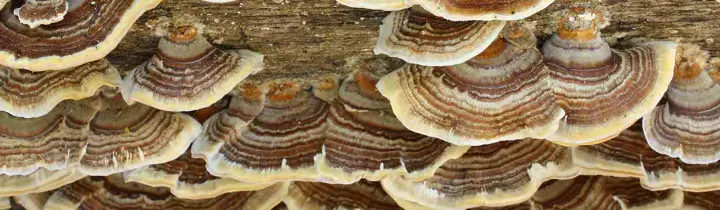
The most reliable sign of the disease is the appearance of fungal fruiting bodies on the trunk. These structures are typically crust-like, leathery, or corky in texture, with a white or creamy color.
Internally, the wood undergoes structural changes, becoming soft, spongy, and discolored. The heartwood may turn brown or yellow, eventually losing its mechanical strength.
In coconut palms, internal decay often leads to stem breakage, where the trunk snaps under the weight of the canopy. Avocado and citrus trees frequently show dieback of major branches.
In some cases, the tree may exhibit exudation or "bleeding" of sap from fissures in the bark near the site of infection as a defense mechanism against the invading fungus.
Pathogen
The causal agent of this disease is the wood-decaying fungus Oxyporus latemarginatus, which belongs to the Basidiomycota phylum. It is known for its ability to colonize and break down the heartwood of trees.
The fungus functions primarily as a wound parasite, invading the host through mechanical injuries, pruning cuts, or dead tissue. Once inside, it decomposes wood components by secreting specialized enzymes.
The life cycle involves the formation of basidiocarps, which serve as reproductive structures on the surface of infected wood. These structures release spores that spread the infection throughout the environment.
Oxyporus latemarginatus is characterized by its high adaptability and its ability to persist in decaying wood for long periods, waiting for favorable conditions for colonization.
Biological studies show that the fungus prefers the inner parts of the stem where humidity and nutrient conditions are stable, making it a persistent and difficult pathogen to eradicate.
Conditions for development
High humidity and consistent moisture in the trunk environment are essential for the survival and spread of Oxyporus latemarginatus spores.
Open wounds are the primary entry point. Poor pruning practices or mechanical damage from farm machinery significantly increase the likelihood of successful infection.
Trees under physiological stress, whether due to drought, nutritional deficiencies, or soil waterlogging, are significantly more susceptible to successful fungal colonization.
The presence of decaying organic matter or old stumps in the vicinity of the plantation serves as a reservoir for the pathogen, facilitating its spread to healthy trees.
Optimal temperatures for the growth and enzymatic activity of the fungus typically range between 20°C and 30°C, typical of tropical and subtropical planting regions.
Why it matters
Heart rot poses a major threat to the commercial production of avocados, citrus fruits, and coconut palms. It can cause significant financial losses through reduced yield and tree death.
As the internal vascular system is compromised, the tree's ability to transport water and nutrients is severely impaired, leading to premature leaf drop and smaller fruit.
The structural degradation of the stem poses safety risks to workers. Weakened trunks are prone to snapping during storms or under the stress of high crop loads.
Because the disease progresses internally, it is often detected too late, making it difficult to prevent the spread to neighboring trees in the plantation.
Continuous monitoring and the eventual removal of infected trees increase production costs and lower the overall efficiency of the agricultural operation.
Protection
The most effective strategy is the implementation of strict sanitary practices. This includes the removal and destruction of infected parts of the tree and nearby stumps.
Preventive measures focus on minimizing physical injuries. All pruning tools must be disinfected regularly, and wound dressings should be applied to large cuts on tree trunks.
Maintaining high tree vigor through proper fertilization and balanced irrigation helps the plant develop natural resistance against initial infections.
Managing drainage in orchards is crucial to prevent soil saturation, which can weaken root systems and make the trunk more vulnerable to opportunistic fungal pathogens.
Early detection through regular field inspections is vital. If fruiting bodies are found, immediate isolation of the tree and local disinfection may help limit the spread of the disease.
Pathogens and affected parts
Affects crops · 3
Discussion
No discussions yet — be the first.