
Phytoplasma
Mycoplasmalike organism
Phytoplasmas are specialized, cell wall-less prokaryotic organisms belonging to the class Mollicutes. Due to their unique biological nature, they reside exclusively within the phloem sieve elements of infected plants and the bodies of their insect vectors.
What the section contains
Phytoplasma
Taxonomically, phytoplasmas are distinct from other bacteria. Because they cannot be cultured in artificial laboratory media, they are classified based on the analysis of 16S ribosomal RNA gene sequences, which allows for the differentiation of various strains and groups.
As obligate intracellular parasites, phytoplasmas rely entirely on the metabolic machinery of their hosts. They have significantly reduced genomes, as they have evolved to lose many metabolic genes that are no longer necessary in a stable, host-provided environment.
The transmission mechanism is primarily biological, mediated by phloem-feeding insects, most notably leafhoppers, planthoppers, and psyllids. After acquisition feeding, there is a latent period before the insect becomes capable of transmitting the pathogen to a healthy host.
Phytoplasmas manipulate their hosts to create favorable environments. By altering the source-sink relationships within the plant, they ensure a constant supply of nutrients to the phloem tissue where they reside and multiply.
Phytoplasmas infect a wide range of economically important crops, including solanaceous vegetables (tomatoes, potatoes), grapes, stone fruits, and numerous ornamental plants. The resulting diseases are often collectively referred to as "yellows" diseases.
The damage caused is systemic, meaning the pathogen spreads throughout the plant's vascular system. This disruption prevents the normal translocation of photosynthates, leading to severe nutritional imbalances and stunted growth.
In fruit-bearing crops, phytoplasmas cause physiological disorders such as flower abortion, fruit deformation, and in the case of apple trees, the production of undersized, green, and tasteless fruit. This renders the harvest commercially worthless.
For vegetable growers, the impact is devastating, as infected crops often stop producing entirely. Once a plant is colonized by phytoplasmas, it serves as a permanent reservoir, potentially infecting neighboring plants through the insect vector population.
Economic losses are compounded by the necessity of roguing (removing) infected plants, which reduces overall stand density and requires additional labor and material inputs to replace the lost crop.
The incidence of phytoplasma diseases is strictly linked to the population dynamics and migration patterns of insect vectors. The peak risk occurs during the warmer months when these insects are most active and mobile.
Initial infection often occurs early in the growing season. However, symptoms may take several weeks or even months to manifest depending on the host species, environmental conditions, and the efficiency of the pathogen translocation within the plant.
The pathogen is capable of overwintering in perennial hosts, including common weeds found in field margins, or within the bodies of surviving insect vectors. This persistence makes these diseases extremely difficult to eradicate from an area.
Environmental factors such as drought or excessive moisture can influence the susceptibility of plants to vector attack. Healthy, vigorously growing plants are generally more resilient, while stressed crops can succumb to infection more rapidly.
A well-timed monitoring program is essential for forecasting. By tracking the arrival and abundance of vectors using sticky traps, growers can optimize the timing of protective insecticide applications to minimize the risk of pathogen spread.
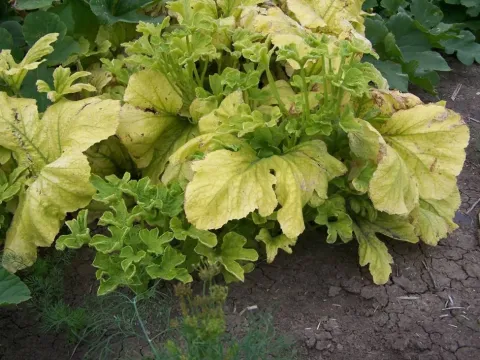
The most common symptom is the yellowing of foliage (chlorosis), which typically starts at the leaf margins and progresses inward. Over time, the leaves may become thickened, leathery, and exhibit upward rolling.
Abnormal proliferation of shoots, known as "witches' broom," is a hallmark sign. This occurs due to the breakdown of hormonal control, causing dormant buds to sprout prematurely and develop into clusters of thin, spindly shoots.
Flower abnormalities, such as virescence (greenish discoloration) and phyllody (the transformation of floral parts into leaf-like structures), are classic indicators. These symptoms lead to complete flower sterility and lack of fruit set.
Stunting of the entire plant is prevalent. The root system is often poorly developed, making the plant highly susceptible to secondary environmental stresses like nutrient deficiency or drought.
- Chlorosis and marginal leaf yellowing
- Witches' broom (excessive shoot proliferation)
- Virescence and phyllody of flowers
- Severe stunting and reduced growth
- Fruit deformation and sterility
Effective management begins with strict sanitation and the use of pathogen-free, certified nursery stock. Planting material must be sourced from reputable providers to prevent the introduction of phytoplasmas into new fields.
Insect vector control is the cornerstone of any management strategy. The use of systemic insecticides, combined with barrier methods like row covers, helps reduce the population of vectors that transmit the disease.
Weed management is critical. Since many weeds act as alternative hosts for phytoplasmas, maintaining a weed-free environment around crops significantly reduces the availability of the pathogen to the vector population.
Roguing, or the immediate removal and destruction of infected plants, is an essential practice to limit the spread of the pathogen within the crop. Plants should be removed as soon as symptoms are detected.
Currently, there is no chemical cure for infected plants. Therefore, integrated pest management (IPM) practices, emphasizing prevention, monitoring, and vector suppression, remain the only viable approach for maintaining crop health and productivity.