
Phellinus noxius
Phellinus noxius
Phellinus noxius is a destructive wood-decay fungus classified within the Basidiomycota phylum. It is widely recognized as the primary agent of brown root rot, a lethal disease affecting a diverse range of tropical and subtropical woody plants.
What the section contains
Phellinus noxius
The fungus produces perennial, bracket-like or crusty fruiting bodies. The upper surface is typically dark brown to black, while the pore surface on the underside is greyish-brown, indicating its activity in releasing spores over an extended period.
The mycelium, or vegetative body, is the most active part of the fungus. It spreads through the soil via root-to-root contact and by forming specialized fungal structures known as rhizomorphs, allowing it to bridge gaps between trees.
This pathogen is notorious for its ability to persist in stumps and woody debris for many years. Its resilience makes it an incredibly difficult organism to eradicate once a forest stand or plantation has become infested.
Biologically, Phellinus noxius functions by decomposing the structural components of wood. This decay process compromises the integrity of the root system, ultimately leading to the structural failure and death of the host tree.
The host range of Phellinus noxius is extensive, including major forest trees, fruit-bearing species, and ornamental plants. It poses a significant threat to agricultural sectors, particularly in regions where rubber, cocoa, and various fruit trees are cultivated.
The primary damage occurs in the roots and the base of the trunk. By destroying the cambium and the conducting vessels, the fungus prevents the tree from absorbing sufficient water and nutrients, resulting in rapid physiological decline.
In commercial plantations, the pathogen often spreads in expanding patches, leading to significant yield losses and high mortality rates among mature trees. The economic impact is compounded by the long-term contamination of the soil.
Trees affected by this pathogen become increasingly vulnerable to windthrow, as the structural degradation of the roots prevents the plant from anchoring securely in the soil, leading to sudden tree falls during storms.
The pathogen's ability to remain active in the soil means that replanting susceptible species in previously infested areas often results in immediate re-infection of young seedlings, perpetuating the cycle of destruction.
The initial signs of infection include chlorosis (yellowing of the leaves), premature leaf drop, and dieback of the canopy. Often, trees exhibit a sudden collapse, where the foliage wilts and dries out rapidly within a single growing season.
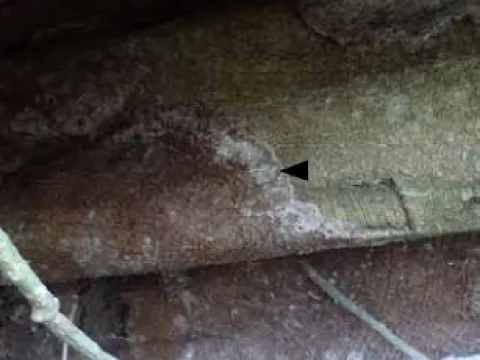
Presence of sporocarps at the base of the trunk or on the exposed roots is a definitive diagnostic feature. These fruiting bodies are often accompanied by a brown, net-like mycelial mat forming on the surface of the roots.
When investigating the root system, a characteristic brownish, brittle decay of the woody tissue is observed. Often, a dark brown to black layer of fungal hyphae may be found coating the root surface, commonly referred to as a fungal sheath.
Field observations of a disease center typically show a gradient of health: dead or fallen trees are found in the center, while trees showing progressive thinning and wilting are located at the leading edge of the infection zone.
External examination of the root collar may reveal sunken lesions or cracks in the bark. These symptoms are indicative of the deeper decay occurring within the sapwood and heartwood due to persistent fungal colonization.
Management of Phellinus noxius requires a multifaceted approach focused on sanitation and the disruption of fungal spread. Chemical treatments are largely ineffective due to the fungus's deep-seated nature within the root system.
The most critical practice is the thorough removal and destruction of all infected trees, including the entire root system. Leaving behind woody debris or stump fragments provides a reservoir that allows the fungus to survive and spread.
Implementing physical barriers, such as deep trenches or root-pruning, can help contain the spread of the pathogen. These barriers prevent the physical contact required for the fungus to move from infected roots to healthy neighboring trees.
In severely infested soils, fallowing or the use of non-host species is advised to reduce the inoculum load in the soil. Proper site preparation and the selection of resistant cultivars are essential for long-term recovery of the area.
- Sanitation harvesting of infected trees and stumps.
- Excavation of root debris to prevent inoculum carryover.
- Construction of isolation trenches to stop root contact.
- Monitoring for symptoms in surrounding apparently healthy trees.