
Description
Symptoms
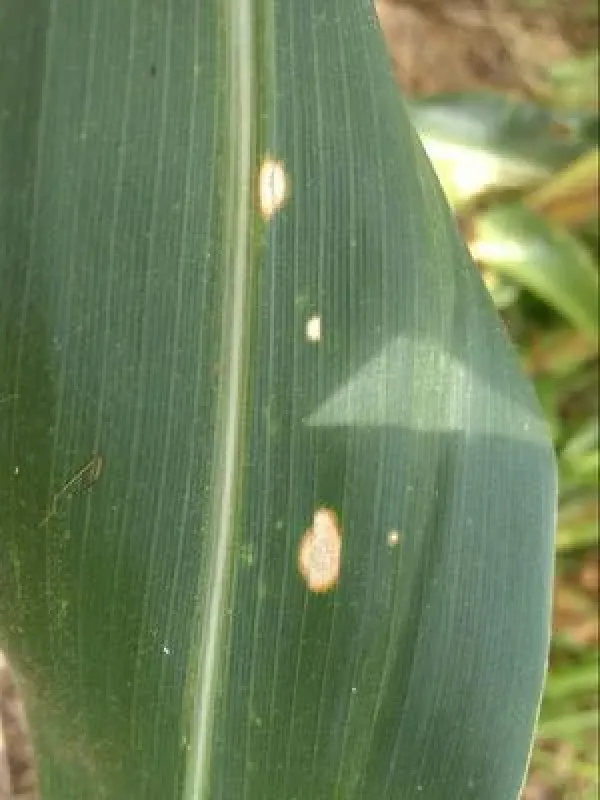
Initial signs of Phaeosphaeria leaf spot appear as small chlorotic lesions that eventually turn brown or light tan. These affected areas often have an irregular shape and may coalesce into larger necrotic zones.
Small black fruiting bodies—pycnidia or perithecia—can be observed on the surface of dead tissue. This is a key diagnostic characteristic of the disease in the field.
In high humidity conditions, a light-colored halo often forms around the spots, separating healthy tissue from the necrosis. Over time, the necrosis covers the entire leaf, causing premature drying and shedding.
The disease typically begins on lower leaves and progresses upward to the flag leaf and head. In severe cases, all vegetative organs of the plant, including leaf sheaths, may be affected.
Visually, Phaeosphaeria leaf spot is often confused with other leaf blotch diseases, but it differs in the size and distribution of sporulation structures on the leaf blades.
Pathogen
The causative agent of the disease is the fungus Phaeosphaeria microscopica (anamorph Stagonospora microscopica), which belongs to the class Ascomycetes. This pathogen specifically targets cereal crops, including winter wheat.
The fungus's life cycle is closely linked to crop residues, where it survives the winter in the form of perithecia and conidia. Primary infection occurs in spring when spores are dispersed by wind or rain splashes onto young leaves.
The development of the fungus takes place inside leaf tissues, where it forms mycelium that disrupts cellular processes and inhibits photosynthesis. The pathogen shows significant adaptation to a wide range of temperatures, allowing it to thrive in various cereal-growing regions.
The biology of the pathogen is characterized by its ability to rapidly accumulate infectious pressure under sufficient moisture. Throughout the growing season, the fungus can produce several generations of spores, facilitating mass infection of the crop.
Identification of the pathogen is often challenging due to its morphological similarity to other species of the Stagonospora and Septoria genera. Therefore, accurate diagnosis in agronomic practice frequently requires microscopic analysis of infected tissue.
Conditions for development
Optimal conditions for Phaeosphaeria leaf spot development include moderately warm weather combined with high relative humidity. Frequent rainfall promotes the active release and spread of spores to healthy plants.
Epidemic development is encouraged by fogs and extended morning dews, which provide the necessary moisture film on the leaf surface for conidial germination. Temperatures between 15°C and 22°C are most favorable for the pathogen.
Dense crop stands, which limit airflow, create a microclimate with high humidity, significantly accelerating the development of the infection. This is a critical agronomic factor that promotes disease severity.
Deficiencies in mineral nutrition, particularly potassium, reduce the natural resistance of wheat to fungal infection. Weakened plants are much more susceptible to the penetration of Phaeosphaeria microscopica mycelium.
High amounts of crop debris on the soil surface provide a significant infectious background. Reduced tillage technologies may contribute to the accumulation of the pathogen in the field.
Why it matters
The primary damage from the disease consists of the premature destruction of the photosynthetic leaf area, which significantly reduces the intensity of photosynthesis. This leads to substantial yield loss and reduced grain weight.
With intense infection, the transport of nutrients to the developing grain is disrupted, resulting in shriveled kernels and lower quality indicators, such as protein and gluten content.
Infection of the flag leaf is the most dangerous, as it provides the majority of the nutrients to the head during critical grain-filling phases. The loss of this leaf leads to a drastic drop in productivity.
In cases where the head is infected, the pathogen can negatively affect grain development, causing partial sterility or creating conditions for secondary infection by saprophytic fungi, which degrades grain quality.
Early-season outbreaks weaken the plant as a whole, making it more vulnerable to unfavorable environmental factors, drought, or other diseases.
Protection
The main strategy for protection is the implementation of crop rotation, which avoids planting wheat in the same field for several consecutive years. This disrupts the pathogen's life cycle that relies on crop residues.
Deep plowing with soil inversion facilitates the rapid decomposition of residues and the death of fungal spores. Quality autumn tillage is recommended to reduce the infectious load in the field.
Chemical control remains a highly effective method when economic thresholds of severity are reached. The highest efficacy is achieved by applying fungicides during the stem elongation and flag leaf emergence stages.
The use of disease-resistant varieties and high-quality certified seed is fundamental to successful management. Breeding efforts in this direction significantly reduce reliance on fungicides.
- Continuous phytosanitary monitoring of crops starting from early spring.
- Optimization of nitrogen fertilizer rates to prevent excessive vegetative growth.
- Control of weeds that may serve as reservoirs of infection.
- Use of systemic fungicides based on triazoles and strobilurins.
Pathogens and affected parts
Affects crops · 1
Discussion
No discussions yet — be the first.