
Description
Symptoms
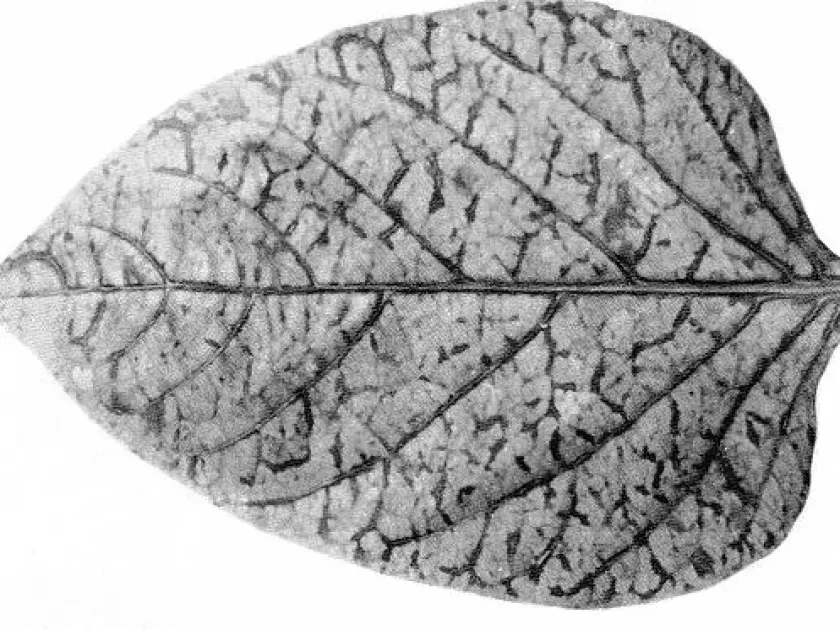
Initial symptoms appear as chlorotic spots and a light green mosaic pattern on young leaves. A characteristic feature is leaf mottling, which progresses over time into a more pronounced speckled appearance across the foliage.
Plants affected by the virus often show signs of growth inhibition and stunting. Internodes become shortened, and the overall vegetative mass lags significantly behind healthy specimens in terms of development.
Leaves are frequently deformed, curled, or take on a thread-like appearance. The surface of the fruits may develop ring spots, necrotic stripes, or sunken areas, which drastically reduces the marketability and quality of the harvest.
Under severe infection pressure, flowers tend to drop, and fruit set is minimal. Any fruits that manage to form often exhibit uneven coloration and delayed maturation, rendering them unsuitable for sale.
- Mosaic patterns on foliage
- Leaf blade deformation
- Plant stunting
- Ring spots on fruits
- Significant yield reduction
Pathogen
The causal agent of this disease is the Peruvian tomato mosaic virus (PerTMV), which belongs to the genus Potyvirus of the Potyviridae family. It is a single-stranded RNA virus transmitted primarily through mechanical means via the sap of infected plants during cultivation practices.
Common weeds within the Solanaceae family serve as the primary natural reservoir, allowing the pathogen to persist throughout the winter season. The virus particles are highly stable and can remain viable in the environment for extended periods if plant debris is not removed.
Transmission occurs through contact. In agricultural settings, insect vectors can carry the virus, although human activity during handling and maintenance remains the most common route for virus spread within the field or greenhouse.
The virus systematically infects the entire plant, invading the vascular system and spreading to all organs. This disruption leads to impaired metabolic processes, causing gradual exhaustion and severe tissue deformation.
The biology of the pathogen has been studied in relation to Capsicum species and certain wild tomatoes. Understanding the viral replication mechanism is crucial for developing robust infection containment strategies during early vegetative growth stages.
Conditions for development
High ambient temperatures promote the development of the virus by accelerating plant metabolic rates, which enables the pathogen to colonize the host more efficiently. High humidity levels also play a role in maintaining the primary sources of infection.
Plant density is a critical factor; high-density planting increases the likelihood of mechanical virus transmission through incidental leaf-to-leaf contact between neighboring plants.
Tissue damage incurred during pruning, pinching, or harvesting creates entry points for the virus. Tools that are not regularly disinfected act as primary vectors for spreading the virus throughout the greenhouse facility.
The presence of weeds near fields or greenhouses provides a permanent infection hotspot. Insect pests, even if not primary vectors, can cause mechanical wounding, further facilitating viral entry into healthy tissues.
The disease progresses most rapidly in greenhouse environments where strict phytosanitary controls are lacking. Crop rotation and thorough cleaning of fields from plant residues are essential conditions for suppressing epiphytotics.
Why it matters
The virus causes serious economic damage because infected plants cannot be cured. The primary risk lies in the irreversible loss of yield potential that occurs during the early stages of the crop's development cycle.
Fruit quality suffers to such an extent that the produce loses its commercial value and fails to meet standards for fresh market sale. Deformed and spotted fruits are considered unsalable and lead to financial losses.
The virus triggers a general suppression of the plant's immune system, making it highly susceptible to secondary infections such as bacterial rots or fungal pathogens that attack already weakened tissues.
In cases of widespread infection within greenhouses, total crop failure is possible. The speed of viral propagation in a controlled environment is extremely high, requiring immediate rogueing of diseased plants to stop the spread.
The absence of effective chemical treatments for systemic viral infections makes this disease one of the most challenging in agronomic practice. Costs include not only yield losses but also significant expenses for quarantine measures.
Protection
The primary method of protection is the use of healthy, certified planting material and cultivars that possess genetic resistance to viruses in the Potyvirus group.
Strict production hygiene is essential: disinfect hands, clothing, and gardening tools after every contact with the plants. Using 70% alcohol or sodium hypochlorite effectively destroys virus particles on equipment.
Timely weed control around greenhouses and cultivation sites is necessary, as weeds act as reservoirs for the pathogen during the off-season.
Upon detection of initial disease symptoms, infected plants must be immediately removed along with their root systems and destroyed (burned) to prevent the spread of the infection to neighboring plants.
The application of insecticides to control pests that cause mechanical damage helps reduce the risk of viral transmission. The use of insect-proof nets on greenhouse windows also contributes to limiting the access of potential vectors.
Pathogens and affected parts
Affects crops · 1
Discussion
No discussions yet — be the first.