
Neofabraea perennans
Neofabrae perennans
Description
How to identify
Neofabraea perennans is a destructive fungal pathogen belonging to the order Helotiales that predominantly attacks pome fruit trees.
This ascomycete fungus is classified as a necrotrophic pathogen, as it feeds on dead or dying tissues of the host, progressively expanding the injury.
The fungus is highly resilient, capable of overwintering as mycelium within the margins of established bark cankers throughout the dormant season.
Infection cycles are largely driven by the production of conidia, which are spread by splashing rain or wind during the spring and autumn months.
It thrives in temperate climates with frequent precipitation, which provides the necessary moisture for the rapid germination and colonization of host tissues.
What it damages
The primary host for Neofabraea perennans is the apple tree (Malus domestica), though it can also infect pear trees under specific conditions.
The pathogen causes significant economic damage by forming deep, perennial cankers on trunks and major scaffold branches, weakening the tree structure.
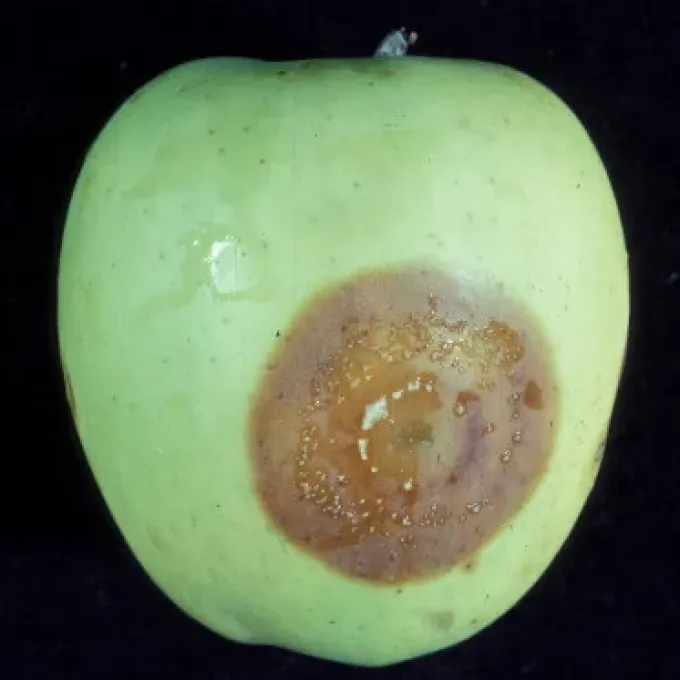
In addition to bark damage, the fungus causes a post-harvest disorder often referred to as "bull’s-eye rot," leading to severe fruit quality loss.
Affected branches may lose their transport capacity, resulting in chlorosis, canopy thinning, and eventually the death of distal parts of the tree.
The ability of the fungus to survive in wood for many years turns infected trees into a permanent source of inoculum for the entire orchard.
Signs of infestation
Early symptoms on bark appear as small, darkened, slightly sunken spots that gradually enlarge over subsequent seasons.
The classic sign of a developed canker is a depressed lesion surrounded by concentric calluses, as the tree attempts to contain the infection.
Small, cream-colored cup-like fruiting bodies (apothecia) often emerge from the dead bark tissue during periods of high humidity.
On harvested fruit, the disease manifests as round, firm brown lesions that become depressed as they expand into the underlying flesh.
In advanced stages, these fruit lesions may develop a visible center with spores, resembling a bull's eye, which is the characteristic symptom of this rot.
Control measures
Effective orchard management requires an integrated approach to sanitation, minimizing the presence of infected tissues and entry points for the fungus.
Pruning out and incinerating infected branches is the most critical step to reducing the total inoculum load within the orchard environment.
All pruning cuts and trunk wounds should be sealed with specialized wound dressings that contain systemic fungicides to prevent new infections.
Chemical control programs should focus on timely applications of registered fungicides during the period of high susceptibility, particularly after harvest.
- Maintain tree vigor through balanced nutrition and proper water management.
- Avoid wounding the trunk with machinery to prevent primary infection sites.
- Ensure rapid cooling of fruit after harvest to inhibit the development of bull’s-eye rot in storage.
Causes diseases · 1
Discussion
No discussions yet — be the first.