
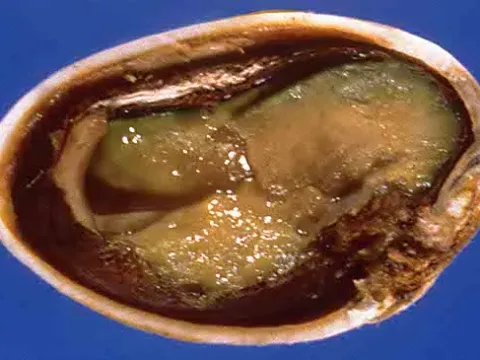
Nematospora coryli
Nematospora coryli
Nematospora coryli is a filamentous yeast-like fungus belonging to the phylum Ascomycota. It is a well-known plant pathogen causing significant quality losses in various agricultural crops.
What the section contains
Nematospora coryli
The organism is defined by its ability to exist in a parasitic form, specifically targeting the internal tissues of fruit and seeds once the plant barrier is breached.
Under a microscope, the fungus displays characteristic needle-like ascospores, often arranged in asci, which are essential for its reproductive success.
This pathogen does not possess the structural capacity to penetrate healthy plant skin, making it entirely dependent on the feeding activities of hemipteran insects.
Biologically, it operates as a symbiont within its insect vectors, effectively hitchhiking from one host plant to another during the insect's feeding cycle.
The host range of Nematospora coryli is extensive, including hazelnut, cotton, soybean, coffee, tomatoes, and various citrus fruits.
In cotton production, it causes internal boll rot, which severely damages the fiber and renders it useless for high-quality textile manufacturing.
Nut crops suffer from a condition known as "kernel spot," where the nut meat becomes discolored and bitter, leading to significant economic loss for growers.
Coffee plantations are also heavily affected, as the pathogen causes "yeast spot" in beans, negatively impacting both the flavor and overall quality of the coffee.
The damage is often insidious; affected fruits might appear perfectly normal on the exterior, hiding the internal tissue degradation until harvest or processing.
The development of the disease is strictly synchronized with the life cycle of insect vectors, particularly various species of plant bugs.
Infection peaks during the warm months, coinciding with the flowering and fruit-setting stages of host plants when insects are most active.
Environmental factors, such as high humidity and warm temperatures, provide an optimal environment for the proliferation of yeast cells within the plant tissue.
The fungus persists in the population of insects, surviving inside their salivary glands or digestive tracts during periods when host plants are not available.
Overwintering of the pathogen occurs primarily through infected insect vectors, ensuring the survival of the fungus from one growing season to the next.
The primary symptom of infection is internal necrosis or browning of the seed or fruit tissue, which often manifests as localized lesions.
Seeds affected by Nematospora coryli often become shriveled and lightweight, losing their viability and nutritional quality due to internal tissue digestion.
External signs are limited to small puncture marks where the insect vector fed, often surrounded by minor surface discolorations.
When infected fruit or seeds are cut open, a foul or yeasty odor may be detected, confirming the presence of active yeast-like decay.
In severe cases, infected fruit may drop prematurely from the plant, or seeds may fail to reach maturity, resulting in reduced yields for the farmer.
The primary strategy for controlling the disease involves managing the population of insect vectors through targeted insecticide applications.
Effective weed management in and around orchards or fields is crucial, as many weeds serve as secondary hosts for the insects that carry the pathogen.
Cultural practices, such as optimizing plant spacing and maintaining good crop health, can help reduce the overall susceptibility of the plants.
Early harvest and rapid processing of crops help to limit the duration during which the pathogen can proliferate inside the harvested produce.
Storing harvested products in dry, cool conditions is essential to minimize the post-harvest progression of the yeast infection in damaged kernels or seeds.