
Description
Symptoms
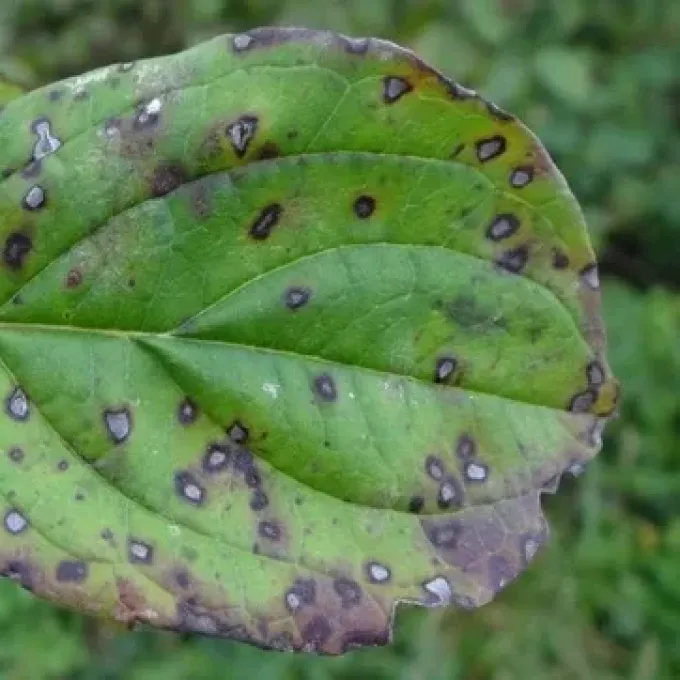
The initial sign of infection is the appearance of small spots on leaf blades, which gradually increase in size. In common pear trees, the spots often have a rounded or angular shape, coloured brown or dark brown with a distinct margin.
Over time, the fruiting bodies of the fungus — pycnidia or pseudothecia — form on the surface of the necrotic areas. They appear as tiny black dots that can be seen upon detailed inspection or with a magnifying glass.
In high humidity, a weak coating of the pathogen's spores may appear around the spots. As the disease progresses, the affected tissues begin to die, leading to premature drying and leaf shedding.
In lingonberries, the disease manifests as dark spots on the evergreen leaves, significantly reducing the aesthetic and vital strength of the berry bush. Affected areas can merge, covering a significant part of the leaf blade.
Severe development of leaf spot leads to the deformation of young shoots and buds. Without control, the infection spreads throughout the plant's canopy, slowing growth and reducing the crop's overall resistance to adverse environmental factors.
Pathogen
The disease is caused by ascomycete fungi of the genus Mycosphaerella. These are obligate or facultative parasites with a complex life cycle that includes both sexual and asexual stages of reproduction.
The infection persists as mycelium or pseudothecia on fallen leaves and plant debris, overwintering in the soil. In spring, ascospores are released into the air and dispersed by the wind, landing on the young tissues of susceptible crops.
Conidial sporulation provides mass secondary infection throughout the entire growing season. The fungus actively penetrates through the stomata or mechanical damage to the leaf epidermis.
The pathogen is adapted to a wide range of hosts, which allows it to successfully survive in various agroecosystems. The internal tissues of the affected plant become a nutrient medium for the fungal mycelium.
Specialization within the genus Mycosphaerella is quite high; however, the morphological signs of pathogens on different plant species are often similar, which complicates visual identification of the specific species without laboratory analysis.
Conditions for development
Favourable conditions for infection development include moderate air temperatures combined with high relative humidity. The most intense infection occurs during wet periods with frequent precipitation.
The temperature range from +15°C to +25°C is optimal for spore germination and colonization of plant tissues. Prolonged fog or morning dew promotes the rapid spread of fungal spores to healthy leaves.
Poor agricultural practices, such as excessive planting density, impair canopy aeration. Lack of airflow creates a microclimate with excessive humidity, which sharply accelerates the development of Mycosphaerella leaf spot.
The presence of a large amount of primary inoculum in the form of plant debris left from the autumn is a critical factor for the start of a spring epiphytotic.
Reduced plant immunity due to lack of mineral nutrition or exposure to environmental stressors makes plants more vulnerable to the penetration of the fungal pathogen.
Why it matters
The harmfulness of the disease lies in the reduction of the leaf's photosynthetic area. This leads to the weakening of the plant and a significant decrease in the intensity of sugar accumulation and other nutrients.
In pear trees, premature leaf fall negatively affects the formation of fruit buds for the following year. Fruits from affected trees often become smaller, lose their marketability, and may fall off prematurely.
For berry crops like lingonberries, the loss of leaves means reduced yield in the current and subsequent seasons. Diseased plants are less able to survive winter cold due to the depletion of carbohydrate reserves.
Under systematic infestation without protective measures, crop productivity drops by 30–50% or more. In nurseries, the disease can lead to the total loss of young seedlings.
Damaged tissues become entry points for secondary fungal and bacterial infections, which further complicates the phytosanitary situation in the field.
Protection
The basis of prevention is adhering to agricultural standards: timely removal and destruction of fallen leaves where the infection overwinters. Deep tilling of tree circles in the autumn helps accelerate the decomposition of infected plant residues.
Regular sanitary and thinning pruning of tree crowns is necessary to improve ventilation. This reduces humidity in the root zone and inside the canopy, preventing fungal development.
For chemical protection, authorized systemic and contact fungicides are used. Treatments are carried out in key growth phases: before flowering, after flowering, and upon the appearance of the first signs of spots.
It is important to rotate products from different chemical groups to prevent the development of pathogen resistance. The use of biological products based on antagonistic microorganisms is effective in integrated protection systems.
- Adherence to planting schemes to prevent overcrowding.
- Timely fertilization of plants to increase immunity.
- Use of resistant varieties when establishing new orchards or plantations.
- Disinfection of gardening tools after working with affected plants.
Pathogens and affected parts
Affects crops · 2
Discussion
No discussions yet — be the first.