
Alfalfa leaf spot
Pseudopeziza medicaginis
Description
Symptoms
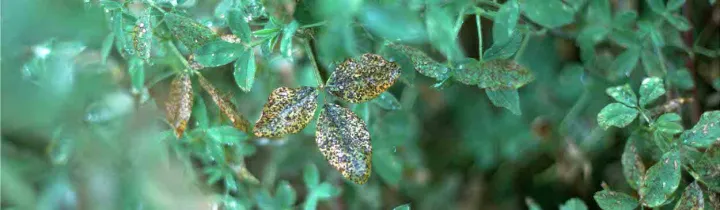
The primary symptom is the appearance of small, circular spots measuring 1 to 3 mm in diameter, typically dark brown or black in color.
A distinctive feature is the presence of a small, raised, shiny disk in the center of the spot, which is the fruiting body of the fungus.
Chlorotic yellow halos often surround the dark spots as the host tissue begins to deteriorate due to the fungal infection.
Severe infections lead to significant yellowing of the leaves, which causes premature defoliation starting from the lower parts of the plant.
Stems can also be affected, although symptoms on stems are generally less common and usually manifest as elongated, smaller lesions.
Pathogen
The causal agent of common leaf spot in alfalfa is the fungus Pseudopeziza medicaginis, which belongs to the Helotiales order.
The pathogen overwinters primarily in infected leaf litter that remains on the soil surface after harvesting operations.
In spring, the fungus produces apothecia that release ascospores, serving as the primary inoculum to initiate the infection cycle.
During the growing season, the fungus spreads through conidia, which are disseminated by wind and water splashes from irrigation or rain.
The fungus is highly adapted to alfalfa and can complete its life cycle multiple times throughout the season under favorable environmental conditions.
Conditions for development
The development of Pseudopeziza medicaginis is favored by moderate temperatures ranging between 18 and 22 degrees Celsius.
High humidity, persistent dews, frequent rain showers, and foggy conditions provide the necessary moisture for rapid spore germination and infection.
Dense canopies that restrict air movement and maintain a humid microclimate are highly susceptible to rapid disease outbreaks.
Poorly managed irrigation systems that keep the foliage wet for extended periods significantly increase the risk of disease propagation.
Inadequate field sanitation, such as leaving harvest residues on the ground, ensures a high level of inoculum for the next growing season.
Why it matters
The primary economic damage is the reduction in nutritional quality and yield, as leaves contain the majority of the plant's protein and nutrients.
Premature defoliation caused by the fungus can lead to substantial losses in hay weight and overall forage quality during the growing season.
Repeated or severe infections weaken the alfalfa plants, reducing their winter hardiness and long-term stand longevity.
The recovery of the alfalfa crop after harvesting is significantly hampered, often resulting in lower yields for subsequent cuts.
In addition to yield loss, heavily infected foliage may be undesirable for livestock, impacting the overall market value of the harvested hay.
Protection
Crop rotation remains the most effective long-term management strategy, with a recommended interval of at least three to four years between alfalfa crops.
Timely harvesting of the alfalfa crop is crucial, as cutting before extensive leaf drop helps remove the inoculum from the field.
Selecting and planting resistant alfalfa varieties is the best defense against disease outbreaks in areas with a history of common leaf spot.
Good agronomic practices, including proper weed management and maintaining appropriate plant density, help improve airflow and reduce humidity.
While chemical control is generally not recommended for hay crops, fungicides may be applied in seed production fields according to local regulations.
Pathogens and affected parts
Affects crops · 3
Discussion
No discussions yet — be the first.