
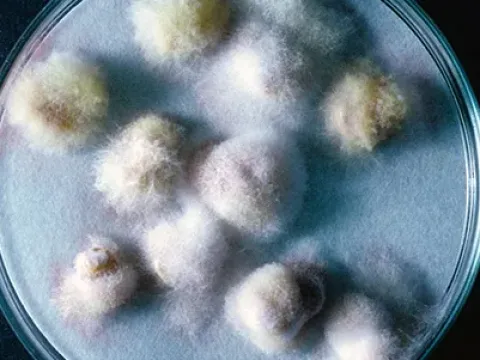
Microcera acuminata
Microcera acuminata
Microcera acuminata is a fungus belonging to the Kingdom Fungi. It is primarily recognized in agricultural science as an entomopathogenic organism.
What the section contains
Microcera acuminata
The fungus is characterized by its specific ability to parasitize various scale insects and mealybugs, which are notorious pests of woody plants.
The taxonomic classification places it within the group of fungi that form distinct, pointed sporodochia on the surface of their insect hosts.
Its biological cycle is strictly dependent on the availability of insect hosts, making it a highly specialized parasite rather than a generalist plant pathogen.
Researchers study this fungus as a potential biocontrol agent, as its morphology and infection strategy are well-adapted to humid horticultural environments.
This fungus does not primarily damage the plant tissue; instead, it acts as a biocontrol agent against scale insects that suck sap from citrus trees.
By infecting and killing these pests, the fungus prevents the extensive damage that these insects would otherwise cause to the foliage and fruits.
It is mainly found in citrus orchards, where scale insects are common and the humidity is sufficient for fungal development.
While the fungus may appear on the surface of leaves or twigs, it is only present there because of the proximity of the pest population.
Overall, its impact on the agricultural ecosystem is positive, as it reduces the need for synthetic insecticides through natural suppression of pest populations.
The fungus thrives during periods of high humidity and moderate temperatures, which are essential for the germination and spread of its conidia.
Rainy seasons and foggy weather create optimal conditions for the fungus to propagate and infect new colonies of scale insects.
The dispersal of the pathogen is mediated by water droplets and wind, which carry spores throughout the tree canopy.
During the dry season, the fungus remains largely inactive, often surviving in a dormant state until moisture levels rise again.
Climatic monitoring is crucial for understanding when the fungus will reach its peak activity to maximize the benefits of this natural control.
The most visible sign of infection is the emergence of white to pinkish, pointed sporodochia on the body of the scale insects.
As the infection progresses, the insect host becomes covered in fungal mycelium and eventually dies, appearing shriveled or crusty.
Observation of a reddish or orange tint on the surface of the pest's shield often indicates the maturation of the fungal spores.
These signs are distinct from plant diseases like soot mold, as the growth is clearly associated with the pest's body rather than the plant's surface.
Regular scouting of citrus branches will reveal whether the fungus is successfully colonizing the pest population in the orchard.
Control measures are generally not required to eliminate the fungus, as it is considered beneficial for maintaining pest levels below economic thresholds.
To encourage the activity of this pathogen, farmers should avoid the frequent application of broad-spectrum fungicides that could inhibit its growth.
Good orchard management, such as maintaining appropriate tree spacing to manage humidity, helps foster a healthy environment for the fungus.
Integrated Pest Management (IPM) strategies emphasize the preservation of such natural enemies rather than their eradication.
- Minimize use of fungicides
- Monitor scale insect populations
- Maintain canopy aeration
- Support biological balance in the orchard