
Description
Symptoms
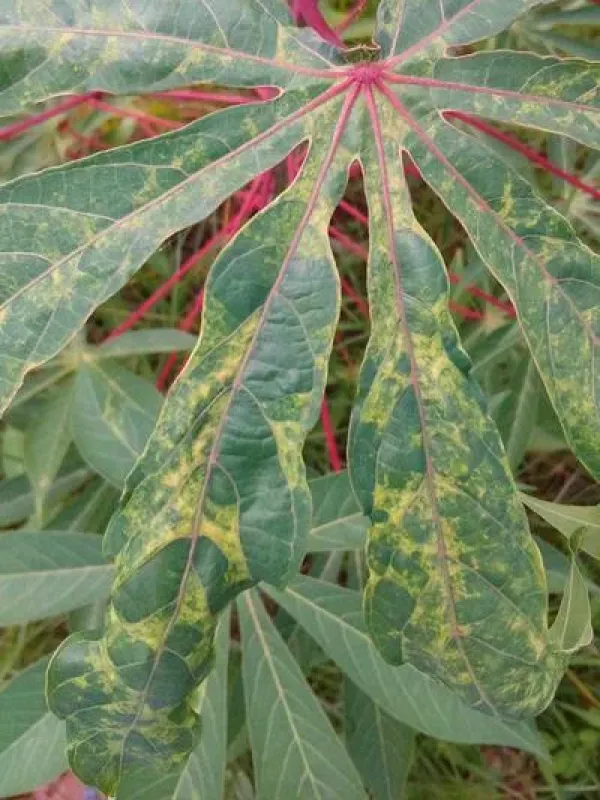
The initial symptom of the disease is a distinct chlorosis on the leaves. The leaf blades develop characteristic yellowish mottling, alternating with areas of normal green tissue.
Common signs include deformation and curling of the leaves. Foliage becomes stunted and crinkled, with wavy margins, which significantly reduces the photosynthetic capacity of the plant.
There is a marked reduction in growth for the entire plant. Infected plants appear stunted with shortened internodes, giving them a bushy or rosetted appearance.
As the infection progresses, the quantity and size of the tubers decrease. In severe cases, tuber formation is severely restricted, leading to a total failure of the harvest.
- Yellowing of leaf veins
- Mosaic patterns on leaves
- Stunting of shoots
- Reduced root system mass
Pathogen
Indian Cassava Mosaic is caused by viruses belonging to the genus Begomovirus, within the family Geminiviridae. These pathogens contain a single-stranded circular DNA genome and are highly specialized in infecting tropical tuber crops.
The primary vector for this disease in the field is the whitefly (Bemisia tabaci). The insect acquires the virus while feeding on an infected plant and then transmits it to healthy plants.
Spread also occurs through the use of infected planting material, such as stem cuttings. This remains the most significant factor in the international and regional movement of the disease.
The virus replicates in the phloem tissue, disrupting the transport of essential nutrients. This results in systemic infection affecting all parts of the cassava plant, including the roots.
This pathology remains a significant challenge in South Asia, where cassava is a vital food security crop. Ongoing research into viral genomics is essential for developing resistant cultivars.
Conditions for development
The virus thrives in hot and humid tropical climates. High temperatures accelerate the life cycle of the whitefly vector, leading to rapid population explosions.
The prevalence of the disease is directly correlated with whitefly population density. Increased vector activity leads to higher rates of viral transmission across the plantation.
Lack of phytosanitary management during the selection of stem cuttings is a primary factor in outbreaks. Using infected material ensures that the virus spreads to new fields.
Plants weakened by soil nutrient deficiencies or water stress are often more susceptible to rapid systemic colonization by the virus.
The presence of alternative weed hosts that harbor the virus during the off-season maintains a high inoculum pressure in the agricultural ecosystem.
Why it matters
The damage caused by Indian Cassava Mosaic results in catastrophic yield losses. In severe cases, farmers may lose between 50% and 80% of their total potential production.
Beyond quantity, the quality of the starch in the tubers is also compromised. This reduces the value of the harvest for both domestic food consumption and industrial starch processing.
Frequent infection leads to economic instability for smallholder farmers who rely on cassava as their primary source of income and nutrition.
The constant threat of the virus forces farmers to invest in costly insecticide programs and frequent replacement of plant stocks, increasing production costs.
Infected plantations act as reservoirs for neighboring farms, triggering localized epidemics and necessitating stringent quarantine measures to contain the spread.
Protection
The primary management strategy is the use of healthy, virus-indexed planting material. Tissue culture methods ensure that cuttings are free from viral load, establishing cleaner plantations.
Systematic monitoring of whitefly populations is essential. Applying insecticides to control the vector at early stages of crop development can significantly curb viral transmission.
Developing and deploying cassava varieties with natural genetic resistance to mosaic viruses is the most sustainable and effective long-term management solution.
Cultural practices, such as removing weed reservoirs and roguing (the physical removal and destruction of infected plants), help to minimize the local infection pressure.
Implementing Integrated Pest Management (IPM) practices, which combine biological control, cultural measures, and strict quarantine protocols, is crucial for effective disease control.
Pathogens and affected parts
Affects crops · 1
Discussion
No discussions yet — be the first.