
Description
Symptoms
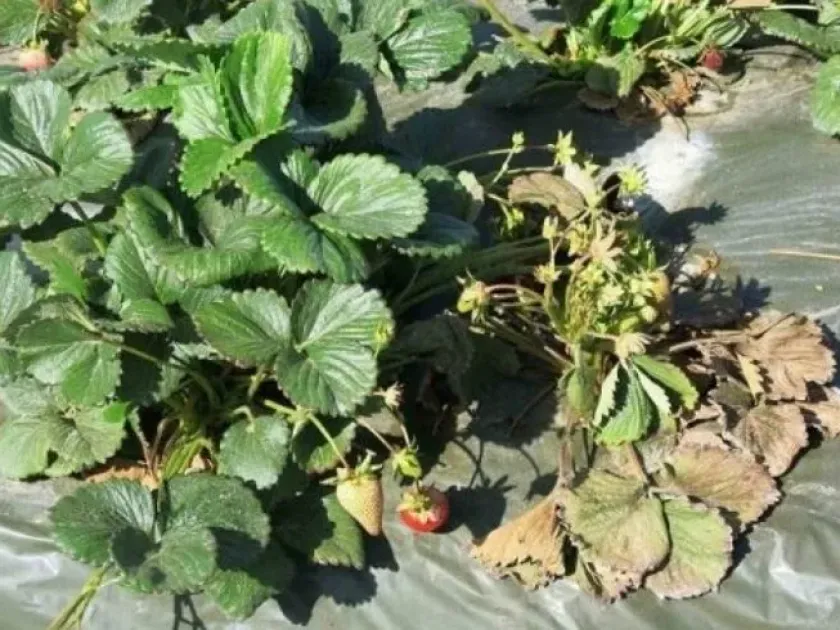
The first symptoms of Idriella root rot manifest as stunted growth of the plants, which gradually lose turgor and become chlorotic. The appearance of strawberry plants noticeably deteriorates, appearing as if they are waterlogged or suffering from drought, even when irrigated sufficiently.
Upon examination of the root system, one can observe characteristic blackening and death of fine lateral roots, which gradually turn into dark, almost black areas. Primary roots can also be affected, turning brownish or dark, indicating tissue destruction.
In affected plants, necrosis of the central root cylinder is observed, which disrupts the normal nutrient supply to the above-ground part of the crop. Leaves often begin to redden at the edges, then turn brown and die, starting from the lower tiers of the rosette.
In advanced cases, the affected root system becomes fragile and easily breaks off when attempting to dig the bush out of the soil. This leads to gradual wilting and subsequent death of the entire vegetative mass of the plant during the growing season.
The progression of the disease is often hidden, and gardeners notice the problem only when the plant is already critically damaged. Identification of the pathogen often requires laboratory analysis of roots to confirm the presence of specific spores.
Pathogen
The causative agent of the disease is the microscopic fungus Idriella lunata, which belongs to the imperfect fungi. The pathogen can persist in the soil for a long time, feeding on organic debris and infecting the roots of susceptible crops.
The fungus forms specific conidia that serve as the main source of infection spread in the soil and through irrigation water. Spore dissemination is also possible via the movement of infested soil on garden tools or through contaminated planting material.
The biology of Idriella lunata allows it to compete successfully with other microorganisms in the soil, especially when the balance of soil biota is disturbed. The fungus attacks root tissues, penetrating through micro-cracks or damage caused by soil pests.
The pathogen shows significant pathogenicity to strawberries, causing complex degradation processes in the root system. Unlike some other types of root rot, this fungus demonstrates an ability to develop under varying pH levels of the substrate.
Research shows that the mycelium of the fungus can grow deep into the plant's vascular system, making it a challenging target for systemic fungicides. The effectiveness of control measures depends directly on the timely detection of primary infection foci.
Conditions for development
The development of fungal infection is facilitated by periods of high soil moisture combined with cool weather, which is typical for the spring season. Excessive watering or water stagnation on the plot significantly increases the risk of plantation infection.
Idriella rot spreads most actively in heavy, compacted soils with poor aeration. The lack of oxygen in the root zone creates ideal conditions for the pathogen's activity, reducing the plant's natural immune resistance.
Failure to implement crop rotation, where strawberries are grown in the same spot for several consecutive years, leads to the accumulation of inoculum in the soil. Repeated use of infested plots for strawberry cultivation almost guarantees an outbreak.
The optimal temperature for the growth of Idriella lunata is within the moderate range, making the crop vulnerable during periods of unstable weather in spring and autumn. Sudden fluctuations in moisture also cause stress, facilitating fungal entry.
Lack of necessary agronomic practices, such as regular hoeing and control of soil-borne pests, creates a favorable environment for the spread of the pathogen. Pests often act as vectors or create entry points for infection.
Why it matters
The damage caused by the disease is reflected in a sharp decrease in strawberry productivity, up to the total death of individual plants. Affected bushes stop bearing fruit or produce extremely meager and low-quality yields.
The disease leads to plant gaps in the plantation, which requires additional costs for replanting. This is economically unfavorable for professional farming operations and private gardeners alike.
Disruption of root nutrition makes plants more susceptible to other stress factors such as drought, low temperatures, or secondary infections. The overall immunity of strawberries against a complex of diseases declines.
The spread of the pathogen throughout the plot can occur very quickly via irrigation systems or rain runoff, threatening the integrity of the entire cultivar collection. Fighting an outbreak in mature plantings is difficult due to the deep penetration of fungal spores.
Yield loss due to Idriella rot can reach 30–50% without proper control. Given the hidden nature of the disease, the damage often becomes noticeable only after a significant portion of the root system has been irreversibly damaged.
Protection
The main method of control is strict adherence to crop rotation: returning strawberries to the same site should not be done for at least 4–5 years. It is recommended to use only healthy, certified planting material from verified nurseries.
An important step is improving the physical properties of the soil, including the application of organic fertilizers to improve structure and regular hoeing to ensure air access. It is necessary to avoid plots with high groundwater levels and moisture stagnation.
- Preventive treatment of seedling roots before planting with modern fungicides.
- Timely removal of plants showing signs of distress along with their root ball.
- Control of soil-borne pests that damage roots (mole crickets, white grubs, nematodes).
- Use of biological preparations based on Trichoderma to suppress the development of pathogenic flora in the soil.
Chemical protection includes the application of systemic fungicides approved for berry crops during high-risk periods. Treatments should be carried out strictly in accordance with the application regulations.
After harvesting, it is recommended to thoroughly clean the plot of plant residues that may be potential reservoirs of infection. Deep autumn plowing of the soil contributes to the destruction of a portion of fungal spores during the winter period.
Pathogens and affected parts
Affects crops · 1
Discussion
No discussions yet — be the first.