
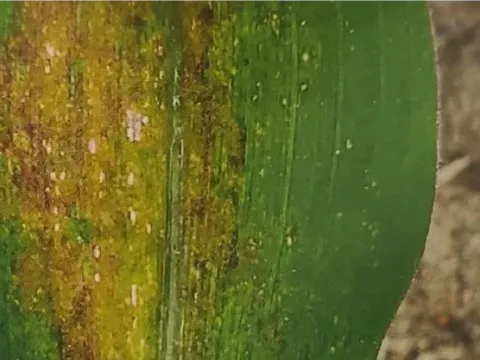
Northern corn leaf blight
Helminthosporium turcicum
Northern corn leaf blight (NCLB), caused by the fungus Setosphaeria turcica (anamorph Helminthosporium turcicum), is a major fungal disease belonging to the Ascomycota division. It primarily affects the leaves of corn plants, causing significant tissue necrosis.
What the section contains
Northern corn leaf blight
The pathogen overwinters as mycelium and conidia on infected corn residues left on the soil surface. During the growing season, these conidia are dispersed by wind and splashing rain to healthy leaves, initiating the infection cycle.
NCLB thrives in mild, humid conditions with temperatures between 20°C and 25°C. High humidity and prolonged leaf wetness are critical factors that accelerate the spread of the fungus and reduce the incubation period.
The disease typically progresses from the lower leaves upward, depending on weather patterns and the susceptibility of the corn hybrid. Initial symptoms usually appear as the plant approaches the reproductive stages.
The economic impact of this disease is severe, as it leads to reduced photosynthetic capacity, resulting in lower grain fill, lighter test weight, and potentially significant yield losses in both grain and silage crops.
The disease primarily attacks corn (maize), although certain related grasses, including sorghum and Sudan grass, can serve as alternative hosts and reservoirs for the fungus.
The primary symptom is the appearance of long, elliptical or cigar-shaped lesions on the leaves. These lesions are initially pale-green or gray and turn tan to brown as they mature.
Under moist conditions, dark olive-colored spores develop within the necrotic lesions, giving them a velvety appearance. This sporulation is a diagnostic characteristic of the disease.
As the infection severity increases, multiple lesions can coalesce, resulting in complete blighting and death of the leaf tissue. This premature senescence prevents the plant from adequately filling the grain.
If infection starts early, the entire canopy can appear gray or "burned," making the field look as though it suffered from severe drought or frost damage.
- Elongated, cigar-shaped lesions on leaves.
- Dark, velvety spore masses on the lesions.
- Rapid yellowing and death of the lower canopy.
- Reduced yield and potential stalk rot issues.
The most effective strategy is the planting of resistant or tolerant corn hybrids. Breeders have developed various genes for resistance, which provide a solid foundation for managing this disease.
Cultural practices are essential, including tillage to bury crop residues, which helps decompose the infected material where the fungus survives through the winter season.
Implementing a diverse crop rotation is highly recommended to disrupt the pathogen's life cycle. Avoiding continuous corn cultivation reduces the initial inoculum level significantly.
Fungicide application is a viable option for high-yielding fields with heavy disease pressure. Using a combination of triazoles and strobilurins applied at the appropriate growth stage can effectively stop disease progression.
Nutrient management, specifically ensuring sufficient potassium levels, supports general plant vigor and can decrease the susceptibility of corn to severe NCLB infections.