
Helminthosporium apple leaf spot
Helminthosporium papulosum
Description
How to identify
The causal agent is the fungus Helminthosporium papulosum, which belongs to the Ascomycota phylum (often classified as a deuteromycete). It is a specialized pathogen targeting the bark, leaves, and fruit of apple trees.
The fungus produces conidia, which serve as the primary inoculum for spreading the disease. These spores are dispersed by wind and rain splashes, allowing the pathogen to colonize new parts of the host tree or neighboring trees.
The fungal life cycle involves overwintering as mycelium or conidia within the bark cracks of infected trees or in fallen debris. Once the environmental conditions become favorable, the pathogen resumes activity.
The fungus is highly dependent on environmental moisture. High humidity, mist, and prolonged rain showers are essential triggers for the development and dissemination of the pathogen in the orchard environment.
The classification of this organism highlights its ability to survive in various forms. Understanding its taxonomy helps in selecting appropriate fungicides that specifically target fungal pathogens of this class.
What it damages
The pathogen primarily affects the apple tree, focusing on young shoots, branches, and fruits. Its destructive activity leads to the degradation of bark tissue, which creates pathways for secondary infestations.
One of the main consequences of the infection is the restriction of growth in young shoots. Persistent infection can cause individual branches to wither and die, significantly reducing the overall productivity of the tree.
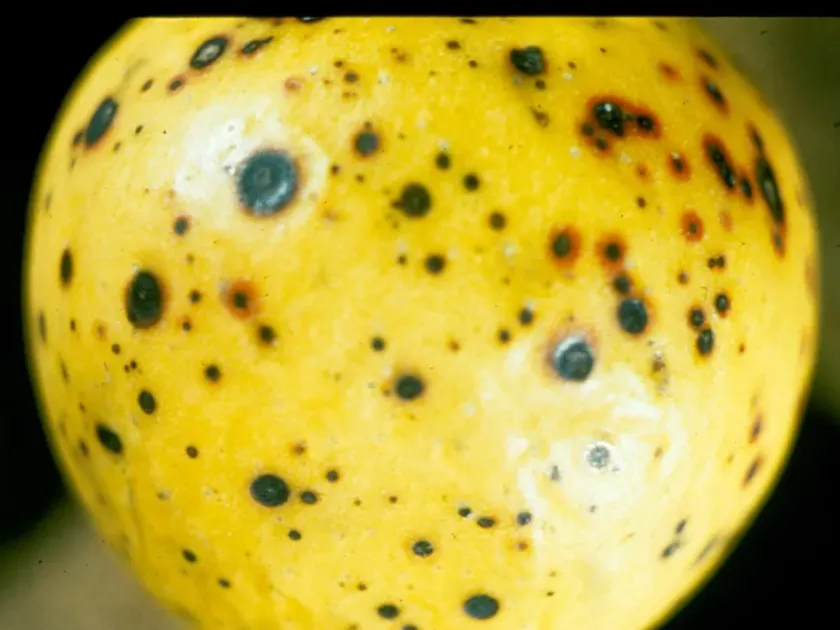
Fruit quality is severely impacted due to the formation of small dark spots. These lesions ruin the aesthetic appeal of the apples and make them susceptible to rot during storage, leading to post-harvest losses.
Chronic infection weakens the apple tree, making it more susceptible to environmental stressors such as frost and drought. The cumulative effect of these factors can lead to the decline of the orchard.
Economic damage is substantial, as farmers are forced to invest in extra fungicide applications and may face lower prices due to the diminished quality of the fruit crop.
Signs of infestation
Initial symptoms are characterized by small, raised, brown-to-black papules on the bark of one-year-old shoots. These growths give the bark a bumpy, rough texture that is distinct from healthy wood.
Leaf lesions present as brown, circular, or irregular spots. In conditions of high humidity, an olive-black fungal growth might become visible at the center of these spots, marking the sporulation stage.
On the surface of the fruit, the disease manifests as minute dark spots. Over time, these spots can coalesce, leading to sunken necrotic areas that distort the shape of the developing apple.
Internal examination of the affected branches reveals a browning of the cambial layer. This indicates that the pathogen is actively damaging the transport and growth tissues of the tree.
- Raised dark papules on young twig bark.
- Brown leaf spots with potential fungal sporulation.
- Small necrotic lesions on the skin of apple fruit.
- Reduced vigor and stunted shoot development.
- Premature yellowing and leaf drop in heavily infected trees.
Control measures
Sanitation is the cornerstone of control. All infected branches should be pruned and removed from the orchard to eliminate the primary sources of inoculum for the next growing season.
Applying copper-based fungicides during the dormant period, especially in early spring, is highly effective. This helps to reduce the fungal population residing in the bark crevices.
During the vegetative stage, protective fungicide sprays should be applied during periods of high humidity and rainfall. Following a proper spraying schedule prevents the pathogen from establishing on new growth.
Promoting tree health through proper fertilization and balanced irrigation is essential. A vigorous tree is more capable of resisting infections and recovering from minor damage caused by pathogens.
Preventing mechanical damage to the bark is crucial, as wounds provide easy entry for the fungus. Always seal pruning cuts with horticultural sealants to protect exposed wood from infection.
Causes diseases · 3
Discussion
No discussions yet — be the first.