
Helicobasidium purpureum
Helicobasidium purpureum
Helicobasidium purpureum is a soil-borne fungal pathogen belonging to the Basidiomycota division, infamous for causing the disease known as violet root rot.
What the section contains
Helicobasidium purpureum
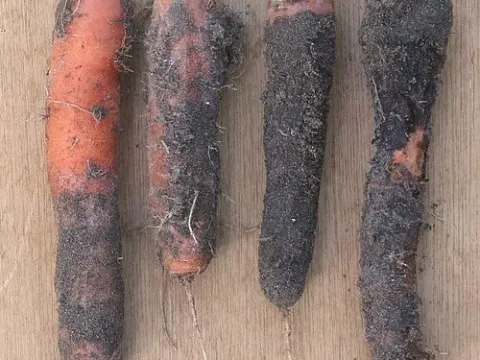
The fungus is characterized by its vivid violet-purple mycelium, which forms a dense mat on the surface of the infected roots of host plants.
It exists in the soil as rhizomorphs, which are specialized fungal strands that help the pathogen spread and survive for many years in the absence of a host.
Taxonomically, it is classified within the order Helicobasidiales, and its asexual stage is frequently referred to by the synonym Rhizoctonia crocorum.
Identification in the field is straightforward due to the distinct purple coloration of the mycelial growth that wraps around the roots of affected vegetables.
This pathogen has a wide host range, severely impacting crops like carrots, sugar beets, potatoes, clover, and various other root vegetables and legumes.
The infection destroys the root tissues, causing a soft rot that often spreads rapidly, leading to the complete decay of the underground parts of the plant.
Plants affected by the fungus show signs of chlorosis, stunted growth, and eventually wilt as the root system fails to provide adequate nutrients and water.
In cases of severe infestation, the pathogen can cause significant yield losses, rendering the affected crops unmarketable and unsuitable for storage.
Root rot caused by H. purpureum often leads to thinning stands in commercial fields, requiring expensive management interventions and replanting strategies.
The pathogen thrives during the growing season when soil moisture is high and temperatures are moderate, facilitating the aggressive spread of its mycelium.
It remains in the soil as sclerotia or persistent mycelia on decaying plant debris, allowing it to survive through harsh winter conditions until the next crop.
Spread across fields is primarily driven by movement of infested soil via agricultural machinery, contaminated water runoff, or infected planting material.
The peak incidence of the disease usually occurs towards the end of the vegetative period, coinciding with the maturation phase of the roots and tubers.
Once the soil is contaminated, the fungus can remain dormant but viable for several years, making the control of this pathogen a long-term challenge.
The hallmark sign of infection is the development of a thick, purple-colored fungal mat that encases the root system, eventually turning tissues dark and soft.
When pulling an infected plant from the soil, the purple mycelial crust is often clearly visible, sometimes with soil particles clinging to the fungal strands.
Above-ground symptoms include progressive yellowing and drying of the foliage, as the damaged roots are unable to sustain the plant's metabolic demands.
Affected areas in a field usually appear as expanding patches of dying or stunted plants, often starting in lower or wetter areas of the soil.
Early-stage infection may be subtle, but as the mycelium grows, it causes characteristic tissue degradation and rotting of the taproot or tubers.
Implementing a strict crop rotation cycle of 4–6 years is the most effective way to reduce the pressure of Helicobasidium purpureum in contaminated soil.
Sanitation practices such as removing and destroying all infected plant residues are crucial to prevent the build-up of the pathogen's inoculum in the field.
Amending the soil to manage pH levels, specifically avoiding overly acidic conditions, can help inhibit the development of the fungal mycelium.
The use of approved soil-applied fungicides can provide a degree of protection in high-risk areas, provided they are applied according to local agricultural regulations.
Selecting resistant cultivars, where available, and ensuring proper soil drainage helps to minimize the environment conducive to fungal growth and spread.