
Helminthosporium rostratum
Helminthosporium rostratum
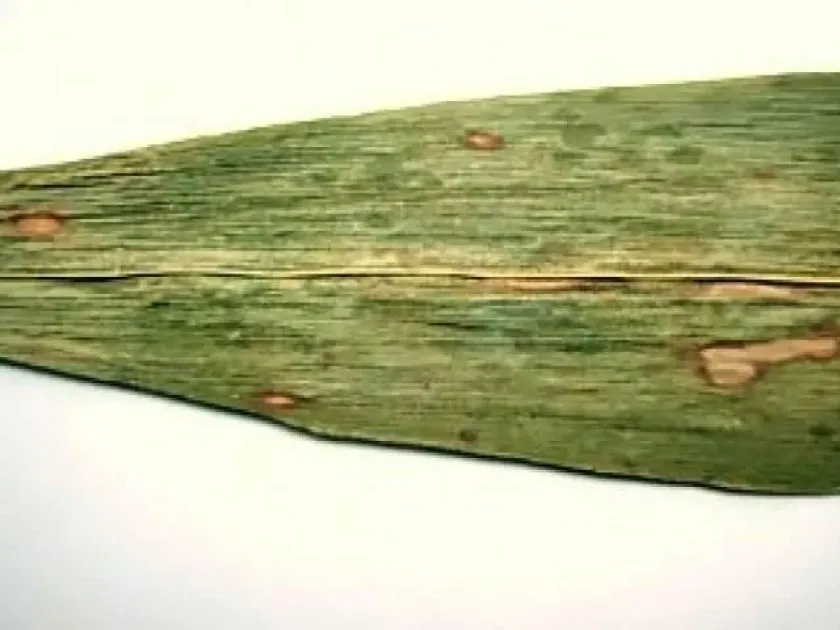
Description
How to identify
Helminthosporium rostratum, currently classified as Exserohilum rostratum, is a significant fungal pathogen within the Ascomycota division. It functions as a parasitic fungus capable of causing severe damage to various plant species.
The fungus is characterized by the production of large, multi-septate conidia which serve as the primary inoculum for spreading the disease within a field.
The biology of this pathogen is strictly tied to its ability to survive in both soil and plant debris, making it a persistent threat in agricultural environments.
Microscopic examination typically reveals long, pigmented conidiophores emerging from the lesions of infected plants, indicating active sporulation.
It displays a high level of environmental plasticity, allowing it to adapt to various cropping systems across different climatic zones.
What it damages
The pathogen has a broad host range, particularly among grasses, including corn, sorghum, and millet. It can infect all vegetative and reproductive stages of the host plant.
Lesions formed on leaves result in the destruction of photosynthetic tissue, which significantly limits the plant's ability to produce energy for grain filling.
Seedling blight is a common consequence of early-season infection, often leading to poor plant establishment and the need for field replanting.
Root and stalk infections weaken the overall structural integrity of the plant, predisposing the crop to lodging and harvest difficulties.
Infected kernels show reduced germination rates and lower quality, which directly impacts the economic value of the harvested yield.
When it appears
The development of Helminthosporium rostratum is highly favored by warm temperatures, typically ranging from 20 °C to 30 °C, combined with high relative humidity.
Infection cycles usually begin early in the spring, as spores are dispersed from overwintering sites by wind and splashing rainfall.
The disease reaches its peak during the mid-to-late growth stages of the crop when canopy moisture remains high for extended periods.
As the season progresses towards maturity, the fungus utilizes the remaining plant tissue to produce survival structures, preparing for the dormant winter period.
Weather patterns with intermittent rainfall and warm days provide the most ideal conditions for explosive secondary spread and epidemic development.
Signs of infestation
Symptoms are distinct and often referred to as leaf blights or spots, starting as small pinpoints and expanding into larger necrotic areas.
- Elongated, rectangular or spindle-shaped brown lesions on leaves.
- Presence of a dark olive-colored fungal growth within the necrotic areas.
- Yellow halos (chlorosis) surrounding the lesion centers as the tissue dies.
- Darkening and necrosis of the crown and root tissues in infected seedlings.
- Overall stunted growth and necrosis of the plant architecture.
Control measures
Effective management begins with the use of certified, fungicide-treated seeds to minimize the risk of introducing the pathogen into clean fields.
Cultural practices, including deep plowing and crop rotation with non-host species, are essential for reducing primary inoculum levels in the soil.
Maintaining balanced soil fertility helps plants resist infection, as crops under nutrient stress are significantly more susceptible to blight.
Selecting and planting resistant or tolerant hybrid varieties remains the most effective long-term strategy for mitigating yield loss.
Fungicide applications during critical growth stages can be used to prevent widespread outbreaks if favorable weather conditions for the fungus persist.
Causes diseases · 1
Discussion
No discussions yet — be the first.