
Cedar Apple Rust
Gymnosporangium juniperi-virginianae
Description
How to identify
Cedar apple rust is caused by the fungus Gymnosporangium juniperi-virginianae, a member of the Basidiomycota division. This pathogen is a heteroecious fungus, meaning it requires two unrelated hosts to complete its life cycle.
The fungus is specifically adapted to infect plants in the Rosaceae family, primarily apples and crabapples, and the Cupressaceae family, specifically junipers such as eastern red cedar.
The life cycle is complex and typically spans two years. It involves multiple spore stages, transitioning between the apple tree and the juniper shrub to survive and propagate.
The pathogen is highly dependent on wind dispersal of spores, which can travel long distances, making the management of neighboring landscapes a critical factor in control.
Understanding the biology of Gymnosporangium is essential for commercial growers and home gardeners to mitigate the significant damage this fungus causes to ornamental and fruiting species.
What it damages
On apple trees, the fungus causes chlorotic spots on leaves, leading to premature defoliation, which reduces the tree's photosynthetic capacity and weakens overall vigor.
Fruit infection results in severe aesthetic and physical damage, characterized by deformed, rusty lesions that often cause the fruit to drop prematurely and become unsalable.
On juniper trees, the fungus manifests as gall-like growths on branches. These galls disrupt the flow of nutrients and can lead to dieback of individual branches or limbs.
The cumulative effect of annual infections on apple trees significantly reduces the total yield and may increase the susceptibility of the tree to other biotic and abiotic stresses.
In ornamental settings, the loss of foliage on junipers and the resulting branch death negatively impact the landscape value and the health of the host plant.
When it appears
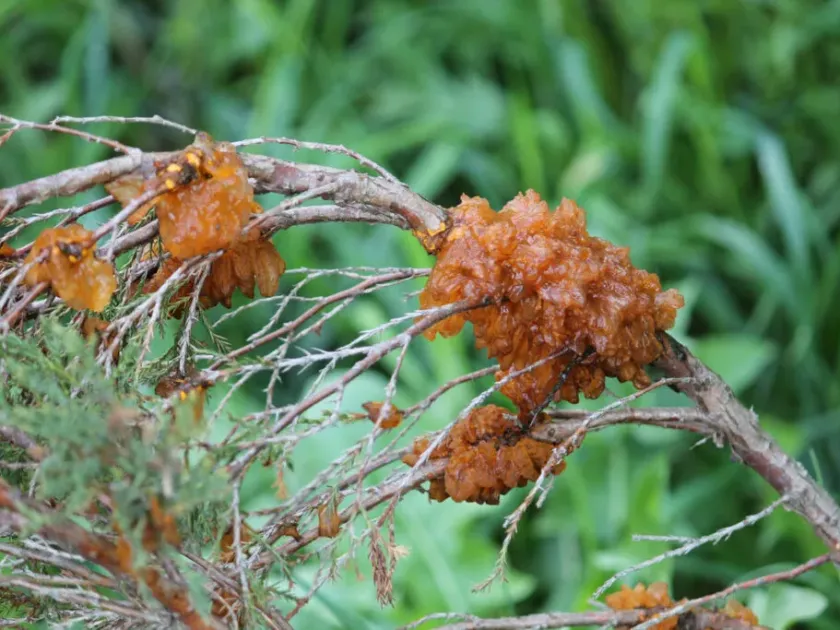
Spring is the most critical period for infection. During wet weather, the galls on juniper trees produce bright orange, gelatinous telial horns, which release spores into the air.
These spores are carried by the wind to young, developing apple leaves and fruit. Infection typically occurs shortly after the apple trees begin to bloom in the spring.
During the summer months, the fungus produces aecia on the underside of apple leaves, which eventually release spores that are carried back to juniper trees to restart the cycle.
In the autumn, the fungus colonizes the stems of the juniper tree, where it develops into the overwintering gall stage, hidden from plain sight until the following spring.
Weather conditions, particularly rainfall and relative humidity, dictate the intensity of the disease each year, with wet springs favoring widespread outbreaks.
Signs of infestation
The first symptoms on apple leaves appear as small, pale yellow spots that expand into bright orange-red circles, often surrounded by a distinct yellow halo.
As the infection progresses, tiny black dots (pycnia) appear within the lesions on the upper leaf surface, followed by finger-like projections (aecia) on the underside of the leaf.
Symptoms on the fruit include firm, orange, or reddish-brown lesions that protrude from the surface, causing the fruit to become misshapen and woody in texture.
On juniper, the presence of brown, woody, kidney-shaped galls on twigs is the primary diagnostic sign. In spring, these galls swell significantly after rain.
If left untreated, infected apple trees show significant leaf drop by mid-summer, leaving the tree sparse and stunted before the normal autumn senescence.
Control measures
The most effective long-term management strategy is to remove juniper trees from the immediate vicinity of apple orchards, ideally keeping them at least 500 feet apart.
If removal is not possible, perform manual pruning to remove galls from juniper branches during the winter months, ensuring all debris is destroyed or removed from the site.
Chemical control involves applying protective fungicides to apple trees, starting at the tight cluster stage and continuing through petal fall to prevent spore germination.
Selecting apple cultivars that are resistant or immune to cedar apple rust is a proactive measure that eliminates the need for intensive fungicide spraying.
- Apply copper-based sprays early in the season.
- Monitor trees regularly for early signs of infection.
- Maintain tree vigor through proper fertilization and irrigation.
Causes diseases · 1
Discussion
No discussions yet — be the first.