
Description
Symptoms
On apple trees, the initial symptoms appear as small, pale yellow spots on the upper leaf surface, which eventually expand into bright orange or reddish lesions.
As the infection progresses, small, tube-like structures called aecia develop on the undersides of leaves, releasing spores and giving the leaf a fuzzy appearance.
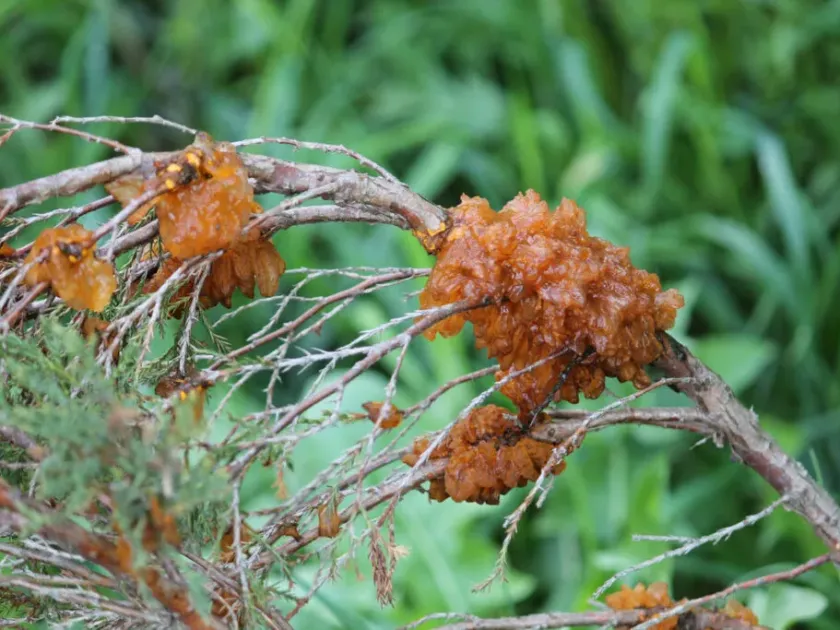
On juniper trees, the infection is identified by brown, woody, spherical galls on the branches, which swell and sprout orange gelatinous tendrils during spring rains.
Heavily infected juniper branches may become stunted, distorted, or develop dieback, especially if the fungus has been present for multiple growing seasons.
Apple fruit can also be infected, showing similar orange-colored spots that lead to fruit deformation and reduced market quality.
Pathogen
The disease is caused by a heteroecious basidiomycete fungus known as Gymnosporangium juniperi-virginianae, which requires two distinct hosts to complete its life cycle.
This pathogen alternates between apple trees (members of the Rosaceae family) and juniper species (specifically Juniperus virginiana and related varieties).
The fungus survives the winter as mycelium within the juniper galls, producing orange, gelatinous telial horns during moist spring weather.
Aeciospores produced on apple leaves are carried by wind back to juniper hosts, where they infect the foliage and stems, initiating the development of new galls.
As an obligate parasite, the fungus cannot survive or spread without the continuous presence of its specific alternate host plants in the surrounding environment.
Conditions for development
The disease thrives in environments where both apple trees and junipers are grown in close proximity, allowing for efficient spore transfer between hosts.
Prolonged wet weather in the spring is the primary driver for the activation of galls on junipers and the subsequent successful infection of apple foliage.
Poor air circulation within the canopy of the trees, caused by a lack of pruning, increases humidity levels and promotes fungal growth.
Wind-driven rain acts as a natural carrier for spores, enabling the pathogen to spread from wild junipers in nearby woods to cultivated gardens.
Optimal infection temperature for this pathogen generally ranges between 15°C and 25°C, coupled with high humidity or leaf wetness periods.
Why it matters
Defoliation caused by severe rust infection weakens apple trees, significantly reducing their ability to photosynthesize and store energy for the next season.
Continuous attacks by the fungus lead to poor fruit set, lower quality harvests, and increased susceptibility to other biotic and abiotic stressors.
Juniper trees often lose their ornamental value due to distorted growth, branch death, and the persistent presence of unsightly fungal galls.
The cumulative stress on the trees over several years can result in significant stunted growth and, in extreme cases, the premature death of the plants.
Management of this disease is costly and labor-intensive, requiring multiple chemical applications throughout the early stages of the growing season.
Protection
The most effective strategy is the physical removal of one of the host types from the immediate area to break the fungal life cycle.
Pruning and destroying infected juniper branches with galls can significantly reduce the local inoculum load before the spring spore release.
Application of fungicides, such as sulfur-based products or systemic myclobutanil-based sprays, during the critical infection period in spring.
- Apply preventative fungicides at the pink bud stage on apples.
- Continue treatments through petal fall and first cover sprays.
- Ensure thorough coverage of all leaf surfaces for optimal protection.
Planting resistant apple cultivars is the best long-term solution to mitigate damage in areas where juniper hosts are abundant.
Pathogens and affected parts
Affects crops · 1
Discussion
No discussions yet — be the first.