
Description
Symptoms
Symptoms of GRSV infection are highly variable and can mimic other physiological disorders or fungal diseases, making early identification challenging.
Early-stage signs often include chlorotic spots, mosaic patterns, or distinctive concentric rings on the leaves, which are hallmark indicators of this virus.
As the disease progresses, necrotic lesions appear on stems and petioles, leading to the distortion of leaves and a severe reduction in plant size, known as stunting.
In lettuce crops, the virus manifests as leaf chlorosis, wilting, and inhibited leaf development, which can lead to total crop failure if the infection occurs early in the season.
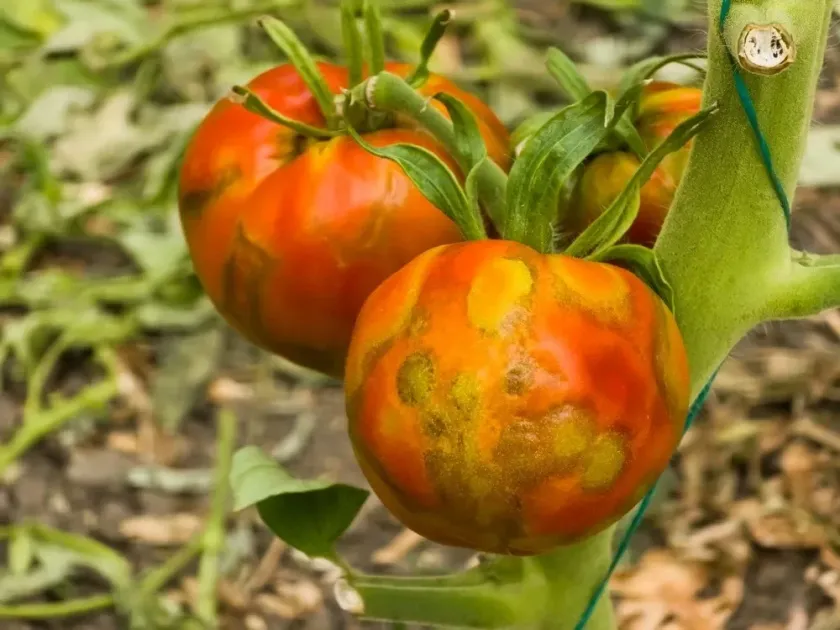
Tomato fruits from infected plants often display ring-like spots, blotchiness, and deformation, rendering them unsellable and completely unsuitable for the fresh market.
Pathogen
Groundnut ringspot virus (GRSV) is a plant pathogenic virus belonging to the genus Orthotospovirus and the family Tospoviridae. It is a significant threat to global agriculture, particularly in warm climates.
Like other tospoviruses, GRSV is an obligate parasite, meaning it requires living host tissue to replicate and propagate itself throughout the plant system.
The virus is exclusively transmitted by thrips, primarily the Western flower thrips (Frankliniella occidentalis). The insect acquires the virus during its larval stage and remains a vector for the rest of its life cycle.
Once introduced into a plant, the virus moves through the phloem, causing systemic infection that affects the physiological and metabolic functions of the host.
The host range is broad, encompassing vegetables like tomatoes and lettuce, as well as legumes such as peanuts, leading to complex management challenges in diverse farming systems.
Conditions for development
The prevalence of GRSV is intrinsically linked to the population dynamics of its insect vector, the thrips, which thrive under specific environmental conditions.
High temperatures and low humidity are optimal for the rapid reproduction of thrips, which facilitates faster transmission of the virus between plants.
Weeds growing in or around the fields often act as secondary hosts for both the virus and the vectors, serving as reservoirs that sustain the pathogen throughout the year.
In protected cultivation environments like greenhouses, microclimatic conditions can be highly conducive to the build-up of thrips populations, increasing the severity of GRSV outbreaks.
The movement of infected transplants or nursery stock across long distances is a primary factor in the geographical spread of the virus to new areas.
Why it matters
The economic impact of Groundnut ringspot virus is severe because once a plant is systemically infected, it cannot be cured, and the damage to crop quality is irreversible.
Infection results in a drastic decline in marketable yield, which can reach 100% loss in high-pressure scenarios, causing substantial financial strain for producers.
Beyond yield loss, the plant's overall health is compromised, leaving it vulnerable to secondary infections by other opportunistic pathogens.
The necessity for frequent insecticide applications to manage thrips increases production costs and can lead to the development of pesticide resistance in insect populations.
Furthermore, the persistent nature of the virus in the environment necessitates long-term management strategies that restrict future crop choices for growers.
Protection
Effective management of GRSV requires a holistic approach focused on integrated pest management (IPM) to minimize the presence of thrips vectors.
Early detection and the removal of symptomatic plants are critical to limiting the secondary spread of the virus within a field or greenhouse.
- Implementing sticky traps to monitor and detect early thrips activity.
- Sanitation practices, including the removal of weeds that serve as virus reservoirs.
- Using reflective mulches to deter thrips from landing on young plants.
- Employing biological control agents, such as predatory mites, to suppress thrips populations.
- Utilizing screen-house protection and high-quality virus-free transplants to prevent initial infection.
Pathogens and affected parts
Affects crops · 1
Discussion
No discussions yet — be the first.