
Description
Symptoms
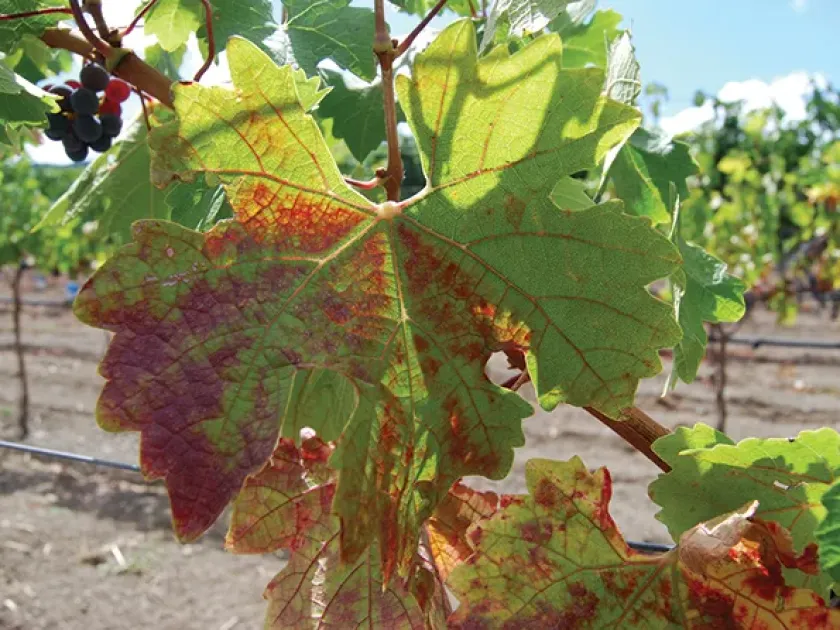
The characteristic sign of the disease is the development of red blotches on the leaves, which typically appear from mid-summer through the harvest season.
In red grape varieties, these blotches manifest as deep red or burgundy spots that may eventually merge to cover a significant portion of the leaf blade.
In white grape varieties, the symptoms appear as chlorotic or pale yellow areas on the leaves rather than red, which can sometimes be mistaken for nutrient deficiencies.
A distinctive feature of this virus is that the leaf veins often remain green even while the surrounding tissue turns red, helping to distinguish it from leafroll viruses.
The symptoms often start at the base of the shoots and progress upward, although the severity and distribution of symptoms can vary greatly from year to year.
Pathogen
The causative agent of the disease is the Grapevine red blotch virus (GRBV), a circular single-stranded DNA virus belonging to the family Geminiviridae.
The virus primarily affects Vitis vinifera (the common grapevine) and is also known to infect various hybrid rootstocks used in modern viticulture.
The primary vector for the transmission of this virus in nature is the three-cornered alfalfa treehopper (Spissistilus festinus), which transmits the virus during feeding.
Transmission also occurs through the propagation of infected plant materials, such as budwood and rootstocks, making nursery certification crucial.
At the biological level, the virus infects the phloem tissue, disrupting the translocation of sugars and nutrients from the leaves to the fruit clusters and roots.
Conditions for development
The spread of GRBV is highly dependent on the population density of the three-cornered alfalfa treehopper, which thrives in warm, temperate climates.
Weedy ground cover within or near the vineyard serves as a habitat and alternative host for the insect vectors, facilitating the spread of the virus.
Climatic factors influence symptom expression, with warmer seasons often resulting in more intense leaf reddening compared to cooler years.
The use of infected nursery stock is the primary method of long-distance dissemination, often leading to the introduction of the virus into previously clean areas.
Vineyard architecture and the proximity to older, infected plantings contribute to the rate at which the virus moves through a block over time.
Why it matters
The primary economic impact is a significant reduction in Brix levels (sugar content), which severely degrades the quality and market value of the wine.
Infected vines frequently exhibit delayed ripening, requiring producers to delay harvest, which increases the risk of weather-related damage to the crop.
Vines infected with the red blotch virus show decreased vigor, reduced shoot growth, and compromised winter hardiness compared to healthy vines.
Long-term infestation leads to a decline in overall vineyard productivity, forcing growers to resort to premature replanting of the affected vineyard blocks.
The financial losses are particularly severe for high-end wineries that rely on consistent fruit quality and optimal sugar accumulation for premium production.
Protection
The most important control measure is the use of clean, certified virus-tested planting material to prevent the initial introduction of the virus.
Regular visual inspection of the vineyard, combined with laboratory testing, allows for the early detection and removal of infected vines to slow the spread.
Managing the treehopper population through targeted insecticide programs during periods of high insect activity can help reduce the transmission rate.
Effective weed management within the vineyard rows and surrounding areas is essential to remove the insect vectors' food sources and breeding grounds.
Maintaining a buffer zone between new, virus-free plantings and existing older blocks known to harbor the virus is a recommended practice for disease mitigation.
Pathogens and affected parts
Affects crops · 1
Discussion
No discussions yet — be the first.