
Description
Symptoms
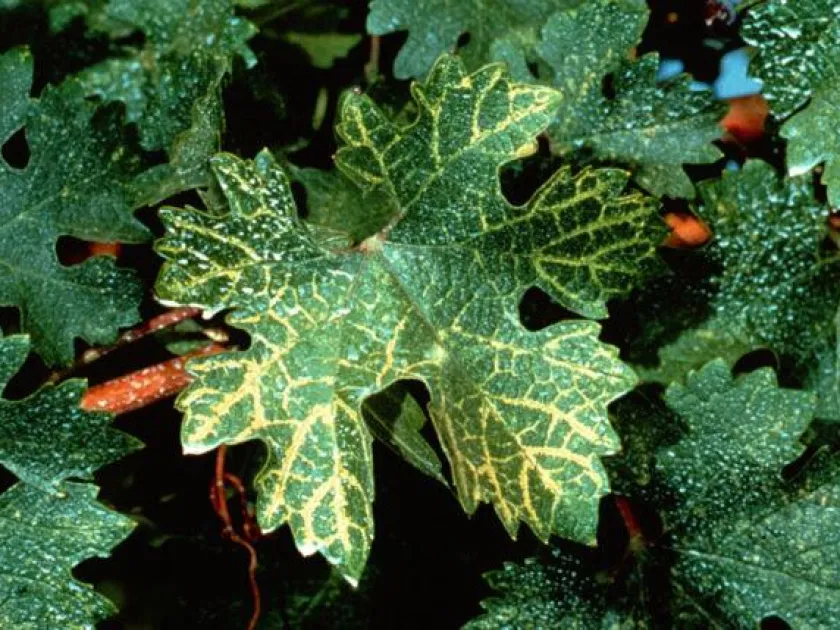
The primary symptom of the disease is the abnormal deformation of leaves, which take on an angular shape and show mottled, chlorotic patterns between the veins.
In early spring, infected vines exhibit stunted growth and an overall reduction in vigor, with shoots appearing significantly shorter than those of healthy plants.
Leaves often display irregular mosaic spots, and edges may roll upwards or downwards, giving the foliage a distorted, twisted, or thickened appearance.
Flower clusters on infected vines often undergo necrosis or deformation, which results in poor fruit set and significant reductions in total crop yield.
As the season progresses, leaves may drop prematurely, and the overall plant health declines, leading to a visible lack of vitality in the canopy.
Pathogen
The disease is caused by the Grapevine angular mosaic virus (GAMV), which systemically invades the host plant tissues and disrupts vital biological functions.
The virus particles circulate through the plant's vascular system, meaning that once a vine is infected, the entire plant becomes a reservoir for the pathogen.
Transmission occurs primarily through the root-feeding nematode Xiphinema index, which acts as a vector by carrying the virus from infected to healthy root systems.
The virus is also spread via contaminated plant material, such as cuttings or rootstocks used for grafting, making it a critical phytosanitary issue.
Mechanical transmission is a secondary but significant route, where the virus is spread by pruning shears and other tools if they are not sanitized between plants.
Conditions for development
High soil moisture levels create an ideal environment for the nematode vectors, which accelerates the spread of the virus across the vineyard floor.
Cool, damp spring conditions are particularly conducive to the expression of symptoms, putting additional stress on the vine during its critical early growth stages.
Heavy, clay-based soils that retain moisture provide a stable habitat for nematodes, allowing them to remain active for extended periods of time.
Poor agricultural practices, such as the use of infected propagation stock, are the primary cause of widespread outbreaks in newly established vineyards.
Environmental stress factors, including nutrient imbalances and waterlogging, can exacerbate the impact of the virus on the vine's metabolic processes.
Why it matters
The economic impact is severe, as infected vines often show a dramatic decline in productivity, sometimes producing 50% less fruit than healthy counterparts.
Grapes harvested from diseased vines are generally inferior in quality, showing lower sugar content and disrupted ripening patterns, which ruins their winemaking potential.
The systemic nature of the virus leads to long-term decline and early mortality of the vine, often forcing growers to remove entire vineyard blocks.
Reduced shoot vigor and poor wood maturation make infected vines extremely susceptible to winter damage, leading to higher rates of cane dieback.
- Loss of vineyard uniformity and aesthetic appeal.
- Drastic reduction in grape sugar levels.
- Increased susceptibility to secondary fungal infections.
- Requirement for costly removal and replacement of affected blocks.
Protection
The most important control measure is to source high-quality, virus-indexed nursery stock that has been certified free from known viral pathogens.
Strict sanitation protocols must be followed, including the thorough disinfection of all pruning tools using alcohol or bleach solutions between vines.
Managing soil-borne nematode populations through pre-plant soil fumigation or the use of approved nematicides is essential in endemic areas.
Once a vine is confirmed to be infected, the recommended action is to remove the entire plant, including the root system, to eliminate the viral reservoir.
Maintaining a high level of vine health through optimal fertilization and irrigation helps the plant withstand the effects of the virus more effectively.
Pathogens and affected parts
Affects crops · 1
Discussion
No discussions yet — be the first.