
Description
Symptoms
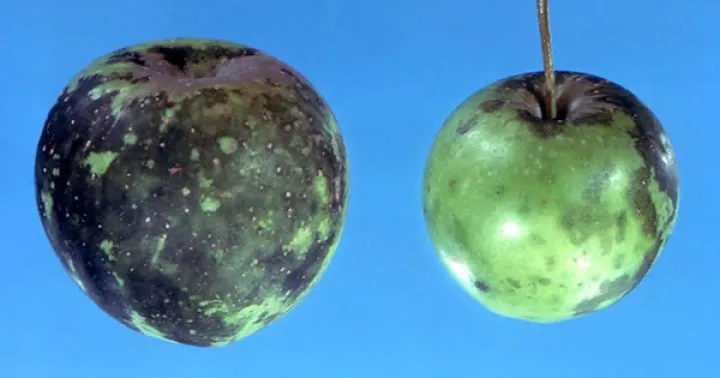
The primary symptom involves the appearance of cloudy, gray, brown, or black smudges or spots on the skin of apples, pears, and tropical fruits like mangoes.
These spots are essentially dense clusters of mycelium that adhere firmly to the waxy layer of the fruit, mimicking a layer of soot or dirt.
While the blotches can sometimes be rubbed off with heavy friction, they typically leave behind a visible discoloration that ruins the product's marketability.
The infection does not cause soft rot or tissue breakdown; the interior of the fruit remains sound unless secondary pathogens exploit the skin damage.
Widespread infection creates a dull and messy appearance, significantly reducing the commercial grade of the harvest.
Pathogen
Gloeodes (Gloeodes pomigena) is a fungal pathogen responsible for the condition commonly known as sooty blotch, affecting the surface of various fruits.
The pathogen infects only the outer cuticle layer of the fruit skin, never penetrating deeply into the fruit flesh, though it severely impacts the aesthetic quality.
This fungus is a cosmopolitan pathogen often found in temperate and subtropical regions where high humidity levels are frequent during the ripening phase.
Its biological life cycle is heavily dependent on surface moisture, which allows fungal spores to germinate and establish colonies on the fruit skin.
In field conditions, it is often identified alongside other fungi as part of the sooty blotch and flyspeck complex, causing characteristic fruit surface blemishes.
Conditions for development
The development of sooty blotch is driven by prolonged periods of high relative humidity (above 90%) and frequent rainfall during the fruit growth stages.
Free water on the fruit surface, such as dew or rain, is the essential requirement for spore germination and colonization of the cuticle.
Orchards with dense, unpruned canopies are at the highest risk because they lack sufficient airflow to dry out moisture after rain or morning dew.
Optimal temperatures for the growth of Gloeodes range between +18°C and +24°C, which frequently coincides with the pre-harvest period.
Poor orchard hygiene, including the presence of infected reservoir plants nearby, contributes to the rapid spread of the disease during favorable weather.
Why it matters
The primary economic impact is the direct reduction in the cosmetic quality of the fruit, leading to lower prices or total rejection by retailers.
In countries where fruit exports are strictly regulated by appearance standards, the presence of even minor sooty blotch can disqualify entire batches.
Cleaning the fruit post-harvest is labor-intensive and may cause physical injury to the fruit skin, further reducing its shelf life.
Although it does not impact the taste or internal quality, the visual blight makes the fruit unappealing to consumers, resulting in lower sales volume.
In severe cases, the cumulative effect of surface fungi can make entire harvests unsuitable for the premium fresh market.
Protection
Pruning is the most critical cultural practice to improve air circulation within the tree canopy, allowing for faster evaporation of moisture from fruits.
Fungicide applications are highly effective if scheduled correctly during the growing season to prevent initial infection during humid periods.
Implementing proper thinning and spacing of trees reduces the humidity buildup that facilitates the development of the pathogen.
Sanitation practices, such as removing debris and controlling nearby wild hosts, help reduce the overall inoculum pressure in the orchard.
- Regular protective fungicide applications during the late season.
- Aggressive canopy management to ensure rapid drying of fruits.
- Monitoring weather patterns to time fungicide applications before high-humidity events.
Pathogens and affected parts
Affects crops · 1
Discussion
No discussions yet — be the first.