
Description
Symptoms
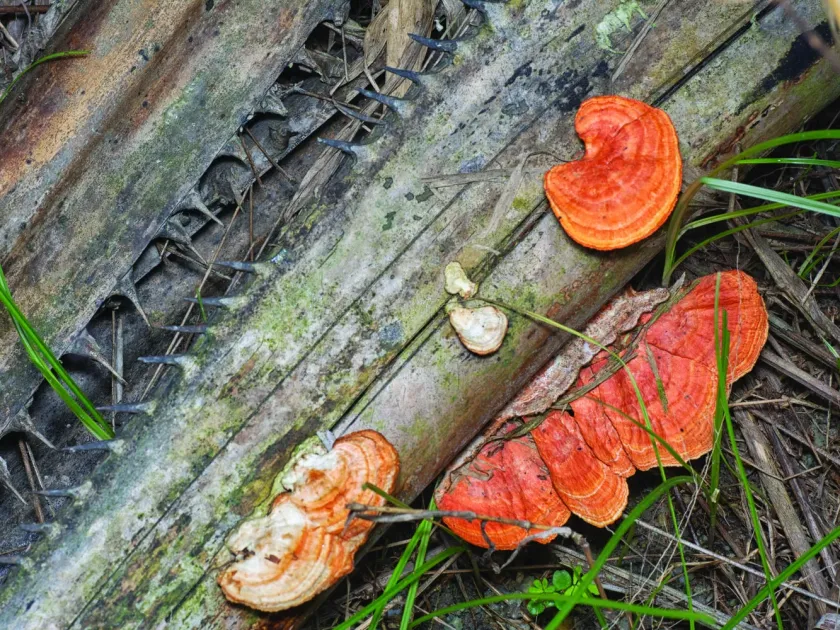
The most distinctive symptom of infection is the appearance of fungal fruiting bodies, known as conks, at the base of the tree trunk or on major root flares. These bracket fungi are typically zoned and possess a rigid, woody texture.
Foliage on an infected plant will begin to yellow prematurely, lose turgor, and gradually wilt, indicating a failure in the vascular system caused by the destruction of the roots.
A progressive thinning of the crown and dieback of individual branches, starting from the periphery, is often observed and may be mistaken for drought stress or natural aging.
Root tissue in the infected area becomes brittle, and the wood takes on a characteristic yellowish-white, stringy appearance, confirming that the fungus is actively decomposing cellulose and lignin.
In advanced cases, the tree loses its structural stability and can collapse suddenly during high winds due to the total structural decay of the root collar and trunk base.
Pathogen
The disease is caused by the wood-decaying fungus Ganoderma zonatum, a basidiomycete that specializes in attacking the root systems and lower trunks of woody plants.
The fungus acts as a necrotrophic parasite, entering the plant tissues through mechanical wounds in the roots, bark, or areas where large roots have naturally sloughed off.
The pathogen primarily inhabits the root zone and the tree's base, where its mycelium actively degrades the complex organic compounds found within the wood structure.
Spread occurs mainly through the release of basidiospores, which are carried by air currents and settle on bark injuries or in the soil near stressed or weakened trees.
The fungus can persist in the soil for extended periods as mycelium or rhizomorphs, making the site highly infectious for future plantings if infected trees are not properly removed.
Conditions for development
The disease thrives in high soil moisture conditions, particularly in areas with poor drainage, where standing water promotes root rot and creates an environment favorable for fungal colonization.
Mechanical injuries to the root system during landscaping, tilling, or transplanting significantly increase the risk of infection by providing easy entry points for Ganoderma zonatum spores.
Trees that are already stressed by pests, nutrient deficiencies, or adverse climate factors are much more susceptible to invasion than healthy, vigorous specimens.
High temperatures combined with excess humidity create the perfect climate for mycelial growth and the rapid production of fruiting bodies on the soil surface near the trunk.
Compacted, heavy soils that lack proper aeration inhibit root health and growth, which weakens the tree's natural defense mechanisms against fungal pathogens.
Why it matters
The primary danger lies in the latent nature of the disease, which decays internal wood structures unseen until the tree becomes a significant safety hazard to surrounding property.
The disease causes substantial economic losses, especially in commercial avocado orchards, where infected trees must be removed and destroyed to contain the spread.
In urban landscapes and parks, the disease poses a critical safety risk, as infected plane trees may collapse without warning, threatening pedestrians and structures alike.
The fungus induces white rot, which destroys the structural integrity of the wood, rendering the tree unrecoverable even with the application of fungicides.
The infectious potential of the site increases over time, preventing the successful cultivation of susceptible crops for many years unless intensive sanitation is performed.
Protection
The most important control measure is strict sanitation: the prompt removal of infected trees, including the entire root system, is essential to stop the pathogen's spread.
Avoid any mechanical wounding to the roots or trunk base during garden maintenance, as open wounds serve as the primary gateway for fungal spores.
Improving soil drainage is critical to prevent waterlogged conditions, which limits the ability of the fungus to spread through the soil profile.
Preventative soil treatments using specific fungicides or the application of biological agents like Trichoderma species may help suppress early-stage fungal activity in the soil.
When replanting, select healthy, disease-free nursery stock and ensure adequate spacing between trees to minimize the risk of pathogen transmission through root-to-root contact.
Pathogens and affected parts
Affects crops · 2
Discussion
No discussions yet — be the first.