
Description
Symptoms
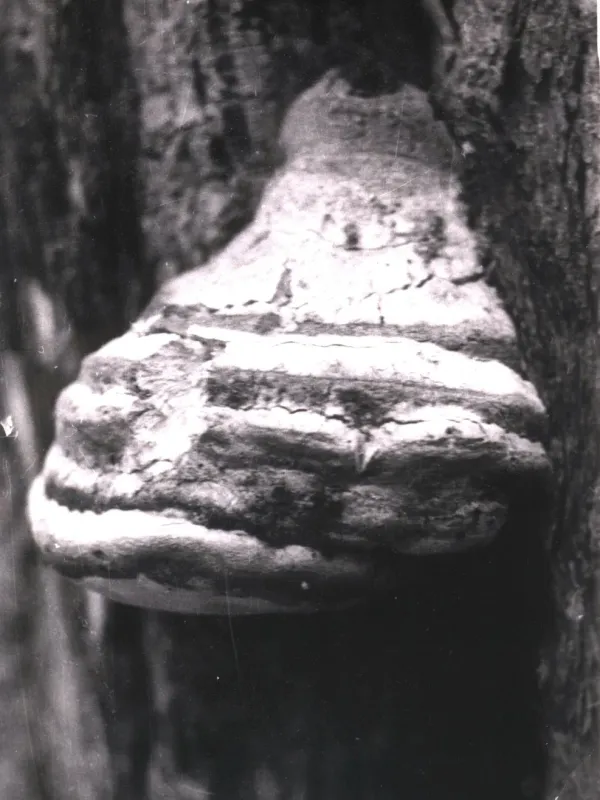
The infection is often hidden, and external signs of decay may not appear for several years. The presence of fruiting bodies on the trunk is the most reliable diagnostic feature.
Infected wood exhibits a reddish-brown coloration and loses its structural integrity. Over time, the wood becomes brittle and crumbles into small cubes, a process known as cubical brown rot.
White, felt-like mycelial mats are frequently found within the cracks of decaying wood, serving as a clear indicator of the pathogen's active presence inside the tree.
Host trees, such as Douglas fir, may show symptoms of general decline, including foliage chlorosis, sparse crowns, and significantly reduced annual radial growth.
Tree failure is a common result of this disease, as the internal decay weakens the wood to such an extent that the trunk can no longer support the weight of the crown.
Pathogen
The disease is caused by the wood-decay fungus Fomitopsis officinalis, also known as the quinine conk. This basidiomycete primarily targets coniferous species and causes extensive internal decay.
The fungus invades the tree through wounds or cracked bark, where its mycelium colonizes the heartwood. It secretes enzymes that efficiently degrade cellulose, resulting in characteristic wood decay.
As a perennial fungus, it develops slowly over many years inside the trunk. It produces rare but distinctive conk-shaped or elongated fruiting bodies with a dense, corky texture.
Spore production allows the fungus to spread across forest stands. Once these spores land on susceptible host tissues, they initiate new infection cycles, ensuring the pathogen's persistence.
Its biological resilience and ability to thrive in old-growth trees make Fomitopsis officinalis a significant pathogen in forest ecosystem management.
Conditions for development
Environmental stress and mechanical injuries are primary drivers of infection. Any damage to the bark provides an entry point for the fungus to establish itself in the heartwood.
Moist environments and moderate temperatures facilitate the germination of spores and the subsequent spread of mycelium throughout the host tree's interior.
Old-growth stands and overmature trees are significantly more susceptible to infection due to their physiological state and the high frequency of wounds accumulated over time.
Poor silvicultural practices, such as lack of thinning or improper logging techniques, can create favorable conditions for the disease to spread throughout a plantation.
Climate fluctuations, such as prolonged droughts followed by heavy winters, weaken the trees' natural defenses, making them much more vulnerable to fungal colonization.
Why it matters
The main impact of brown trunk rot is the severe degradation of timber quality. The heartwood decay renders the logs unsuitable for most industrial and structural purposes.
Economic losses are substantial, as the presence of the fungus often necessitates early harvesting and significantly reduces the marketable volume of the affected timber.
Increased tree breakage poses a major safety risk in forest stands, requiring additional resources for monitoring and removing hazardous trees near roads or recreational areas.
The fungus can spread to adjacent trees, creating disease centers that may decimate susceptible populations, particularly in monocultures like Douglas fir plantations.
The loss of mature trees to this decay leads to the degradation of the forest structure, impacting biodiversity and the ecological functions of the forest stand.
Protection
Regular forest health monitoring and the identification of infected trees are essential for preventing the spread of the pathogen within a forest area.
Sanitation cuttings, which involve the removal of infected or overmature trees, are effective in reducing the total spore load and protecting the health of the remaining stand.
Minimizing mechanical damage during timber harvest is crucial, as avoiding bark injuries prevents the fungus from gaining a foothold in healthy trees.
Implementing proper silvicultural management, including the selection of appropriate planting sites and spacing, helps maintain the vigor of the forest and its resistance to decay.
Proper disposal of infected wood debris is necessary to ensure that residual spores do not continue to infect new host trees in the vicinity.
Pathogens and affected parts
Affects crops · 1
Discussion
No discussions yet — be the first.