
Artist's bracket
Fomes applanatus
Description
How to identify
The artist's bracket (Fomes applanatus) is a perennial wood-decay fungus belonging to the Polyporaceae family. It is widely recognized for its ability to grow on living and dead hardwood trees.
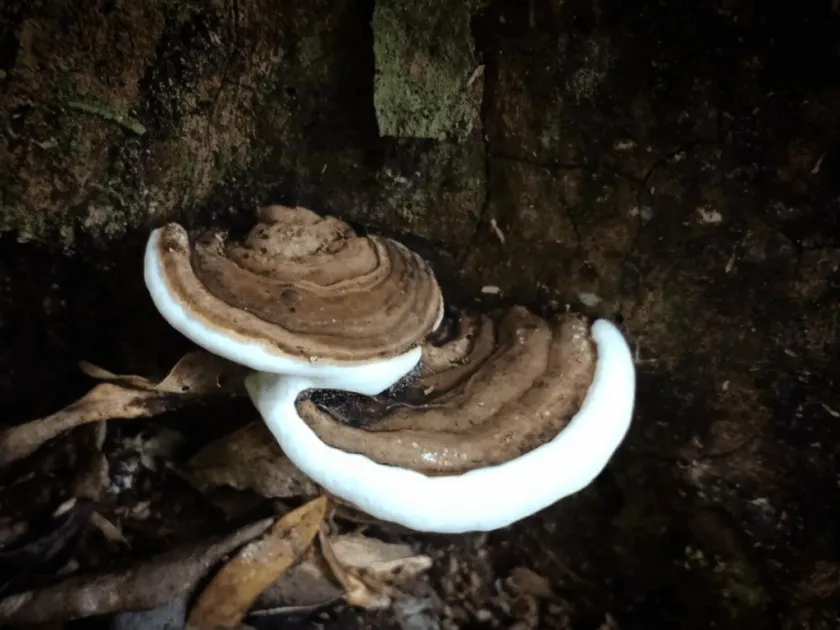
The fruit bodies are semicircular or fan-shaped, with a hard, woody texture. The upper surface is typically brown, grey, or blackish, often featuring a layered, zoned appearance.
The pore surface on the underside is white when fresh but bruises dark brown immediately. This unique characteristic allows it to be used for artistic drawing, which is the origin of its common name.
The fungus produces microscopic spores in massive quantities, which can often be seen as a fine, reddish-brown dust settling on the bark around the base of the infected tree.
Taxonomically, it is often associated with the genus Ganoderma. It plays a significant ecological role as a decomposer, though it is destructive when appearing on living landscape or ornamental trees.
What it damages
Fomes applanatus primarily infects broad-leaved trees such as oak, beech, poplar, and maple. In orchard settings, it can cause severe damage to fruit-bearing varieties.
The pathogen enters through wounds in the bark, exposed wood from pruning, or damaged roots. Once established, the mycelium secretes enzymes that break down lignin and cellulose.
This process results in white rot, which degrades the heartwood of the tree, significantly reducing its internal strength and structural integrity over several years.
Affected trees may appear healthy on the outside for a long time, even while the internal wood is being slowly consumed, making sudden failure a major risk.
The loss of heartwood leads to internal hollows, which can cause the tree to snap during windstorms, posing a threat to surrounding property and people.
Signs of infestation
The most obvious sign is the presence of the woody, perennial brackets attached to the trunk, usually near the ground level or on old stump wounds.
Infected wood often shows a bleached, fibrous appearance in advanced stages, interspersed with characteristic black zone lines created by the fungus to delineate its territory.
Crown dieback is a common symptom as the tree's ability to transport water and minerals through the damaged xylem is severely compromised by the ongoing rot.
Cracks appearing along the trunk or the presence of fungal growth indicates that the rot has progressed significantly and the structural safety is in jeopardy.
- Hard, shelf-like fruiting bodies.
- Presence of a reddish-brown spore deposit.
- Premature yellowing or shedding of foliage.
Control measures
Proper wound management is the most effective preventative measure. Pruning should be done carefully to avoid large, jagged wounds that are prone to fungal entry.
Any mechanical damage to the trunk caused by gardening equipment should be treated immediately with antiseptic wound dressings to prevent pathogen colonization.
If a tree is found to have extensive decay, professional assessment is required. Often, complete removal and destruction of the infected wood is necessary to stop the spread of spores.
Maintaining tree vigor through appropriate fertilization, mulching, and irrigation helps the tree develop its own natural defenses against wood-rotting pathogens.
Applying preventative copper-based fungicides to the bark and pruning wounds can help inhibit the germination of fungal spores during wet periods of the year.
Causes diseases · 1
Discussion
No discussions yet — be the first.