
Description
Symptoms
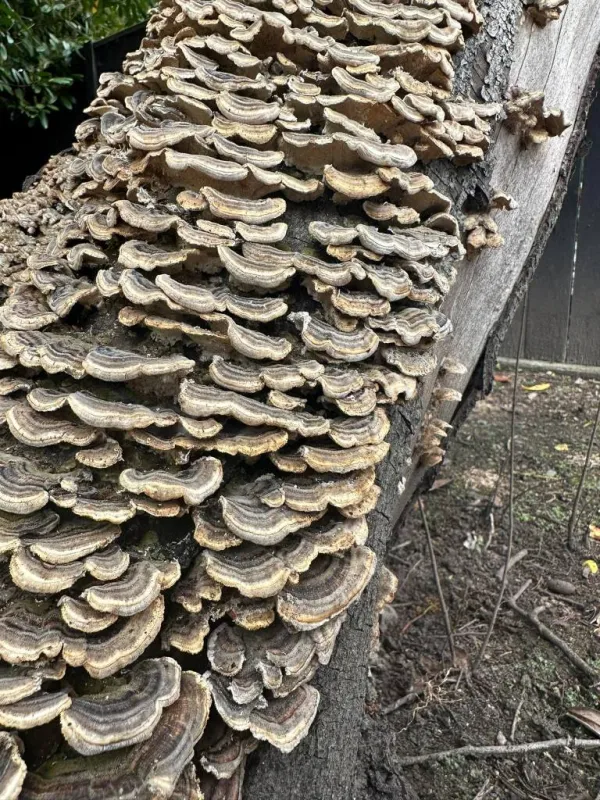
The most visible symptom is the appearance of leathery, multi-colored fruiting bodies arranged in overlapping clusters. The cap surfaces exhibit concentric zones of varying shades including white, grey, blue, and brown.
Internally, the wood undergoes white rot. Infected tissues become fibrous, brittle, and bleached, losing their density and strength compared to healthy heartwood or sapwood.
Affected trees, such as the elm, often display signs of canopy decline, including yellowing leaves, premature leaf drop, and dieback of the crown as the conductive tissues fail.
Peeling bark and exposure of the decayed wood are common in advanced stages. Beneath the bark, thick white fungal mats (mycelial fans) may be found covering the sapwood.
In final stages, the interior of the trunk becomes hollowed out. This makes the tree extremely susceptible to windthrow and mechanical failure, posing a significant safety risk.
Pathogen
Trametes versicolor, commonly known as Turkey tail, is a wood-decay fungus belonging to the Polyporaceae family. It is a saprotrophic fungus that can act as a opportunistic parasite on weakened woody plants.
The pathogen disperses through basidiospores that travel via wind currents. These spores infect trees by landing on open wounds, cracks in the bark, or damaged branches, where they germinate into the wood.
Once inside, the fungus develops mycelium that secretes enzymes to break down lignin and cellulose. This process leads to the degradation of the wood structure, leaving it soft and structurally unstable.
The fungus produces distinctive shelf-like, fan-shaped fruiting bodies on the exterior of the bark. These sporocarps are essential for the survival and reproduction cycle of the organism.
The pathogen is highly adaptable and can survive in a wide range of temperatures. Its mycelium can persist inside the wood for years, slowly consuming the host while awaiting favorable conditions to fruit.
Conditions for development
High humidity and consistent moisture levels favor the development of the fungus. It thrives in shaded, overcrowded environments where airflow is restricted and moisture persists.
Mechanical damage is the primary entry point. Wounds from lawnmowers, wildlife, storms, or improper pruning provide the perfect environment for spores to establish an infection.
Trees under physiological stress, due to drought, poor soil fertility, or other pests, are significantly more vulnerable to colonization by Trametes versicolor than healthy specimens.
Accumulation of coarse woody debris, such as stumps and fallen branches in the vicinity, serves as a reservoir for the pathogen. From these sources, spores can easily spread to healthy nearby trees.
Fruiting body production is optimal under moderate temperatures, typically between 15°C and 25°C. During warm, humid spells, the fungus can produce vast quantities of spores.
Why it matters
The primary concern is the rapid destruction of the tree's structural integrity. A hollowed-out trunk can fail unexpectedly, creating significant safety hazards for properties and people.
The fungus affects a broad range of hardwood species, including elm. The loss of vital trees diminishes the ecological and aesthetic value of urban forests and landscape plantings.
Physiological harm occurs as the fungus disrupts the transport of water and nutrients within the tree. This leads to a systemic decline, causing the plant to starve and eventually die.
Because the fungus produces large numbers of spores, one infected tree can lead to an epidemic in the immediate area if the pathogen is not managed effectively.
Wood decay caused by this fungus makes the timber economically useless for construction or furniture making, causing substantial financial losses for timber owners.
Protection
The primary management strategy is the physical removal of fruiting bodies. Pruning infected branches can slow the spread, provided the cuts are made back to healthy wood.
All pruning tools must be disinfected after use on infected trees to prevent cross-contamination. Any open wounds should be treated with protective sealants or fungicides.
Improving tree vitality through appropriate watering, fertilization, and mulch application helps trees develop better defenses against fungal attacks.
- Regularly inspect trunks for the presence of fruiting bodies.
- Remove and destroy old stumps that harbor the fungus.
- Sanitize tools with an alcohol or bleach solution.
- In cases of severe structural decay, remove the tree entirely to prevent collapse.
Removal of heavily infected trees is recommended to prevent the buildup of inoculum. The infected wood must be burned or buried to stop the further dispersal of fungal spores.
Pathogens and affected parts
Affects crops · 1
Discussion
No discussions yet — be the first.