
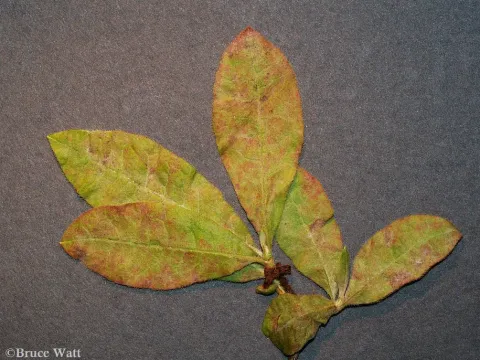
Azalea powdery mildew
Erysiphe azaleae
The causative agent of azalea powdery mildew is the fungal pathogen Erysiphe azaleae, which belongs to the Erysiphaceae family. It is a highly specific biotroph that primarily affects species of the genus Rhododendron, including the widely cultivated azaleas.
What the section contains
Azalea powdery mildew
This fungus survives by extracting nutrients from the host plant through haustoria, specialized structures that penetrate the epidermal cells without causing immediate death of the host tissue. This ectophytic lifestyle allows the fungus to create a visible layer of white, powdery mycelium on the surface of the leaves.
The pathogen reproduces via conidia, which are asexual spores formed on the surface of the mycelium. These spores are easily disseminated by air currents, splashing water, and handling, facilitating the rapid spread of the disease within greenhouses and nurseries.
Erysiphe azaleae is well-adapted to the humid, enclosed environments often found in residential homes and professional greenhouses. Its ability to proliferate under stable temperature conditions makes it a persistent challenge for plant growers.
Understanding the taxonomic position and biological habits of this fungus is essential for effective management. It differs from other powdery mildews by its specific host range and distinct symptoms that manifest primarily on the foliage and occasionally on the flower buds of azaleas.
The damage caused by Erysiphe azaleae is primarily aesthetic but can lead to severe physiological decline. The presence of the fungus blocks sunlight from reaching the leaf surface, significantly reducing the plant's photosynthetic capacity.
Severe infestations lead to chlorosis and subsequent necrosis of the leaf tissue. As the fungus draws resources from the plant, it inhibits the growth of new shoots and prevents the development of healthy flower buds, leading to a reduction in the ornamental value of the azalea.
In cases of heavy infection, the leaves may curl, dry out, and drop prematurely. This leads to partial or total defoliation, leaving the shrub vulnerable to secondary pathogens and further environmental stress, such as sunburn or dehydration.
The economic impact is substantial for commercial growers, as symptomatic plants cannot be sold. Furthermore, the cost of labor and fungicides required to mitigate an outbreak can consume a significant portion of a nursery's maintenance budget.
Without intervention, the cumulative effect of the pathogen exhausts the plant's stored energy reserves. This makes it difficult for the azalea to survive the winter or recover during the next growing season, often leading to plant death.
Azalea powdery mildew outbreaks are most frequent during periods of moderate temperatures and high relative humidity. While often associated with the spring and autumn months, the disease can occur year-round in temperature-controlled greenhouse environments.
Fluctuations between warm days and cool, humid nights create optimal conditions for spore germination. The condensation that forms on the leaves provides the necessary moisture for the fungal spores to colonize the host plant effectively.
During the peak summer season, poor ventilation and high humidity accelerate the spread of the pathogen. Once a plant is infected, the rapid production of conidia allows the fungus to cover entire sections of the plant within a matter of days.
As the season ends, the fungus may produce chasmothecia—small, dark fruiting bodies that serve as overwintering structures. These bodies allow the pathogen to survive on fallen leaf litter, acting as a source of primary infection for the following season.
Monitoring for signs of the disease is crucial during transitions in climate. Professional agronomists recommend regular scouting to detect the first white patches before the fungus gains a firm hold on the plant population.
The most recognizable sign is the emergence of white, flour-like patches on the surface of the leaves. These patches start small and sporadic but gradually merge to form large, dense mats of fungal mycelium.
As the infection matures, the appearance of the foliage changes significantly. The affected areas often show signs of yellowing (chlorosis), followed by browning or bronzing as the underlying cells begin to die from the parasitic activity of the fungus.
Leaf distortion is a common consequence of the infection. The leaves may curl inward or become crinkled, hindering their ability to function properly. The white coating might also extend to the stems and petioles in severe cases.
- White, powdery spots appearing on the leaves.
- Curling, yellowing, or browning of infected leaves.
- Premature leaf drop and stunted shoot growth.
- Presence of tiny black dots (chasmothecia) on the mycelium.
- General lack of vigor and poor flowering performance.
If you observe any of these symptoms, it is vital to isolate the affected plant immediately. Checking the underside of the leaves is particularly important, as the fungus often colonizes the shaded, humid microenvironment of the leaf underside first.
Control of Erysiphe azaleae requires a multifaceted strategy involving sanitation, environmental management, and chemical treatment. Proper plant spacing is the first line of defense, ensuring that air can circulate freely around each plant.
Sanitation practices are critical to preventing disease spread. All fallen leaves and heavily infected plant parts should be pruned, removed, and safely discarded to eliminate the reservoir of spores that could restart the cycle.
When environmental controls are insufficient, systemic fungicides belonging to the triazole or strobilurin classes are highly effective. These chemicals move through the plant tissues to eradicate existing mycelium and provide a barrier against new infections.
Resistance management is essential; therefore, alternating between different classes of fungicides is recommended to ensure long-term efficacy. All applications must be thorough, covering both the top and bottom of the foliage to ensure complete coverage.
Biological control agents, including certain beneficial fungi and bacteria such as Bacillus subtilis, can also be utilized. These products are useful for maintaining plant health and preventing colonization during the initial stages of the growing season.