
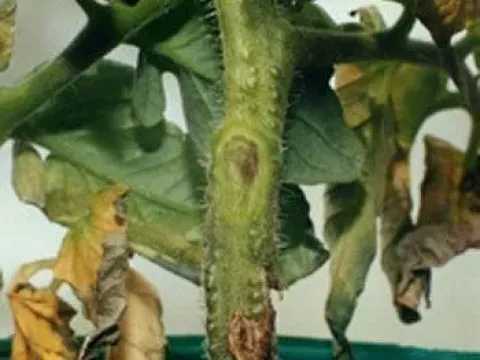
Bacterial canker of tomato
Corynebacterium michiganensis
The causative agent of bacterial canker is the gram-positive bacterium Clavibacter michiganensis subsp. michiganensis. It is a vascular pathogen that colonizes the xylem of host plants.
What the section contains
Bacterial canker of tomato
This organism is widely recognized as a significant quarantine pest because it can spread through contaminated seed lots, which facilitates global distribution across different regions.
The bacterium is highly persistent and can survive in crop debris for several seasons, in the soil, and on various surfaces like wooden stakes or greenhouse structures.
It enters plants through natural openings such as stomata, or more commonly, through microscopic wounds inflicted during cultivation activities like pruning or tying.
Optimal development occurs in warm and humid conditions, where the bacterium multiplies rapidly within the vascular bundles, physically obstructing water flow to the upper plant parts.
The primary host is the tomato, but the pathogen can also affect peppers, eggplants, and various weeds within the Solanaceae family, serving as a reservoir.
The disease causes significant economic damage by reducing overall yield, lowering fruit quality, and in severe cases, leading to total crop failure within a greenhouse or field.
Losses are particularly high when the infection occurs early in the season, as the systemic colonization prevents the plant from developing a strong root system or healthy foliage.
Fruit spotting makes the harvest unmarketable, as the characteristic lesions severely diminish the aesthetic and commercial value of the tomato produce.
- Systemic wilting leading to plant death.
- Reduced fruit set and stunted plant growth.
- Transmission to subsequent crops through contaminated seeds.
- Increased secondary rot infections in weakened tissues.
The hallmark symptom of bacterial canker is the marginal necrosis of leaves, often starting at the edges, accompanied by chlorosis and eventual wilting of individual leaflets.
In mature plants, a progressive wilting occurs, typically starting from the bottom of the plant and moving upwards, often appearing as a one-sided wilt on specific branches.
The fruit symptoms are distinctive, appearing as small, raised spots with a pale white halo, commonly referred to as "bird's eye" spots, which may expand into larger lesions.
When cutting through the stem of an infected plant, one can observe a distinct browning or yellowing of the vascular tissues, indicating the bacterial spread within the xylem.
During periods of high humidity, a translucent bacterial ooze may be present on stems or petioles, which acts as a secondary source of inoculum for neighboring plants.
Integrated disease management starts with the use of pathogen-free seeds, which should be tested or treated with hot water or specific chemical disinfectants before sowing.
Strict sanitation protocols in greenhouses, such as disinfecting tools with bleach or quaternary ammonium compounds, are essential to prevent cross-contamination during plant handling.
Good cultural practices, including long-term crop rotation, avoiding overhead irrigation, and maintaining good ventilation, are critical to reduce the humidity levels that favor the bacterium.
Copper-based bactericides may provide some level of protection against foliage spread, although they are not curative once the systemic infection has taken hold of the plant.
Early identification and rigorous roguing of infected plants, followed by soil disinfestation or solarization, remain the most effective methods to contain an outbreak.