
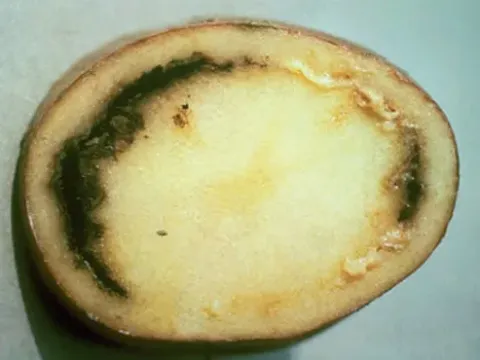
Bacterial ring rot
Corynebacterium sepedonicum
Bacterial ring rot is caused by the bacterium Clavibacter sepedonicus. It is a Gram-positive, non-spore-forming actinobacterium that lives and multiplies in the plant's vascular tissue.
What the section contains
Bacterial ring rot
The pathogen is highly contagious and can persist in dried slime on surfaces, farm equipment, and storage containers for extended periods, making sanitation essential.
Identification is frequently difficult because the bacterium can remain latent in seed tubers, showing no visible symptoms during the initial stages of infection.
Standard detection involves laboratory analysis, such as ELISA (Enzyme-Linked Immunosorbent Assay) or PCR, to confirm the presence of the bacteria in suspect tuber lots.
The bacterium thrives in a wide range of temperatures, but it spreads most rapidly during cool, moist conditions that favor the systemic movement of the pathogen through the plant's xylem.
Potatoes are the primary host for Clavibacter sepedonicus. The bacteria invade the vascular ring of the tubers and the stems, clogging the conductive vessels with bacterial ooze.
Damage results in the wilting and eventual death of the foliage, significantly reducing the yield and rendering the surviving tubers unsuitable for seed use or long-term storage.
The disease causes a collapse of the vascular system, preventing water and nutrients from reaching the plant's aerial parts, leading to rapid wilting during hot, dry periods.
In storage, the infection progresses as the bacteria break down the tuber tissue, causing a soft, cheesy, or liquid rot that emits a characteristic, often unpleasant odor.
Economic losses are severe for seed potato producers, as entire certified lots may be rejected due to zero-tolerance policies for this regulated quarantine pathogen.
Field symptoms often appear mid-to-late season. The foliage may show interveinal chlorosis (yellowing) and marginal necrosis, followed by wilting of stems or individual branches of the plant.
When an infected stem is cross-sectioned, a creamy or yellowish bacterial ooze may emerge from the vascular bundles, which is a diagnostic indicator of bacterial wilt.
The most distinctive sign is found in the tuber: a creamy, yellow, or light brown discoloration of the vascular ring. As the rot progresses, this tissue becomes soft and mushy.
In advanced stages, the internal part of the tuber may disintegrate completely, leaving a hollow cavity filled with rot, even if the skin appears relatively intact.
- Marginal chlorosis and leaf rolling.
- Vascular ring discoloration in tubers.
- Bacterial ooze from stem tissues.
- Internal breakdown of tuber starch tissues.
- Development of hollow cavities in tubers.
The primary control measure is the exclusive use of certified, disease-free seed potatoes. Testing seed lots before planting is the most effective preventative strategy.
Strict sanitation protocols must be maintained. All equipment, crates, and storage facilities that have come into contact with infected tubers must be thoroughly disinfected.
Cull all infected plants and tubers during the growing season and harvest. Never save seed from a field where ring rot has been diagnosed, regardless of how light the symptoms were.
Practice crop rotation and field sanitation to reduce the pathogen population in the soil. Avoid planting potatoes in the same field for at least three seasons.
Proper harvest management is crucial. Avoid wounding tubers during digging and ensure rapid healing of skin wounds by maintaining appropriate curing temperatures immediately after harvest.