
Description
Symptoms
The most visible symptom of the disease is the appearance of the fungus's characteristic woody conks, usually emerging from branch stubs or scars on the trunk.
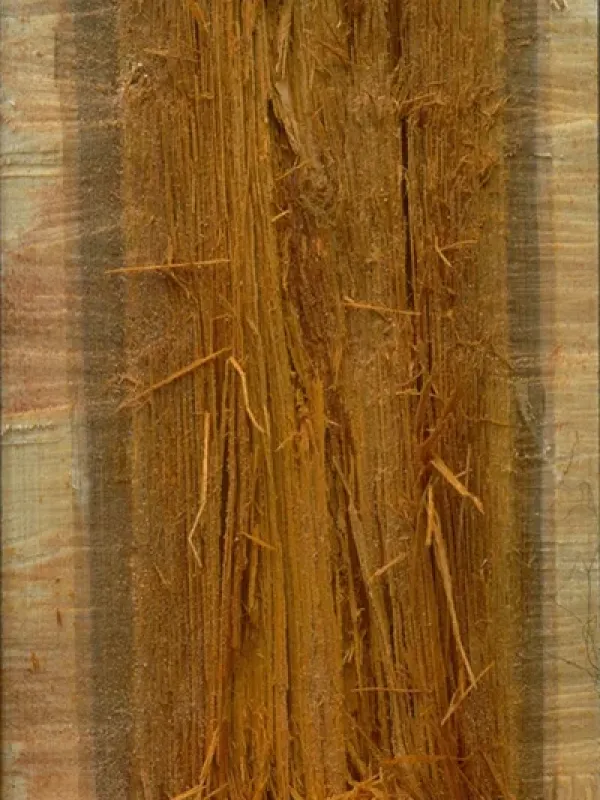
Internally, the wood undergoes a transformation into a fibrous, stringy rot that is deep rusty-red in color, indicating advanced stages of degradation.
As the rot progresses, the internal structure of the trunk loses its integrity, becoming soft and friable, eventually leading to the formation of central cavities.
Trees affected by this fungus often exhibit reduced growth and premature structural failure, particularly during high-wind events, due to the weakened trunk core.
In advanced cases, the tree may show a visible swelling or distortion of the trunk at the site where the decay is most concentrated and the fungal fruiting bodies are present.
Pathogen
The causative agent of this disease is the wood-decay fungus Echinodontium tinctorium, which belongs to the order Polyporales. It is a slow-growing parasite that primarily targets the heartwood of mature conifer trees.
The fungus is notorious for its long-term presence inside the tree trunk, where it gradually colonizes and breaks down the internal tissues over several decades.
Infection typically occurs through wounds or damaged branches, allowing the fungal spores to enter the heartwood and establish a permanent colony.
The fungus produces distinctive hoof-shaped perennial conks on the trunks, which are dark and woody on the upper surface and display a vibrant orange or rusty-red hymenium with spines on the bottom.
The species is biologically characterized by the production of specific pigments that stain the decaying wood a reddish or rust-brown color, which is a hallmark of the infection.
Conditions for development
The development of Echinodontium tinctorium is favored by the presence of large entry points on the trunk, often created by animal damage, falling debris, or previous logging injuries.
High humidity and cool, temperate forest environments provide the ideal microclimate for the survival and germination of fungal spores on susceptible hosts.
Older stands of conifers, such as Douglas fir (Pseudotsuga), are at the highest risk, as these trees have accumulated more physical damage over their long lifespans.
Lack of proper forest ventilation and high tree density can facilitate the spread of spores from infected trees to adjacent healthy individuals.
The slow growth rate of the pathogen means that environmental stressors often exacerbate the disease, making the tree less capable of compartmentalizing the infection.
Why it matters
The primary economic impact is the massive degradation of timber quality, rendering the heartwood of the trunk unsuitable for structural lumber or pulp production.
Ecologically, the fungus contributes to the collapse of old-growth stands, significantly altering the composition and structure of the forest habitat.
Financial losses are substantial because the internal rot is often hidden from view, making it impossible to detect until the tree is harvested and cut open.
The infection spreads vertically within the trunk, potentially affecting the entire length of the main bole and destroying the most valuable portion of the tree.
Managing the disease requires costly sanitary interventions, as infected trees pose a physical hazard and serve as a reservoir for further spread of the pathogen.
Protection
The most effective management strategy involves rigorous sanitation harvesting, which includes removing trees that show visible signs of fungal conks to reduce the local inoculum source.
Preventing mechanical damage during forest management operations is crucial to minimizing the entry points available for the fungus to establish itself.
Promoting a diversity of tree ages and species within a forest stand can increase the overall resistance of the ecosystem to the spread of heart rot fungi.
Regular forest health monitoring and inventory assessments are essential for identifying outbreaks before they become widespread within a specific forest compartment.
- Removal of infected standing trees.
- Minimizing trunk wounds during logging.
- Maintaining healthy, diverse forest stands.
Pathogens and affected parts
Affects crops · 1
Discussion
No discussions yet — be the first.