
Description
Symptoms
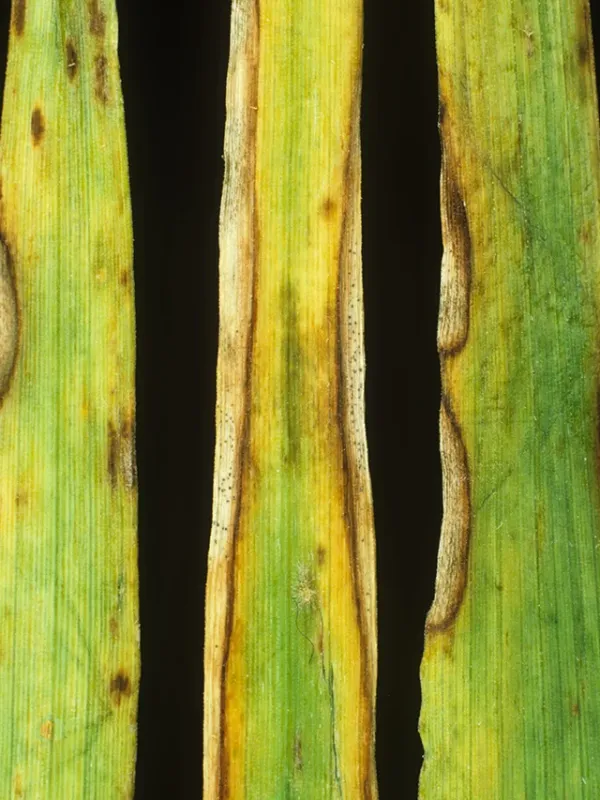
The first symptoms appear as small, water-soaked spots on the foliage that gradually enlarge, turning into brown or dark-colored necrotic lesions.
Affected areas are often surrounded by a chlorotic halo, which indicates the stress and tissue degradation occurring within the plant leaf.
Tiny black dots, known as pycnidia, can be observed within the centers of mature lesions; these are the fruiting bodies of the fungus.
Under favorable conditions, lesions can coalesce, eventually destroying the entire leaf tissue and causing it to wither and die prematurely.
In maize, the disease progresses from the lower leaves to the upper canopy, significantly reducing the green surface area of the plant.
Pathogen
The causal agent of Didymella leaf spot is the fungus Didymella exitialis. This pathogen belongs to the Ascomycota phylum and affects various crops, including cereals.
The fungus overwinters on crop residues in the form of pycnidia and perithecia, which serve as the primary source of inoculum for the next growing season.
The disease spreads through the release of spores that are transported by wind currents or splashing rain droplets onto healthy plant tissues.
Initial infection typically starts on lower leaves that are closest to the soil surface, where moisture levels are consistently higher.
The fungus thrives in environmental conditions characterized by prolonged moisture, which is essential for the germination of spores and mycelial colonization.
Conditions for development
Frequent rainfall, high humidity, and overcast skies provide the ideal environment for the development and spread of Didymella leaf spot.
The pathogen prefers moderate temperature ranges, which makes it particularly prevalent during wet and cool spring or summer weather patterns.
High plant densities or lodging increase the humidity within the canopy, preventing rapid drying of foliage and facilitating successful fungal infection.
Reduced tillage practices that leave significant crop debris on the soil surface provide an excellent substrate for the fungus to persist and survive.
Nutritional imbalances, particularly deficiencies in potassium or phosphorus, can weaken the plant and make it more susceptible to this pathogen.
Why it matters
The primary impact of Didymella leaf spot is the destruction of photosynthetic tissue, which severely limits the plant's ability to produce energy.
Premature senescence of leaves leads to reduced grain filling in maize, resulting in lower yields and lighter test weights of the harvested grain.
Weakened plants are more prone to secondary infections and stalk rot, which can negatively affect the overall structural integrity of the crop.
In cases of severe infection, the loss of leaf area can lead to significant economic losses for farmers due to reduced yield potential.
The disease also affects the quality of the fodder, making the harvest less valuable for livestock feed or industrial processing purposes.
Protection
Crop rotation is the most effective cultural practice to reduce the pressure of the disease by breaking the cycle of the fungal pathogen.
Deep plowing or burying of crop residues helps to accelerate the decomposition of infected material, effectively reducing the primary inoculum source.
Selecting disease-resistant or tolerant hybrids is a key strategy for integrated pest management to avoid unnecessary reliance on chemical fungicides.
Fungicide applications may be necessary in high-pressure environments, especially if the disease starts early and weather conditions remain favorable for spread.
- Maintain proper plant spacing to improve air circulation.
- Optimize fertilization to promote vigorous plant growth.
- Control volunteer plants that may act as reservoirs for the fungus.
Pathogens and affected parts
Affects crops · 1
Discussion
No discussions yet — be the first.