
Description
Symptoms
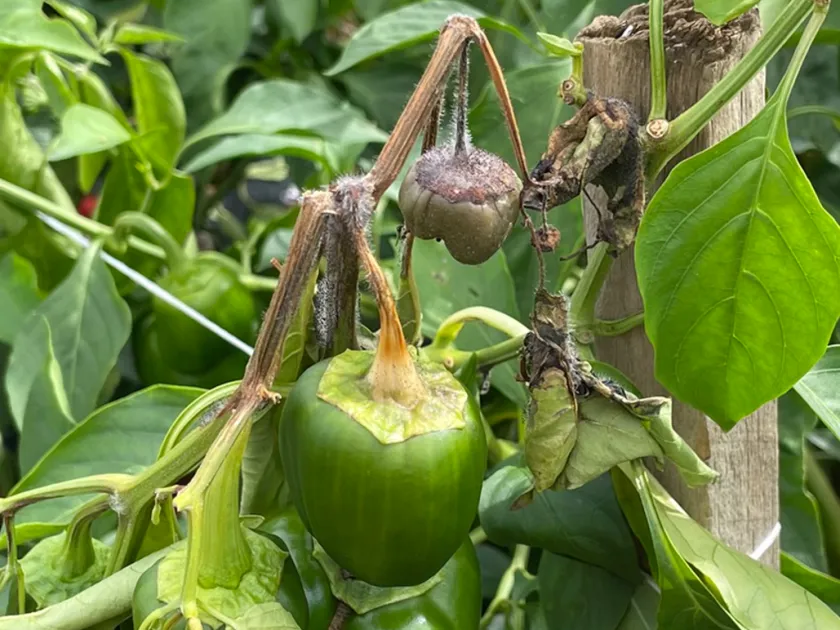
The first signs of the disease are watery spots on leaves, blossoms, or fruits, which rapidly expand into necrosis. Affected plant tissues quickly lose turgor and die off.
A diagnostic characteristic is the development of a dense, fuzzy growth on affected areas, consisting of the pathogen’s conidiophores and sporangia. Initially white, this growth darkens to greyish or brown over time.
On soybeans, the disease manifests as infection of young pods and upper leaves. Affected tissues often succumb to soft rot, leading to a total loss of commercial value.
In reproductive organs, blossoms may drop, and fruits become deformed while being covered with the characteristic spore-bearing growth. Sunken, dark lesions may appear on stems, hindering normal plant nutrition.
Under high-humidity conditions, the disease progresses extremely rapidly, causing widespread death of affected plant organs within a few days.
Pathogen
The disease is caused by fungi of the genus Choanephora, most notably the species Choanephora cucurbitarum. This pathogen belongs to the class Zygomycetes and thrives on various plant tissues.
The fungus exhibits saprotrophic properties but quickly adopts a parasitic lifestyle under favorable conditions. It is capable of infecting a wide range of agricultural crops, including vegetables and industrial plants.
The infection survives in plant debris and soil as mycelium or dormant structures. The biology of the pathogen is closely tied to high humidity, which is essential for massive sporangia production.
Pathogen dispersal occurs via conidia, which are easily carried by wind, rain splashes, or insects to healthy plant tissues. The ability to germinate rapidly in the presence of moisture plays a crucial role in the fungus's life cycle.
Choanephora rot often manifests as a secondary infection on weakened plants or those previously damaged by pests, complicating field diagnosis.
Conditions for development
The key factor for Choanephora rot development is high relative humidity, exceeding 80-90%. Prolonged rains and foggy weather are considered ideal conditions for disease outbreaks.
The temperature optimum for the pathogen's development ranges between +25°C and +30°C. Warm, humid weather triggers the most rapid fungal proliferation.
Poor agricultural practices, such as high-density planting, contribute to microclimates with inadequate ventilation, drastically increasing the risk of spread in agrocenoses.
Mechanical damage to plant tissues caused by hail, farm machinery, or insect pests facilitates pathogen entry.
Poor soil drainage and excessive nitrogen fertilization, which reduces the plant's natural immunity, also contribute to the development of Choanephora rot epidemics.
Why it matters
Choanephora rot causes significant crop damage by inducing the decay of fruits, flowers, and leaves. In commercial fields, this leads to reduced yields and inferior produce quality.
In soybeans, the infection can reduce pod filling and impair seed quality. The pathogen can attack plants at various growth stages, increasing the risk of harvest loss.
The disease spreads rapidly from initial focal points, potentially killing a significant portion of the crop during seasons favorable to the pathogen.
Infected produce is unsuitable for long-term storage, as rotting processes continue post-harvest, potentially infecting nearby healthy fruit.
Economic losses arise from direct yield reduction and the costs of emergency fungicide applications required to contain the spread.
Protection
The primary control method is strict adherence to crop rotation, avoiding susceptible species for 2-3 years.
It is crucial to remove and destroy plant debris, as it serves as the main source of inoculum in the field after harvest.
Using high-quality seed and appropriate seed treatment is recommended to improve seedling resistance to soil-borne pathogens.
Preventive fungicide applications during periods of high humidity are effective in suppressing disease progression. Use broad-spectrum products for better results.
- Optimize plant spacing to improve air circulation.
- Manage insect pests proactively to minimize tissue wounds.
- Balance mineral fertilization to strengthen plant cell walls.
Pathogens and affected parts
Affects crops · 1
Discussion
No discussions yet — be the first.