
Description
Symptoms
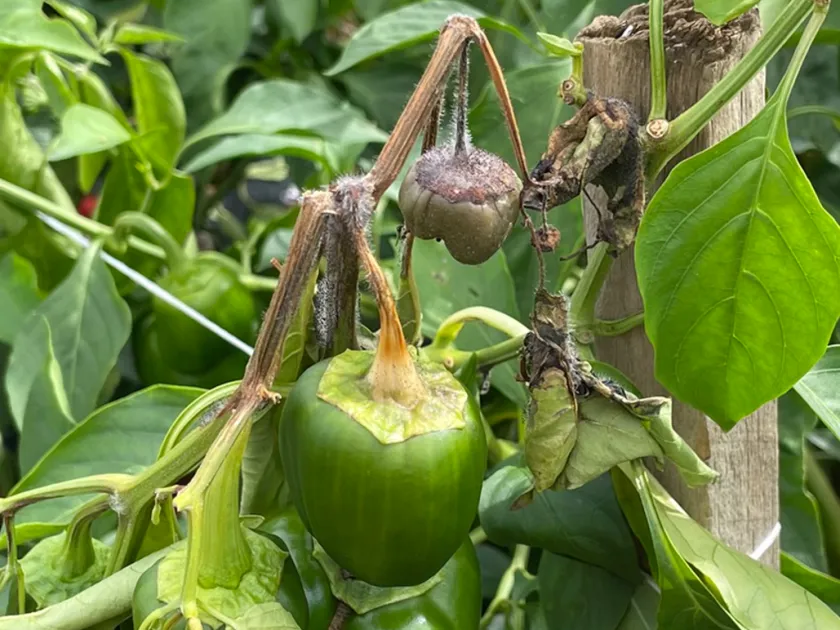
The primary symptom of Choanephora rot is the rapid development of a dense, silver-grey fungal mat on the affected plant parts. This fuzz consists of abundant sporangia, which give the infected area a distinctive metallic or hairy appearance.
Infected tissues, particularly fruits and succulent stems, quickly become water-soaked and soft. The structure of the plant part collapses, turning into a mushy, decaying mass that often emits a pungent, foul odor as bacterial secondary decay sets in.
In flowering plants, the fungus often targets the blossoms, leading to blossom blight and widespread shedding of buds. If the infection reaches the young fruit, it causes stunted growth, deformation, and eventual abscission of the fruit from the plant.
On lentil crops, the pathogen causes darkening and browning of the pods, which eventually leads to the wilting of the entire reproductive structure. Seeds within these pods may fail to fill properly or might be destroyed entirely by the fungal mycelium.
The disease spreads with remarkable speed. Under high humidity, entire clusters of leaves or fruits can be covered in mycelium within 24 to 48 hours, making the destruction of plant organs very conspicuous and rapid.
Pathogen
The disease is caused by fungi belonging to the genus Choanephora, specifically the species Choanephora cucurbitarum. These fungi are classified within the order Mucorales and are recognized for their broad host range.
This pathogen acts as both a saprophyte, surviving on decaying plant debris, and a necrotrophic parasite. It produces numerous asexual spores (sporangiospores) that are easily dispersed by wind and splashing rain, facilitating quick outbreaks in field conditions.
The life cycle of the fungus is highly adapted to agricultural environments. During unfavorable periods, it can produce thick-walled zygospores that remain dormant in the soil or crop residue, ensuring the survival of the pathogen until the next season.
The fungus produces a potent cocktail of cell-wall-degrading enzymes, including pectinases and cellulases. These enzymes rapidly macerate the host tissue, causing the characteristic soft rot and releasing nutrients that the mycelium uses for further growth.
Genetic diversity within the Choanephora species allows the fungus to adapt to various climates. Its ability to switch between different hosts, such as legumes, cucurbits, and peppers, makes it a persistent challenge for integrated pest management.
Conditions for development
High relative humidity is the most critical environmental factor for the development of Choanephora rot. Humidity levels exceeding 85 percent provide the necessary moisture for the rapid germination of spores and the establishment of infection.
Warm temperatures, specifically between 25 and 30 degrees Celsius, are optimal for the pathogen. These thermal conditions accelerate the metabolic rate of the fungus, leading to a much faster colonization of plant tissues compared to cooler weather.
The presence of free water on the plant surface, such as dew, rain, or irrigation water, is essential for infection. Water droplets help the spores stick to the epidermis and facilitate the initial penetration process, especially in flowers.
Poor air circulation within crop canopies significantly contributes to the severity of the disease. Dense foliage prevents moisture from evaporating quickly, creating microclimates where humidity remains high for extended periods, favoring fungal outbreaks.
Mechanical damage to plant tissue from insects, agricultural equipment, or handling provides easy entry points for the mycelium. Once the protective barrier of the plant epidermis is breached, the infection can spread internally with little resistance.
Why it matters
Choanephora rot causes significant direct economic losses by destroying fruit and vegetable yields. Because the rot progresses so quickly, it can render an entire field of produce unmarketable in a matter of days during a wet spell.
For crops like lentils, the loss of pods and seeds significantly reduces the final harvest weight. Moreover, the quality of any surviving seeds may be compromised, leading to poor germination rates and issues with future seed viability.
The rapid softening of tissues facilitates secondary infections by soft-rot bacteria. This synergistic relationship between fungi and bacteria complicates crop management and can lead to a complete breakdown of the plant's structural integrity.
Farmers face increased production costs due to the need for frequent fungicide applications and extra labor for removing infected plant material. The uncertainty caused by this disease often complicates long-term crop planning and export strategies.
In addition to field losses, Choanephora rot can continue to develop during post-harvest storage if fruits are infected before or during the harvest. This leads to substantial losses during the transit and retail stages of the supply chain.
Protection
Effective management begins with strict crop rotation and the elimination of crop debris. Removing and destroying infected plant remains is crucial to reduce the primary inoculum level in the soil for the following growing season.
Cultural practices such as wider row spacing and proper pruning improve air circulation within the field. This helps to reduce the local humidity levels and allows foliage to dry off quickly after rain or irrigation.
In high-risk areas, the use of protective fungicide sprays can effectively inhibit spore germination. These applications should be timed to coincide with high-humidity periods and the flowering stages of the crop to maximize their effectiveness.
Choosing resistant or tolerant varieties is the most sustainable approach to control. While complete resistance is rare, selecting crops that are less prone to the specific environmental stressors associated with Choanephora rot can minimize impact.
Managing irrigation is key; using drip irrigation instead of overhead watering reduces the duration of leaf wetness and prevents water from splashing spores onto susceptible flower parts. This significantly lowers the risk of infection.
Pathogens and affected parts
Affects crops · 1
Discussion
No discussions yet — be the first.