
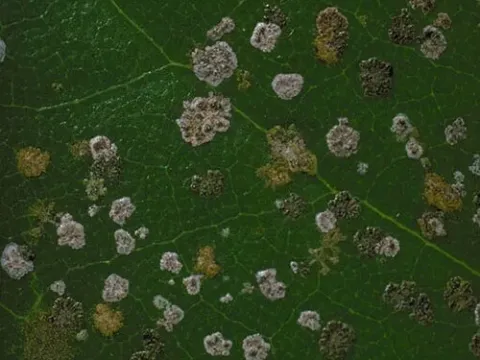
Cephaleuros virescens
Cephaleuros virescens
Cephaleuros virescens is a unique phytopathogenic organism, classified as a parasitic green alga belonging to the Trentepohliaceae family. Unlike most algae, this species leads a parasitic lifestyle, infecting the tissues of higher plants.
What the section contains
Cephaleuros virescens
Systematically, it belongs to the phylum Chlorophyta. It forms colonies on the surface of leaves and stems, appearing as velvety patches or coatings ranging from bright green to reddish-brown due to the presence of carotenoids.
Reproduction occurs through zoospores, which spread via raindrops or wind, settling on susceptible plant parts. Under favorable conditions, these zoospores germinate, forming new vegetative thalli directly on the host surface.
The infection is often mistaken for fungal diseases or lichens. However, microscopic analysis reveals the typical structures of filamentous green algae, specifically the presence of sporangiophores.
The life cycle is closely linked to environmental moisture. The alga can survive short periods of drought by remaining in the host's tissues, making it a persistent pathogen in tropical and subtropical regions.
This pathogen affects a wide range of crops, primarily in high-humidity regions. The main objects of infection are perennial woody plants and shrubs, which suffer significant stress from colonization.
Significant economic losses are recorded on coffee, tea, cacao, and citrus plantations. Other susceptible crops include avocado, mango, vanilla, pepper, and decorative species such as magnolias and camellias.
The algae colonize the epidermis of leaves, shoots, and fruits, causing both surface contamination and deep tissue damage. In some cases, the pathogen leads to necrosis of leaf tissue patches.
Severe shoot infection can lead to deformation and premature leaf drop, which significantly reduces the total photosynthetic area and long-term productivity of the plant.
In infected plants, growth is stunted, fruit quality decreases, and in the absence of proper agricultural practices, branch dieback (dieffenbachia-like symptoms) occurs, potentially leading to the death of the entire crown.
The activity of Cephaleuros virescens peaks during rainy seasons when high relative humidity (above 80-90%) and moderate temperatures favor rapid zoospore germination.
Pathogen spread is significantly increased in dense plantings where air circulation is restricted, allowing moisture to persist on leaf surfaces after rainfall or fog.
Disease development is most intense at temperatures between +20°C and +30°C. In cooler or drier periods, the alga's activity decreases, but it remains in the form of resting structures within the host.
Extended dew periods and frequent nocturnal fogs create an ideal microclimate for colonizing young leaves and current-season shoots, which are the most susceptible to primary infection.
Improper irrigation management in nurseries or greenhouses, leading to constant wetting of the foliage, creates perfect conditions for mass infestation throughout the year.
Characteristic spots of circular or irregular shape appear on leaves. The color varies from greenish-grey to orange-brown or rusty-red, reflecting the development of the alga's reproductive structures.
The surface of the affected area often becomes velvety to the touch due to emerging sporangiophores, which appear like tiny hairs when viewed under a microscope or magnifying lens.
Stem infections are characterized by bark cracking and the formation of ulcers. This makes the plant vulnerable to secondary infections, including various fungal and bacterial pathogens that enter through the damaged epidermis.
When fruits are infected, dark spots emerge on the skin, reducing the marketability of the produce, which is a major concern for crops like mangoes and citrus fruits.
A diagnostic sign is the presence of a coating that cannot be easily wiped off, unlike dust or superficial debris; scraping the surface may leave a visible trace on the plant tissue.
Good agricultural practices are the primary control measure. It is essential to ensure adequate crown ventilation through regular pruning, which reduces humidity within the plant canopy.
Copper-based fungicides remain the most effective chemical method for control. Applications should be performed at the beginning of the rainy season or at the first sign of spot development.
Avoiding excessive planting density is crucial. Following recommended spacing ensures better sun access and rapid drying of leaves after rain, which inhibits algal colonization.
Promptly removing and destroying severely infected plant parts is necessary. Sanitary pruning helps lower the overall inoculum pressure on the plantation and prevents further spread.
In nurseries, preventive treatments and strict moisture control are recommended. Using healthy planting stock grown in well-ventilated conditions is the best way to prevent primary outbreaks.